
Dominicans Divided on Marcello Hernández and Druski’s SNL Phone Store Sketch
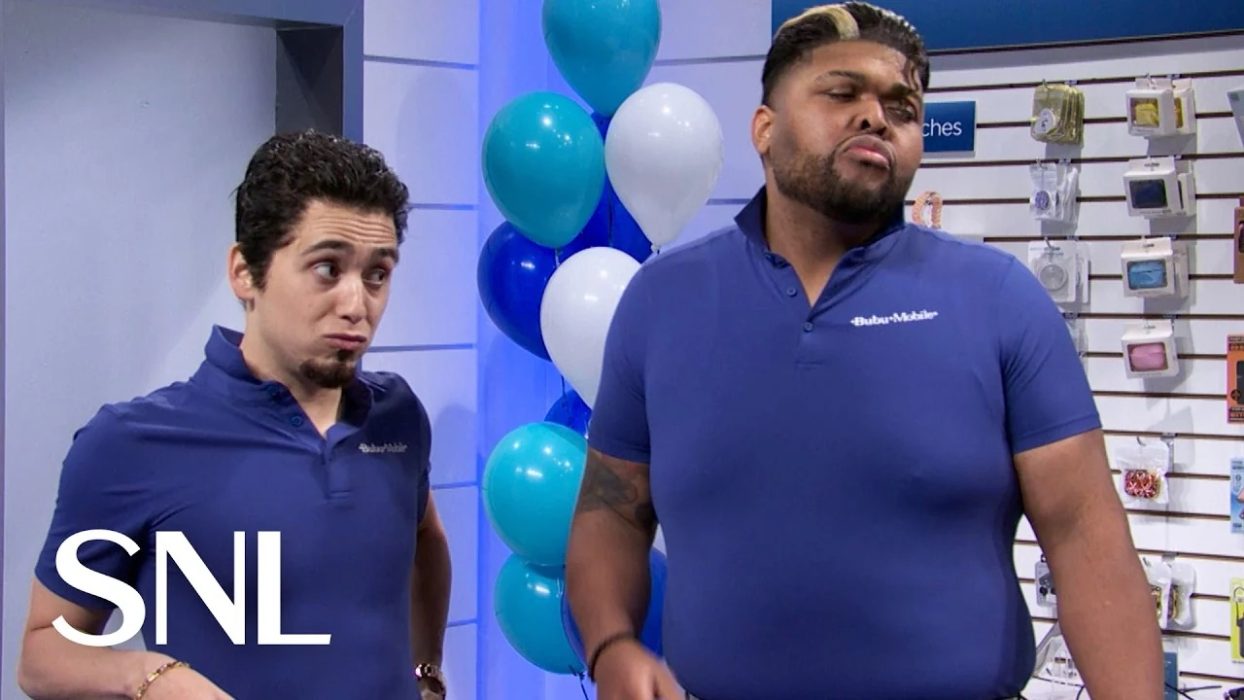
Druski, the first content creator to host “Saturday Night Live,” took the stage on Saturday, Nov. 7. By Monday, one of his sketches had Dominicans arguing about it in two languages. In “Bubu Mobile,” Jeremy Culhane and Mikey Day play office workers who want a new phone and get nowhere with the store’s two friendly Dominican salesmen, Marcello Hernández and Druski.
In a matter of seconds, viewers listed every single detail, from the salesmen’s white belts to the word “papi,” which, for many, echoed what social media calls the “Dominican papi” look, a meme of fitted shirts and sharp fades that has circulated on TikTok and Instagram. Catchphrases like “How you know I’m Dominican, papi?” fit perfectly. But Dominicans, both in the diaspora and back home, were split between those who laughed in recognition and those who saw a community reduced to its loudest caricature.
The Harshest Review of “Bubu Mobile” Came From Santo Domingo
The most pointed criticism came from Santo Domingo Noticias. The news outlet wrote in Spanish that the sketch “aimed to make people laugh at the expense of Dominicans, but ended up being a regrettable display of racial and cultural stereotypes.” The post objected to the exaggerated accents, the trouble with English, the disregard for personal space, and the behavior it associated with infidelity. “We Dominicans are not a caricature of loud, rude people unable to express ourselves properly in English,” it said, adding that Dominicans are “a community of millions of hardworking, professional, and entrepreneurial people who deserve a far more dignified representation.” It closed by drawing a line between comedy and caricature: “Mocking stereotypes can be comedy; turning stereotypes into the only identity of a people is something else.”
Similarly, one user wrote that their family in the Dominican Republic saw the clip and told them, “bro don’t ever send us druski content or video ever.”
Marcello Hernández’s Roots Became Part of the Argument
Many were quick to single out Hernández, who is of Dominican descent, either to validate the joke or to express disappointment over his participation. One user questioned whether Hernández has Dominican roots at all, and another wrote that the sketch “just imitated a Cuban and smacked Dominican all over it.” Hernández has said his mother is from Cuba and his father is from the Dominican Republic.
“Us Dominicans dont say Papi,” another user wrote, taking issue with the dialogue. “We say Primo or KLk.” The same user added that Druski knows more Dominican slang than Hernández.
Plenty of Viewers Said They’d Met These Salesmen in Washington Heights
“Tell us you’ve never been to a cell phone store in Washington Heights without telling us you’ve never been to a cell phone store in Washington Heights,” one user wrote. Another, writing in Spanish, said the Dominican of New York “is a character,” and that anyone who spends a day in Upper Manhattan or the Bronx “won’t stop laughing.” A third, also in Spanish, admitted the sketch exaggerated but said it “isn’t far from reality,” since a walk through Washington Heights “leaves you a little stunned if you’re not used to it.”
Many of the defenders led with their own heritage. “I’m Dominican and it was hilarious. Get over it,” one user wrote. “As a Dominican, this is mad funny,” wrote another. “The DR makes fun of all cultures, but when it’s our turn to get roasted, y’all have a problem.” A third wrote in Spanish that they are Dominican too and know exactly who the sketch was about, adding that “some tígueres go too far.” One user who said they were Puerto Rican sent the clip to Dominican friends, “and they were crying laughing.”
Spanish-Language Replies Pushed Back on the Santo Domingo Outlet
The split was messier than diaspora versus island. Many of the Spanish-language replies under the Santo Domingo Noticias post took the sketch’s side and turned on the outlet. “The whole family was on the floor laughing,” one user wrote in Spanish. “That was the purpose of the sketch, comedy.” Another, who called themself “proudly Dominican,” said Dominican news outlets “don’t know what else to do to get attention.” A third asked, also in Spanish, whether the sketch had mocked any of the real tragedies in Dominican history, from the victims of the Jet Set nightclub to the dead of Hurricane Georges.
Some Found Druski’s Sketch Corny, Not Offensive
Between the laughter and the outrage sat a crowd that did not find it funny. “I found it corny but I’m not offended,” one user wrote. Another called it “low hanging fruit humor” and suggested the sketch could have balanced the joke with “another Dominican in the store.” One user, posting on Monday, declared, without citing any data, that “98% of Dominicans online were not offended.”
One user pointed out that Carlos Montesquieu, a Dominican comedian, “alone has like 100 videos mocking ourselves.” Another, writing at length in Spanish from the Bronx, said the sketch reflected a lived experience for many New Yorkers, while acknowledging that in some neighborhood businesses, some Latinos, especially Dominicans, are not always welcoming to people outside the community, particularly Black Americans. “Both statements can be true at the same time,” the user wrote, “although comedy is, in the end, subjective.”