
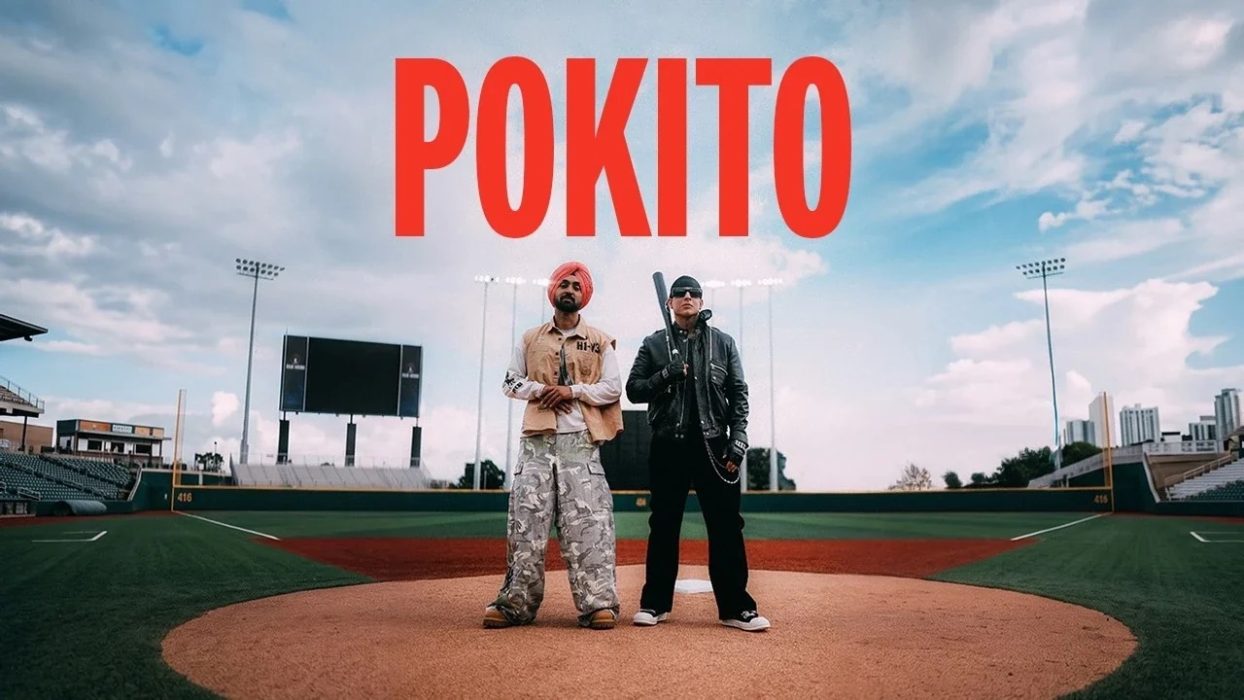
Daddy Yankee’s “Pokito” With Diljit Dosanjh Is the Crossover Nobody Saw Coming. And It Makes Perfect Sense
The music video for “Pokito,” Daddy Yankee’s new single featuring Diljit Dosanjh and directed by Stillz, opens with a bodega, which could also be a store in the Punjab region of South Asia. Fruits, warm colors, and a cow begin to draw a sisterhood of cultures we never imagined. Diljit Dosanjh wanders a glowing ballpark and a corner store, his turban the one constant as he changes from denim to traditional white, while Daddy Yankee answers in ball jerseys, leather, and dark shades. The video, filmed in Puerto Rico, also moves through a baseball field, where ball and cricket players seamlessly swing.
Released last week, the song is track seven on Daddy Yankee’s new album, La Postal. Dosanjh opens it in Punjabi before the Puerto Rican star comes in with his familiar flow. More surprisingly, most of the lyrics are in Punjabi rather than Spanish.
The beat, however, seems absolutely natural, whether you are Punjabi or Latino.
And for Daddy Yankee, the artist whose 2004 single “Gasolina” helped carry reggaetón from Puerto Rico to the rest of the world, the song puts him back in a role he’s played before, this time on a different continent.
Daddy Yankee Always Believed Punjabi Music and Reggaetón Would Make a Great Marriage
La Postal is a 15-track concept album about love in its different forms, including romance, family, and self-love. Guests include Cardi B, Myke Towers, Danny Ocean, Bizarrap, and De La Rose. Daddy Yankee described it on Instagram as “a postcard written in 15 songs, where you’ll find love in all its forms.” The album also features production from Luny Tunes, the duo whose work helped shape reggaetón’s sound, and from his son, Jeremy Ayala González.
Critics are calling “Pokito” the album’s most surprising crossover. With a perfect blend of styles, the track redefines the Spanish “poquito,” or “a little,” and Daddy Yankee has described the song as about hard work, discipline, and success that comes gradually. What’s more, Dosanjh went to the island to record with him in person, according to the same report.
“I always believed that Punjabi music and reggaeton would make for a great marriage,” Daddy Yankee said, according to Just Jared. In a press release, he added, “Lyrically, the song is about working hard, and discipline is part of self-love.”
The Diamondback’s Julissa Mendoza Robles wrote that the track “mostly sounded like a bhangra song, but with the bass and pacing of a standard reggaeton song,” and that his rapping “flowed well with Dosanjh’s verses over the upbeat track.” In the Hindustan Times, Monica Yadav wrote that the two trade verses about their own paths, with Daddy Yankee looking back on what it took to get where he is and Dosanjh playing up the bravado and outsize persona that Punjabi pop is known for.
From “Gasolina” to La Postal, Daddy Yankee’s History-changing Path
The music Daddy Yankee is carrying to Punjab was once treated as contraband at home. In fact, not long ago (kinda), in February 1995, the Drugs and Vice Control Bureau of the Puerto Rico Police Department raided six San Juan-area record shops and confiscated hundreds of underground hip-hop cassettes and CDs, saying they violated local obscenity laws, the scholar Raquel Z. Rivera wrote in a 1996 essay for the magazine Against the Current.
That underground scene, recorded in carports and public housing complexes and sold from car trunks, drew on Jamaican dancehall, Panamanian reggae en español, and hip-hop. Its rhythmic backbone, the dembow, was first showcased on Jamaican artist Shabba Ranks’ 1991 song “Dem Bow.”
Then came Daddy Yankee. He coined the word “reggaeton” on a 1994 DJ Playero mixtape, and a decade later, “Gasolina,” produced by Luny Tunes, became the hit that spread the genre internationally.
He retired in 2022 at the end of his farewell tour, La Última Vuelta, and said he had devoted his life to God, a turn reflected in last year’s Lamento en Baile. This summer, “Echo (FIFA World Cup 2026),” his collaboration with Shenseea, became his 31st No. 1 on Billboard’s Latin Airplay chart.
Today, the genre he helped coin is the most popular in the whole world. This could explain why Daddy Yankee went further and explored new frontiers.
Punjabi Music Took Its Own Long Road From the Village to the Club
Bhangra began as a folk dance in Punjab, a region now divided between India and Pakistan, and grew into a dance-oriented pop genre built on Punjabi rhythms, especially the beat of the dhol, a two-sided barrel drum. However, diaspora communities shaped much of its modern sound. Punjabi immigrants to the United Kingdom in the 1970s, many of them settling in places like Southall in London, brought the music into British clubs by the 1980s, and in the 1990s producers began mixing dhol and tumbi with reggae and club music. For example, Apache Indian’s 1993 song “Arranged Marriage” combined a reggae vocal style with dhol and a Punjabi chorus.
In 2003, Panjabi MC’s “Mundian To Bach Ke” became the first bhangra track to reach the U.K. top 10, and the song, which later picked up a verse from Jay-Z, “found fans in every corner of the world,” The Juggernaut reported in 2024. Dosanjh has carried that reach further. In 2023, he became the first Punjabi singer to perform at Coachella. And his international collaborations include “Señorita” with Colombian star J Balvin, “Palpita” with Colombian singer Camilo, and tracks with Sia, Saweetie, and NLE Choppa.
A Crossover Some Had Already Seen
While many might be surprised by the Reggaeton-meets-Punjabi single, others had seen the resemblance for a while. For example, in a thread posted in October 2025 on the subreddit r/AskIndia, a user from Colombia asked why Punjabi music bears “a certain resemblance to reggaeton” and named artists such as Bad Bunny, Karol G, J Balvin, and Daddy Yankee as points of comparison.
“You’re right, Punjabi pop today borrows a lot from global club sounds like reggaeton and Afrobeat,” one user replied, adding that the songs the poster had heard were “modern Bollywood-style fusions made for dance floors.” The same user wrote that while visiting Colombia, they heard “Voodoo,” a song they first took for a Spanish track before realizing it featured Punjabi vocals from Badshah. Another user in the thread pointed the original poster to the British Asian underground of the 1990s and 2000s, writing that artists such as Bally Sagoo and Apache Indian “had many reggae influences.”
Seen from above, the two genres share more than geography would imply. From diasporic contexts to the influence of Jamaican reggae and dancehall on the way to the global charts. In that reading, “Pokito” brings together two branches that grew from a shared influence.
Daddy Yankee Pairs “Pokito” With a Softer Sound on “La Postal”
Fans of hits like “Gasolina” or “Rompe” “won’t find the same sound in La Postal, as the production is more toned down,” The Diamondback wrote, comparing the songs to his Christian reggaetón, and concluding that the album “may not be the best album he’s released” but is “a great attempt on his first concept album.” Rolling Stone described the lead single, “BOTZ (Bésame Otra Vez),” as revisiting the aggressive rapping of his earlier hits, and said that with “Pokito” he “expands reggaeton’s global reach.”
“We come from different parts of the world, but we understand the same hunger,” Daddy Yankee said of his partnership with Dosanjh.