
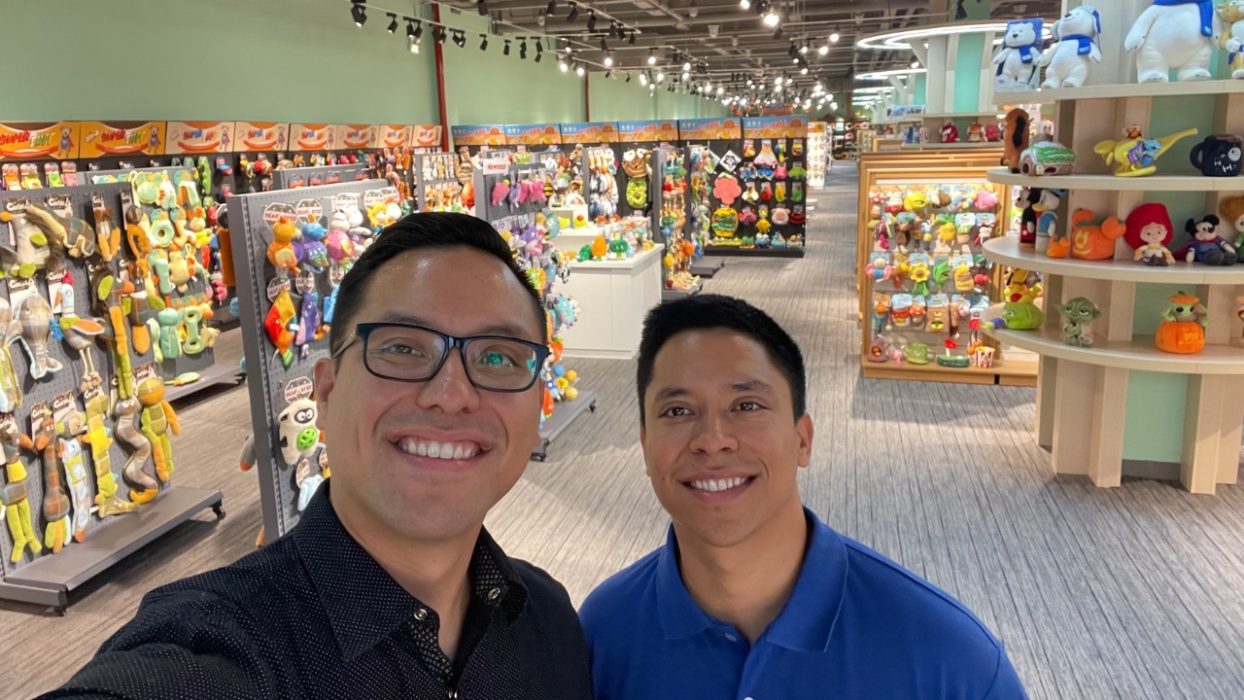
How a House Full of Foster Dogs Turned Engineers Saul and Erik Lopez Into Toy Inventors
When Saul and Erik Lopez were small, their father took them along to work. He ran his own house-painting business in Los Angeles, and because the boys were so little, he cut his white painter’s pants into shorts so they could wear them on the job, Erik recalls. Their parents barely went to primary school, Saul says, and their father, who had served in the army in Guatemala, painted homes in some of the city’s wealthiest neighborhoods. On those job sites, everyone around them told the boys to do well in school.
Over the years, the same clients kept hiring their father, and they watched the stickers pile up on his truck: Stanford, MIT, NASA. Some of them asked him how his sons had gotten there. “My dad, for whatever reason, would tell them, ‘It’s because I gave them a lot of fish when they were little,’” Saul says. “So there are now four kids in Beverly Hills, in the Palisades, who just got a nonstop diet of fish because they thought that was the path to get to those schools or those places.”
Today, Erik, who lives in Los Angeles, still works at NASA, and Saul, who lives in London, has spent his career in engineering at companies including Google and Airbus. On evenings and weekends, the brothers run Milunova, a pet products business named after three of their dogs, Millie, Luna, and Nova, and built on years of fostering animals together.
A Gates Scholarship and Years of NASA Rejections
Both brothers went to college as Gates scholars. “We always joke around that Auntie Melinda Gates and Uncle Bill paid for our education and our schooling, and I truly would not be doing what I’m doing now if it wasn’t for that,” Erik says.
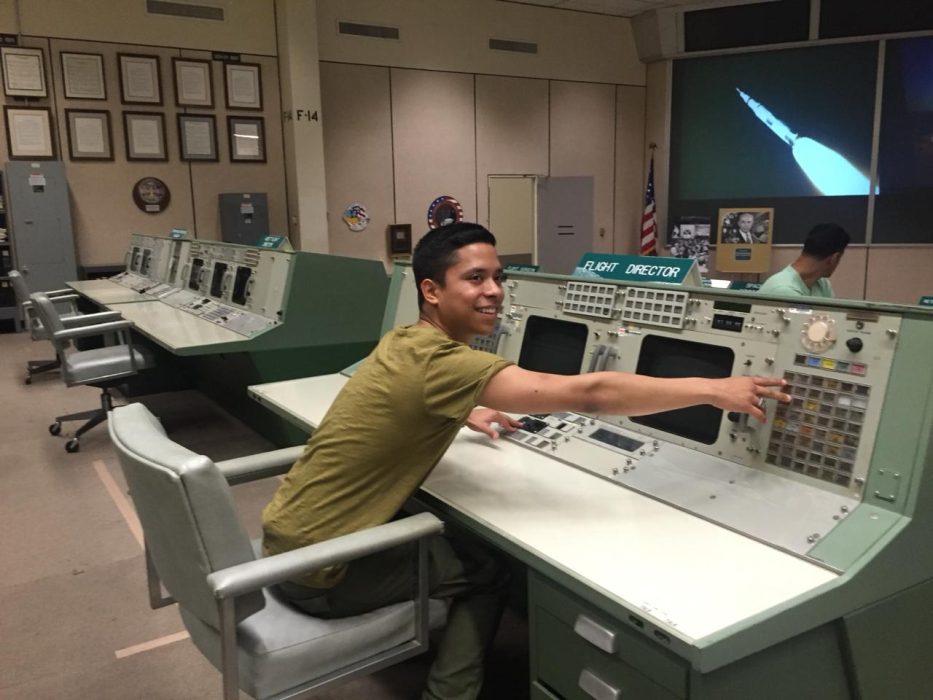
He earned bachelor’s and master’s degrees in aerospace engineering at the University of Illinois, which also had an aviation program, so the scholarship covered his flight training, too. “Bill Gates was paying for me to fly planes,” he says with a laugh. He came out with a pilot’s license and a long record of rejections from NASA. “I had been applying to internships at NASA since I was in high school, getting rejected from internships at NASA since I was in high school, and then once I finally got my foot in the door, I was like, ‘Okay, I’m in. I’m not letting go,’” he says. That door led to Mission Control in Houston, where he worked as a propulsion officer. He was in that role for Artemis I, the uncrewed 2022 test flight around the Moon. He left Mission Control when he moved back home to Los Angeles. He still works for NASA.
Saul, the older of the two by about 15 months, studied mechanical engineering at MIT and then earned a master’s degree at Stanford, concentrating in mechanical engineering, manufacturing, and mechatronics. He went on to work in consumer electronics at Google and also worked at SpaceX. A former boss from Google later recruited him to Airbus in Toulouse, France, where he learned French. “I was helping them kind of inject a bit of Silicon Valley spirit into their company,” he says.
Luna, Nova, Millie, and Over 100 Fosters
However, the brothers grew up without pets. Their father ran a strict no-pets household, Erik says, and when their sister got a dog from her middle school crush, the siblings hid it for several days before they got caught.
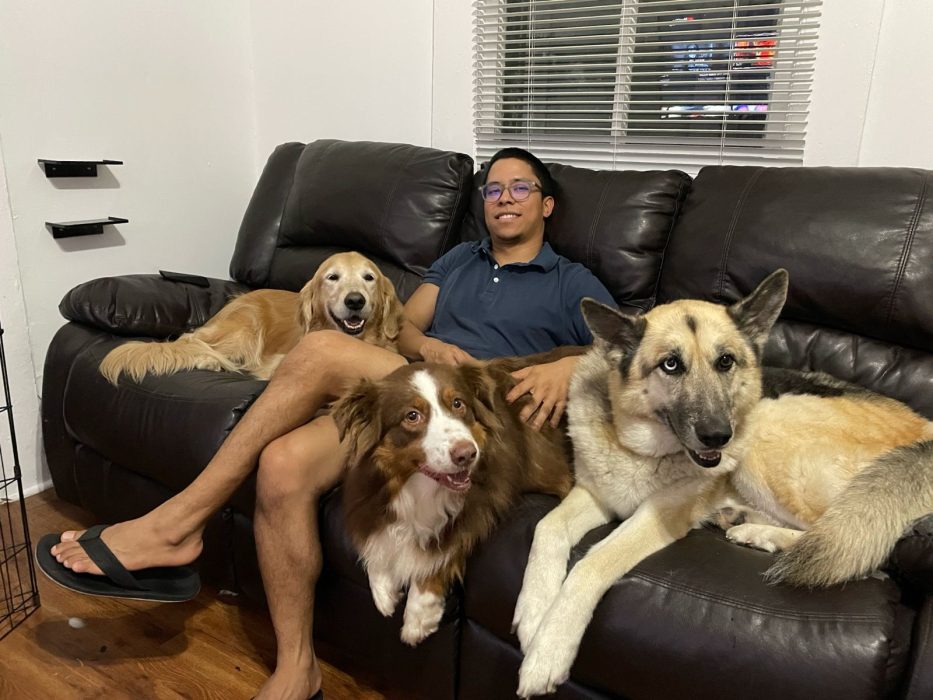
But then, in Houston, Erik had a small house “in the boonies in the middle of nowhere.” “What it meant is that I had a ton of space for dogs, like, a way too much space for dogs,” he says. Luna, a German shepherd-husky mix, had been with him since his days at the University of Illinois. Nova, a golden retriever, came next, and then Millie, an Australian shepherd. Erik named all three with space and aviation in mind. Luna for the moon he saw in her one white eye, Nova for an exploding star, and Millie for Amelia Earhart. He started fostering, too. Together, the brothers have fostered more than 100 dogs and cats, Erik says, and on the morning of the interview, Erik had just dropped off a litter of five foster kittens on their way to adoption.
A Couch in Houston and a Brother’s Dream
For his part, and after a few years in France, Saul came back to the U.S. in the fall of 2018 and moved in with Erik in Houston. “I was actually crashing on Erik’s couch. That’s when we started the company,” Saul says. He had been doing some soul-searching. “I felt like I had a great career up to that point, and I felt like I really wanted to do something for myself,” he says. “I’ve always wanted to be an inventor, start a company, and who better to do that with than my brother, who I think is the most brilliant person in the world.”
At first, the brothers prototyped all kinds of things unrelated to dogs. Saul had never had a pet, but he watched how his brother lived with the fosters, and he remembers a line Erik used to repeat: “Pets have a lot to teach us. We can learn a lot from them.” Eventually, they decided to go all in. “We love these pets, and they’re like our family, so let’s just build cool stuff for them and stuff that we wanted, and make it really, really good,” Saul says.
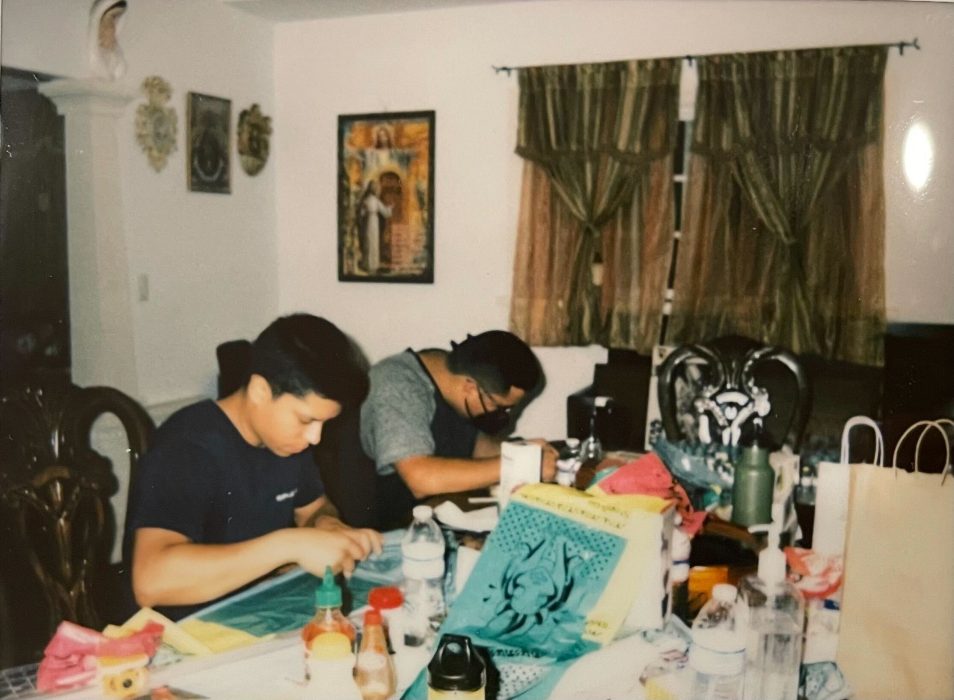
One of their first experiments, code-named Icaroof after Icarus, was meant to stop Luna from jumping on people to lick their faces, her favorite way of showing affection. “But when you’re a 70-pound German shepherd husky mix, it tends to scare some people,” Erik says. The brothers bought sensors and programmed them to detect her jumps. “What we learned is there was no deterrent for Luna because she wanted more than any one thing to lick the person in the face,” he says. Some of his favorite photos come from that period, including one of Blizzard, a small white foster, napping next to the prototypes.
A Fox Puppet, a Teething Puppy, and an Idea
“When you have teething puppies, and you only have to experience it for a month, it’s a fleeting thought,” Erik says. “When you have a teething puppy every month for years, you’re like, ‘I need to solve this problem.’”
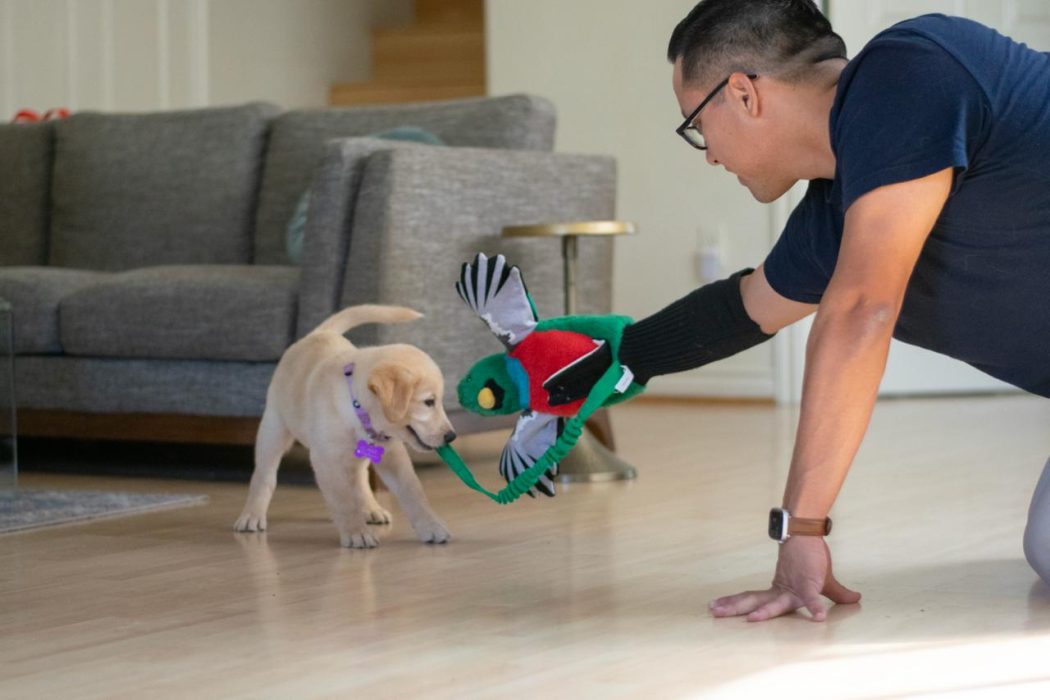
When Luna was a puppy, Erik bought her a fox puppet, a children’s toy, on a trip to the zoo with his grandfather and his nephew, and it became her favorite thing through her entire puppyhood. Once the fosters started arriving, the brothers noticed that the puppet worked as an outlet for the puppies, too. “What if we could combine a puppet but make it intentionally for animals?” Erik says. Some of the first prototypes were made with socks. The result became Pupr Pals, a line of hand puppets for dogs with a bite-resistant lining that keeps the owner’s hand safe. “It seems simple, but there are so many details to make it functional, to make it safe for the animals, to make it so that when you put your hand in, and you use it, your hand doesn’t get tired,” he says.
The Missing Eye That Stopped Everything
They had already given the factory the go-ahead to start production, which Erik calls “a big deal for us because, by the way, we have no external funding.” Then a rescue called Erik about a new litter of puppies, as it often did. He brought the toy along to play with them, and when he picked it up, one of its eyes was gone. In that version, the eyes were small plastic beads, like those on many other dog toys, and a friend’s dog had recently needed emergency surgery after chewing off a similar bead from another toy, he says. “I just realized that all it took was a minute of not paying attention, and you’re putting your dog at risk,” Erik says.
He called Saul on the drive home, and they told the factory to halt production. “One of our favorite mindsets in our company that we repeat to each other all the time is, ‘You have to turn problems into opportunity. The obstacle is the way,’” Saul says.
The redesign was Saul’s idea. “We thought, like, all the toys have, like, the boring black eye with the white dot if they do embroidery at all,” he says. “And we thought, ‘Why not try to design it to make it actually kinda look a bit like a real-ish squirrel and give it a bit more life?’”
An Army of Nieces and a Trip to China
At Google, a mentor taught Saul how to set up production lines. “This sounds kind of ridiculous saying it, but it’s just, these people are human beings,” he says. “They’re like, just like us, and they have their own lives, and actually, we ended up becoming really good friends with the people we work with.”
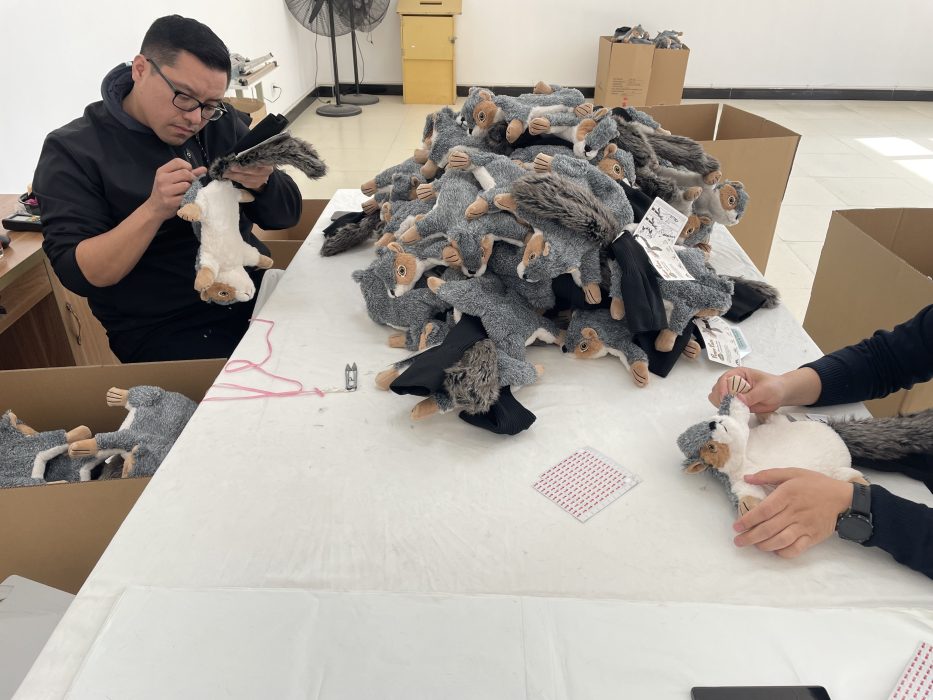
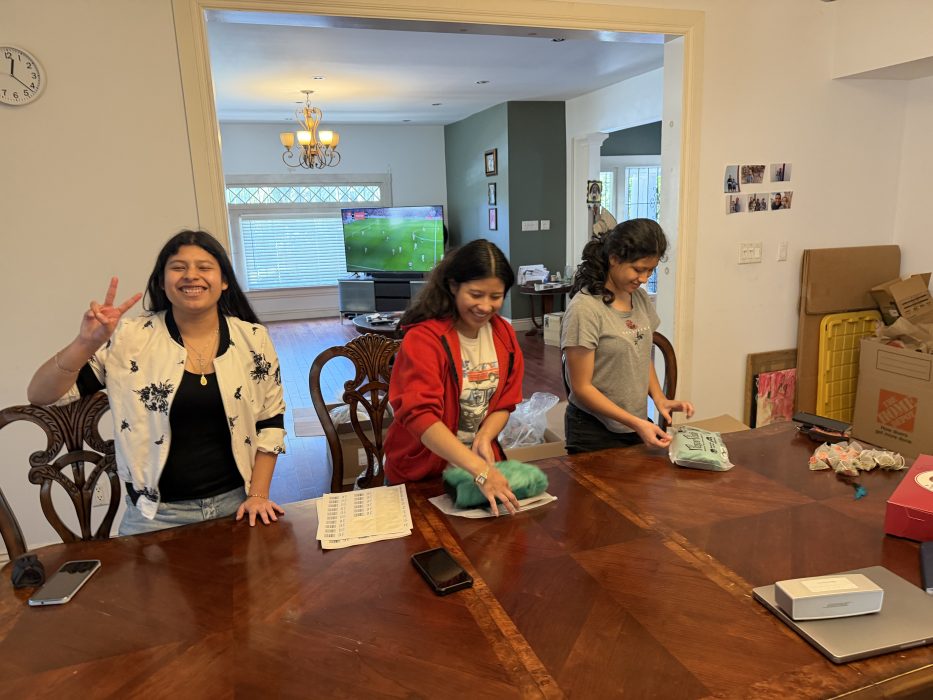
When the first production batch arrived from one factory, the brothers inspected every product by hand, with a quality team Erik set up out of their nieces, complete with written procedures that began with washing their hands, Saul says. After about 500 pieces, they brought in the rest of the family. The defect rate came to roughly 15%, the brothers recall, so they photographed the problems, sent a report to the factory’s quality manager, and told the factory they would show up in person to see the next run fixed. They bought the tickets, and by the time they arrived, everything had been fixed. The quality manager, whom the brothers now call Aunt Susie, became a close friend.
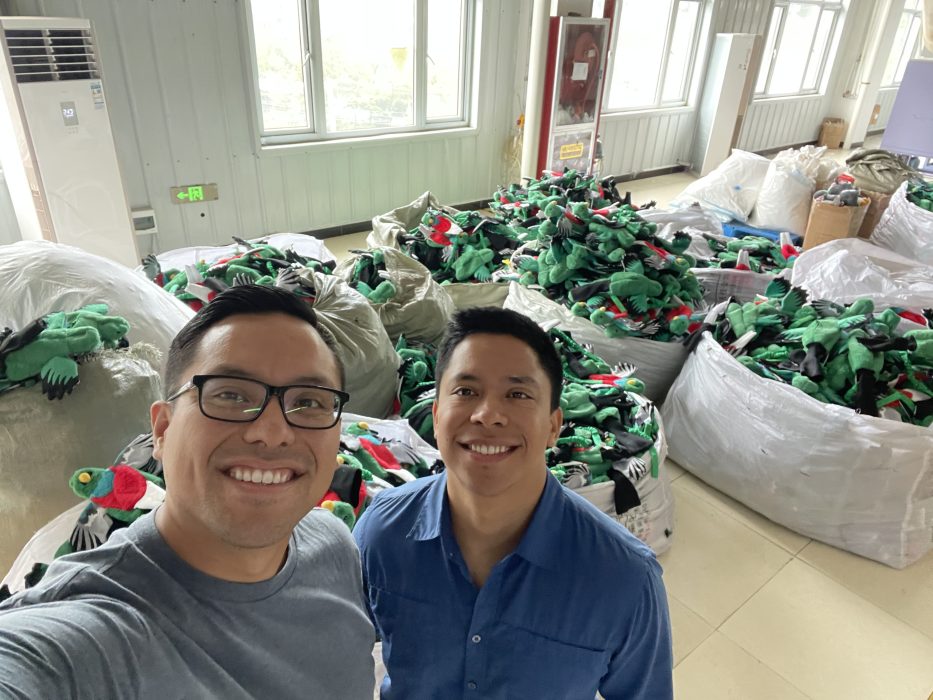
For Erik, the trip meant telling NASA that he was going to China to visit a poop bag factory. “I had to get a briefing on, like, looking out for Chinese spies,” he says. The directions the brothers got to that factory pointed them to the building next to the primary school. Several of the factories they work with have since told them that Milunova makes their most complicated product, Erik says, “because of how much we care about the details.”
Nine Million Views and Five Years of Waiting
After so much work, it’s hard to pinpoint the moment an idea actually becomes a productive business. For Erik, the brothers thought they’d made it when they launched their Stop and Go poop bags. A manufacturer in Washington State made the bags, and Erik assembled the first ones by hand while rewatching the Marvel movies ahead of the release of “Avengers: Endgame.” They posted the bags on TikTok, where the video passed 9 million views, he says. “I have people recognize me from work from our TikTok content, which was really, really strange,” Erik says.
It then took the brothers five years to figure out how to manufacture the bags, he says. “Little did I know that it takes more than just having a good idea to make it, getting it into the hands of people,” Erik says.
“For me, it was the first time I played with the toy with my dog,” Saul says. “It was just that moment of, it was all worth it. And that was my dream realized.”