
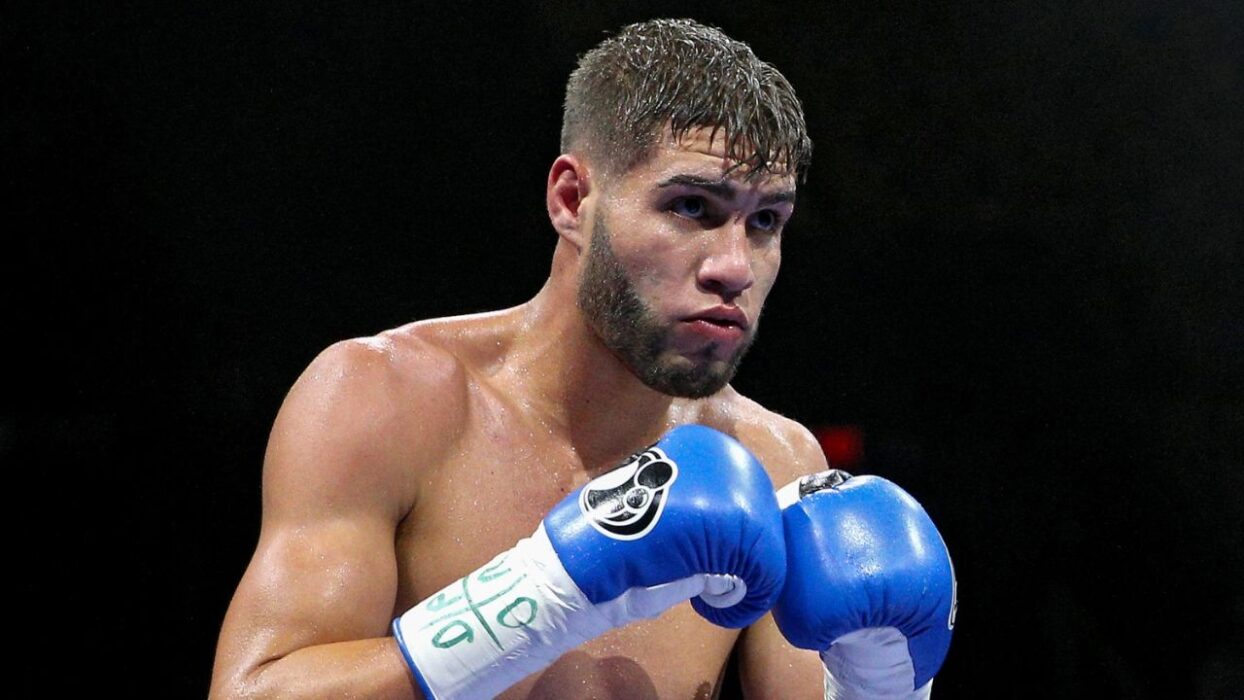
Remembering Prichard Colón, the Boxer Who Changed the Sport Without Ever Winning a World Title
Prichard Colón never won a world title. Nevertheless, in 2021, the World Boxing Council awarded him an honorary championship, along with the Green and Gold belt, which the organization said he “always deserved.” It is one of boxing’s stranger honors. It represents a title awarded not for what a fighter did inside the ropes but for what was taken from him there.
Colón died last week at 33, eleven years after the fight that ended his career and began the rest of his life. What happened in between is the reason boxing looks at rabbit punches differently today than it did in 2015.
A Prodigy From Puerto Rico
Colón was born in Florida in 1992, but his family moved to Puerto Rico when he was ten. On the island, he became an up-and-coming fighter. He won five national amateur titles across two weight divisions and a gold medal at the 2010 Pan American Youth Championship, all before he turned 20. Then, Colón chased a spot on the 2012 Olympic team in London, losing in the quarterfinals at a pre-Olympic qualifier in Brazil. He eventually turned professional in 2013.
The early results suggested the Olympic near-miss had cost him nothing. Colón won his first 16 professional fights, 13 of them by knockout, including a fourth-round stoppage of former WBA champion Vivian Harris in September 2015. He was 23, undefeated, and a month away from the fight that would mark the rest of his life.
The Fight That Changed Everything for Prichard Colón
On October 17, 2015, Colón faced Terrel Williams at EagleBank Arena in Fairfax, Virginia, in a super welterweight bout. By the seventh round, Williams was landing punches to the back of Colón’s head. These rabbit punches are illegal under boxing rules, and the referee deducted a point. Colón kept fighting. He was knocked down twice in the ninth round while, according to Al Jazeera, complaining of dizziness.
When the round ended, his own corner made a costly miscalculation. Believing the fight was over, they removed his gloves. By the time they realized there was another round left, too much time had passed, and Colón was disqualified.
It was the only loss of his career. Colón needed help walking back to his dressing room. His mother, Nieves Meléndez, asked him how he felt. “Mommy, I’m dizzy, I cannot see,” he told her, Nieves later recalled. Once inside the room, he began vomiting and lost consciousness. He was rushed to Inova Fairfax Hospital, where doctors found a subdural hematoma and performed emergency surgery to relieve the pressure on his brain.
221 Days, Then a Decade More
Colón spent 221 days in a coma. While he survived it, the injury left him in a persistent vegetative state. He was unable to walk or talk, requiring round-the-clock care for the rest of his life. His parents, Nieves and Richard, who had also been his trainer, became his full-time caregivers. “My life has changed, and it’s all about taking care of him,” Nieves told The Washington Post in that same 2017 interview, describing a routine built entirely around a son who could no longer speak for himself. “You don’t know what will happen tomorrow,” she said.
In 2017, Colón’s parents filed a lawsuit seeking more than $50 million in damages against the ringside doctor and promoters connected to the fight. A Virginia state investigation the year before had reached a more complicated conclusion, finding that while Colón’s condition was tragic, there was no single action egregious enough to place the blame on one person. According to the BBC, the lawsuit remains unsettled nearly a decade later.
The Rules Boxing Rewrote Because of Prichard Colón
What Colón’s case did accomplish, unambiguously, was change the sport’s own rules. The WBC has said Colón’s injury “inspired” it to reinforce its safety regulations, adopting zero tolerance for blows to the back of the head and adopting stricter medical protocols “to protect the integrity of all fighters around the globe.” It is a legacy Colón never asked for and could not have chosen, but it is a real one: every fighter now protected by tighter enforcement against rabbit punches is protected, in part, because of what happened to him in Fairfax.
The honorary championship followed in 2021. The WBC called him an “icon of bravery” and the “Champion of the Heart,” language that boxing organizations reach for often and rarely mean as literally as they did here. In the same statement, the organization said Colón had fought “with the elegance and pride of carrying Puerto Rico’s flag to the greatest heights.” The WBO described him as “a warrior until the very end,” whose “greatest fight became a testament to resilience and the unwavering love of his family.” The WBA, in its own tribute, wrote that his story left the sport “profound lessons about life, resilience, and our sport.”
A Sad Farewell
Richard Colón announced his son’s death on Facebook last week. “Good morning, my people,” he began. “I regret to inform you of the departure of my son Prichard from this earthly world. Now he is in a better world.” He went on: “I did everything possible to fulfill his wish, his dream of bringing him on vacation to Puerto Rico as he so desired, but it couldn’t be done. Thank you for so many years of love and prayers. As much as you can, please keep us in your prayers.”