
Where Would We Be Without Latinos? Five Ways La Cultura Is Shaping the U.S. and World
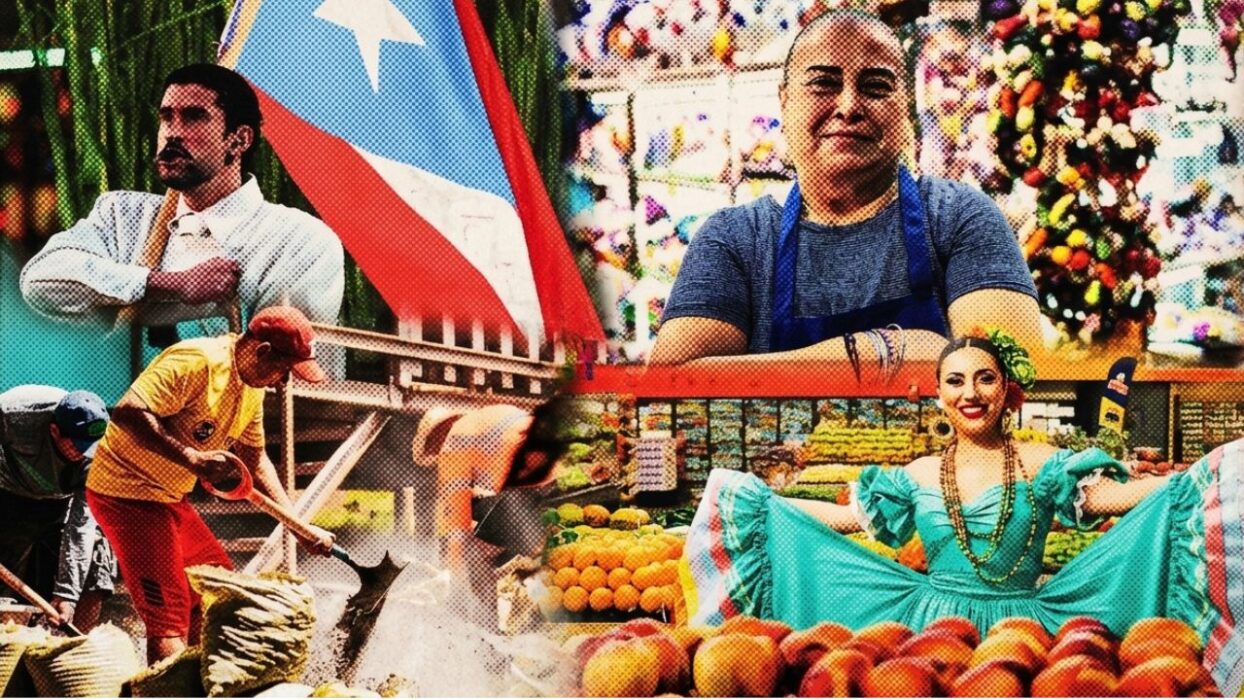
As our National Heritage Month begins, we’re reminded of how Latino culture has been a pervasive force of resilience, love, and sazón long before the month was commemorated in 1988, when the nation formally recognized Latin American history, culture, and contributions in the United States.
However, Latino contributions go far beyond the United States.
Our Names Are Many. Yet, We Share a Similar Story
Hispanic, a term coined in the 19th century to identify descendants of Spaniards, was later used in the 1970s U.S. Census to identify Spanish-speakers and those with Spanish surnames. Latino, a term also popularized in the 19th century, first emerged after independence from Spain to identify commonalities among colonies that no longer wished to identify with their colonizer.
Dating as far back as the history this country was founded on, Latin Americans in the U.S. have been subject to mass deportations, immigration witch hunts, racism, and disparities in representation amongst regional leadership and nearly every workforce industry. Nonetheless, Latino contributions to the economy, culture, and the shaping of history have never waned.
Hispanic. Latino. Boricuas. Chicanos. Chapines. Latinx. Latine. The words to identify us are many. Some better than others. Some too vague. Some truly encapsulating. Some that do not do our identity justice.
Still, as much as Latin culture’s resilience and sazón came long before the 1988 Hispanic Heritage signing, the culture’s growing wings touch every country around the globe, further proving it will remain until the end of time, regardless of obstacles that attempt to stop it.
Here are five ways Latinos are driving forces in population, economic output, food, music, and culture at both the national and global levels.
1. For the first time in history, 1 in 5 Americans is Latino
New data from the Latino GDP Project in 2025 showed that 1 in 5 Americans was Latino, a first in U.S. history. With the total U.S. Latino population estimated to be more than 68 million, the Latino labor force was the single strongest growth recorded by researchers, at 5.5.% last year, 4.2 percentage points stronger than the non-Latino labor force.
“Time and time again, we find that hard work, self-sufficiency, optimism and perseverance are the characteristics that underlie the strength and resilience of U.S. Latinos,” said Matthew Fienup, executive director of the Center for Economic Research & Forecasting at Cal Lutheran.
Population growth among Latinos also continues to skyrocket, currently 5.8 times faster than among non-Latinos, underscoring how rapidly the community continues to grow. Despite Latinos suffering a higher mortality rate during the COVID-19 pandemic, the number of births and population growth continued to outweigh deaths, with a cumulative population increase of 3.2 million from 2020-2024 compared to the 1.3 million decline of non-Latinos.
2. Economic output so big, Latinos could be their own country
With the U.S. Latino GDP hitting 4.1 trillion in 2025, it became the world’s fifth-largest GDP, larger than India’s entire economy. In 2024, the U.S. Latino economy hit 4.4 trillion. If the Latino economy were a single country, it would be the world’s fourth-largest economy.
The Latino GDP Project published eight consecutive reports that reveal and continuously confirm that the strength of the U.S. economy is directly tied to the Latino labor force.
“The Hispanic-Latino population is a driving force when it comes to the growth of our economy and the strength of both our labor force and human capital.” Said Raul Anaya, President of Bank of America Greater Los Angeles.
The numbers continue to suggest there is no economy without Latinos.
Matthew Fienup, executive director of the Center for Economic Research & Forecasting at Cal Lutheran, said: “By supporting this population, we believe these same characteristics will continue to drive growth in the overall U.S. economy for years to come.”
Perhaps to understand our economy, we must understand Latinos. To support America’s future, we must support Latinos.
3. Global output of Latin music
Latin music has long gone far beyond our carne asadas and family parties and into the world’s radio airwaves. However, the global reach of our culture’s diverse music has surged over the last decade. According to the Recording Industry Association of America (RIAA), in 2025, Latin music’s annual U.S. revenue reached 1 billion dollars wholesale, marking the tenth year of growth of the U.S. Latin market.
“It’s great to see new generations discover and build on the sounds I grew up on in Miami, taking music to new places and breaking down walls between formats, services, genres and styles so more fans than ever can experience the lure of Latin music.” Said Rafael Fernandez Jr. of RIAA.
From reggaeton’s beginnings in Puerto Rico’s underground to a current worldwide sensation, regional Mexican music’s popularity in the pueblos to now a growing popularity on international charts, and salsa rhythms birthed in Cuban parties now beloved by nations globally, Latin music has overwhelmingly affected the hearts (and perreo) of citizens of the world.
In 2023, Peso Pluma and Eslabon Armado’s “Ella Baila Sola” reached No. 1 on the Billboard Global Top 100 Charts.
Karol G’s historic Coachella performance as the first Latina to headline the festival was matched by Los Hermanos Flores, who also became the first Salvadoran band to perform there. The iconic Bad Bunny Super Bowl Halftime Show garnered a record-breaking 4.1 billion views in just 24 hours across television, social channels, and YouTube worldwide. Even Condé Nast, a popular travel magazine, noted that Latino music’s global popularity has increased travel to Latin America.
When Spotify turned 20 this year, the platform delivered a list of most-streamed albums of all time with none other than Bad Bunny’s Un Verano Sin Ti at number one. Benito’s unapologetically Puerto Rican sounds, cultural cariño, and Caribbean homage are what keep the artist’s musical success a triumphant symbol for all Latino loudness.
“I think it really showed how seriously he takes representing Puerto Rico, and that’s part of the reason he’s so huge because everyone resonates, especially Latinos, with that profound love of a homeland.” Said Dr. Vanessa Diaz, a professor of Chicano and Latino studies at Loyola Marymount University, on The De Los Podcast.
That homeland, ringing with the sounds of Latin music, is what’s inviting everyone, regardless of ethnicity or geographic location, to the global party, raising the question: how much further is the future of global music moving away from being English-centered and toward being culture-centered?
4. Global pervasiveness of Latin food
Tacos. Tamales. Arepas. Empanadas. Pupusas. Ceviche. Sancocho. The list of tasty Latin dishes popular throughout homes across the country and beyond is exhaustive.
There’s no doubt that Latin food goes straight to our bellies and straight into the hearts of all cultures. Mexican street food vendors have shaped California’s culture and food landscape. That hot dog outside of the concert venue or club, the paletero/elotero in your neighborhood, or the taquero near the highway all contribute to the estimated 10,000 roadside food vendors and more than 4,000 food trucks in the Greater Los Angeles area alone.
From working-class taquerias in 1800s Mexico to your favorite vendor outside a shopping center today, tacos show how pervasive Latin food is as a culinary favorite worldwide. In the early 1900s United States, Mexican food was considered the food of the working, lower class. Now, Michelin-starred restaurants serve Mexican dishes, and fusion restaurants combine flavors from other cuisines such as Korean pork belly tacos.
Like Latin music, Latina writer Juliana Galassi believes the cuisine’s popularity is also driven by feeling: “… the warmth and spirit of the culture in every mouthful.”
Like our favorite musicians, chefs such as Brazilian Alex Atala and Peruvian Gastón Acurio have popularized their cultures’ traditional dishes, gaining notoriety as internationally beloved storytellers through cuisine.
Ana Sofia Sada Cervantes, assistant professor of culinary arts at the Culinary Institute of America, cites Latin American cooking as significantly responsible for introducing indigenous ingredients, globalizing popular dishes, and encouraging multicultural fusions as some of many ways Latin food has shaped culinary culture around the world. Hence the aforementioned Korean pork belly tacos.
“Chefs all around the world have taken inspiration from Latin America, from flavors, ingredients, and techniques, and have used them in modern-day dishes in their restaurants. The global food scene has definitely been impacted by the uniqueness of Latin ingredients, dishes, and cooking methods that will continue to inspire chefs and food aficionados around the world.” Said Sada Cervantes.
5. Joy and dance as resistance
In 2025, the U.S. Supreme Court ruled 6-3 that ICE agents have the right to stop, question, and detain people based on accent, appearance, and language.
According to the Deportation Data Project, close to 9 in 10 Latinos without a criminal record were deported from February 2024 to September 2025. In July 2026 alone, U.S. Immigration and Customs Enforcement arrested nearly 50,000 people, a record for the second Trump administration.
In the midst of current societal impacts on Latino migrants, their language, and culture, the numbers show that la cultura continued to thrive and grow. Bad Bunny’s San Juan residency brought joyful disruption amid great protest and disillusionment in Puerto Rico’s ongoing war over beauty, water rationing, political turmoil, severe drought, and blackouts. Nonetheless, Benito’s Yo No Me Quire Ir de Aquí residency prioritized what Latinos have a special knack for: dancing with joy through the suffering.
His DeBÍ TiRAR MáS FOToS would go on to become the first Spanish-language album to win The Academy’s Album of the Year. “La Rebelión” by Joe Arroyo and La Verdad, one of the most famous salsa songs that Latinos and non-Latinos love to dance at parties around the world, is a song about colonization, racism, and violence — but we dance anyway. It is our story, our history, expressed in the joyous movement of our hips, the music too good not to move to.
Migrants at the U.S.-Mexico border behave similarly, rebelling against the torturous waiting for the American dream by engaging in dance parties and dance classes at Comunidades Cultural and Migrant Shelter in Tijuana.
I recently went to a funeral of a family member who tragically died at such a young age. At the after-party, there was a banda. We joined the family in dancing, singing, crying, laughing, and dancing some more until we were all out of breath. It was one of the most healing experiences I have been a part of.
Embracing the melting pot
Mina Lora, founder of the social justice nonprofit People’s Theatre Project, gave a TED Talk on the injustice she suffered, leading to her greatest successes as a Latina immigrant in New York City, naming sancocho not just as the famous Dominican stew that simmers together different flavors, but also as a metaphor for the melting pot we Latinos can live by, celebrating our cultural roots loudly in America without washing them down through assimilation, but beautiful fusion instead.
“We tell stories from the seemingly mundane to the devastation that follows a deportation of a parent, everyday struggles of inequitable school and housing, the impact of gentrification, and how dangerous racial profiling is. Through art, music, poetry, dance, and dialogue, we can tell these stories of belonging. We do them in a way that honors our struggles but celebrates the immovable joy of our identities.” Said Lora.
The aforementioned statistics point to just how much the global market profits off of consuming Latino labor, culture, and art all while mass deportation numbers increase and discrimination continues to shape the political landscape.
Nonetheless, that same labor, culture, and art make being Latino feel beautiful and unstoppable. We hold acknowledgment of injustice in one hand with joy in the other, a balancing tension that keeps the Latino community not just surviving but thriving.
To understand how to make the U.S. great, and the world even greater, we must remember that Latinos help shape that greatness and are here to stay.