
Italy Returned 27 Pieces of Mexican History. Here’s What Came Home
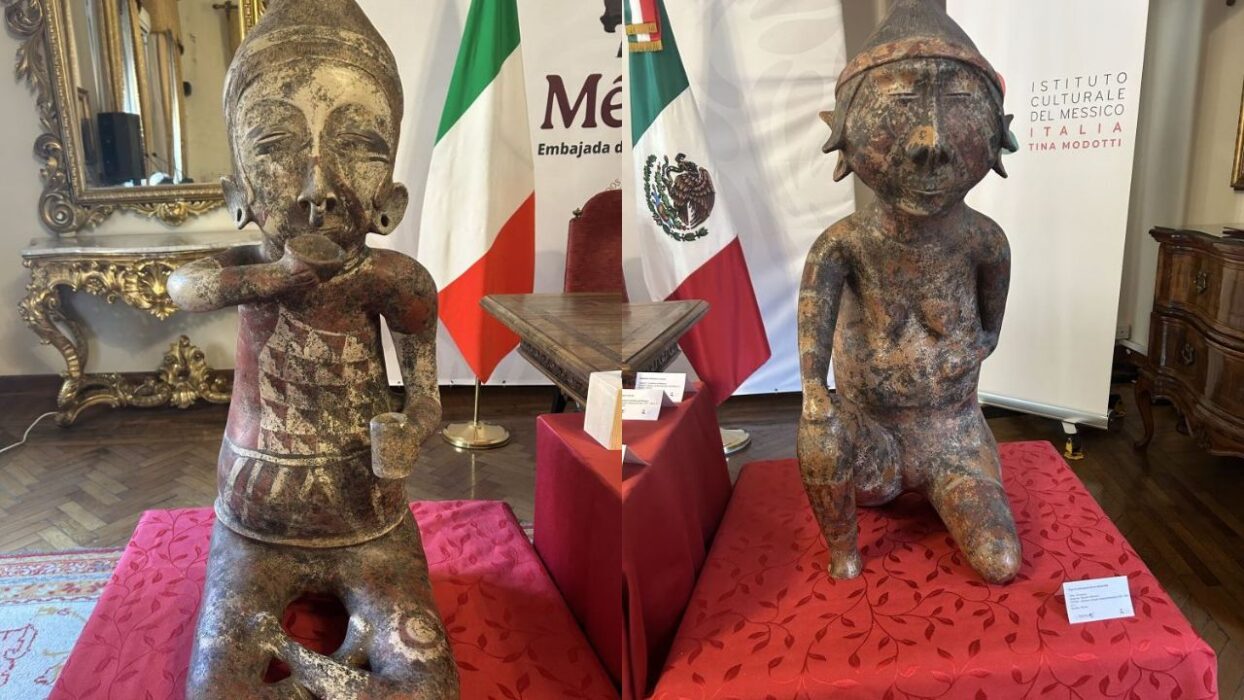
At a ceremony at the Mexican Embassy in Rome last Thursday, Mexico recovered 27 pieces of its history. The pieces included three sculpted Teotihuacan heads that had been sitting in a private estate in Milan. Two Maya terracotta figurines seized in Rome. And three fossil fish from the Late Cretaceous, intercepted in a postal shipment arriving in Venice. They had all left Mexico illegally, through online auctions, unlicensed private collections, and postal shipments. And found their way into Italian hands. Italy’s Carabinieri cultural heritage unit found them and ensured the pieces would make their way back home.
For his part, Mexico’s ambassador to Italy, Genaro Lozano, received the objects from Brigadier General Antonio Petti of the Carabinieri’s Cultural Heritage Protection Unit, known as the TPC. “These pieces represent the living history of Mexico,” Lozano said during the ceremony. Their value, he made clear, lies in “memory, justice, and recovering and keeping history alive.”
How Italian Investigators Traced Mexico’s Stolen Heritage Across Six Cities
Italian investigators recovered the 27 artifacts through six separate investigations, in cities stretching from Florence to Venice to Monza. Each one tells a different story about how Mexico’s pre-Columbian heritage ends up scattered across Europe.
In Florence, Carabinieri acted on a tip from Peruvian authorities who had flagged a suspicious listing on an e-commerce platform. That lead brought investigators to a private home, where they seized 16 illegally imported pre-Columbian pieces. In Milan, officers conducting an inventory of a private individual’s estate found the three Teotihuacan heads. They were sculpted in the Central Mexican Plateau between 200 B.C. and 650 A.D.
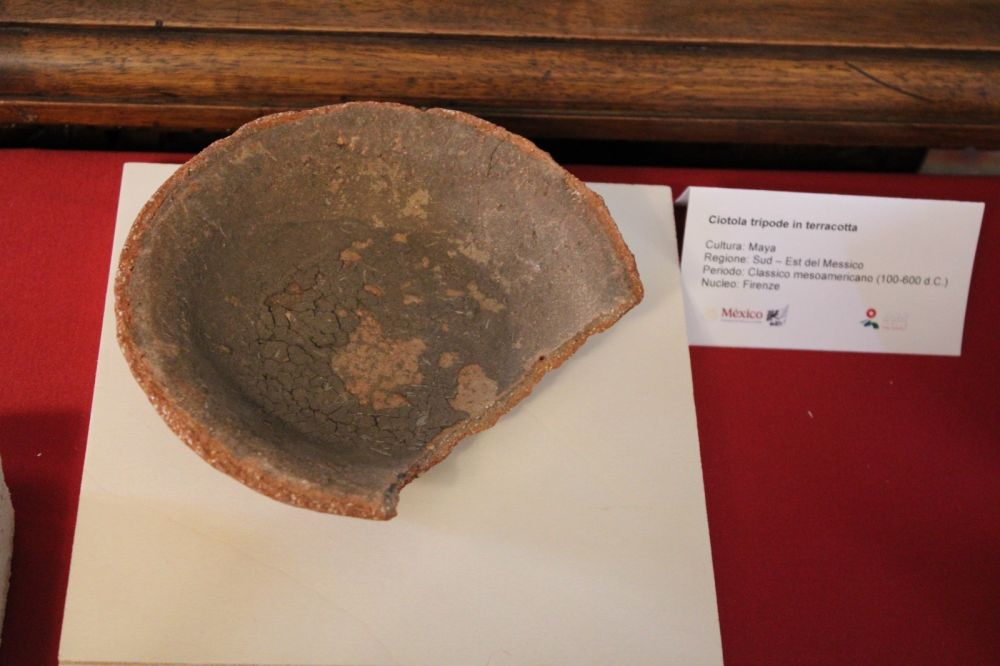
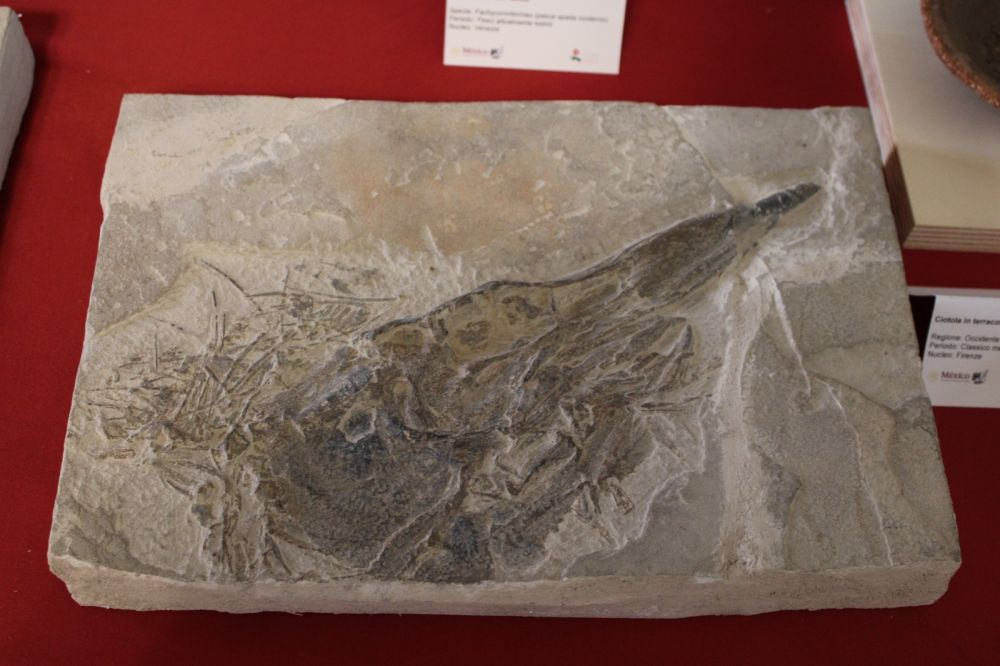
Similarly, someone surrendered a tripod bowl voluntarily in the nearby city of Monza. Similarly, in Rome, two Maya terracotta figurines from the Early Classic period. They were dated between 100 and 400 A.D. and were seized in a separate investigation into the illegal antiquities trade. And finally, in Venice, Carabinieri agents intercepted a postal shipment from the Mexican state of Nuevo León containing three fossilized fish from the Late Cretaceous period. General Petti described the full collection as being in an “absolutely excellent state of preservation.”
All 27 objects are classified by Mexico’s National Institute of Anthropology and History (INAH) as archaeological monuments and the inalienable property of the Mexican nation. Now, they will travel to Mexico, where authorities will decide whether to display them in national museums or return them to their regions of origin.
Italy’s Cultural Heritage Police Are One of the Best in the World
The Carabinieri TPC is Italy’s dedicated stolen art squad, with a network of international partnerships that has made it a key player in the global fight against art trafficking. Its collaboration with law enforcement across the Americas has intensified in recent years. In 2017, the TPC signed a formal agreement with Mexico’s Federal Police to provide training and strategic advice on combating the illicit trade of cultural property.
The Florence investigation illustrates how that network operates in practice. Peruvian authorities spotted the suspicious listing first, passed the information to Italian officials, and the Carabinieri made the seizure. Vito Polizzi, an archaeologist at Palermo University whose research focuses on archaeological cooperation between Italy and Mexico, told The Art Newspaper that Mexico’s vast territory and the sheer number of its archaeological sites, spanning Maya, Aztec, Zapotec, and Totonac heritage, make it exceptionally difficult to prevent looting, allowing theft and illicit trafficking to remain widespread. The Florence investigation is a sharp illustration of how that trade has migrated online.
Mexico Has Been Doing This Systematically
These 27 pieces are not a one-off. They are part of a deliberate, sustained campaign. The Mexican government’s “Mi Patrimonio No Se Vende” initiative, known in English as “My Heritage Is Not for Sale,” led by the Ministry of Culture, the Ministry of Foreign Affairs, and INAH, has driven a coordinated international effort to identify and repatriate stolen artifacts wherever they surface.
Mónica de la Mora Kuri, director of the Tina Modotti Cultural Institute of Mexico in Italy, attended the ceremony in Rome and put the scale of the effort in perspective. Under the administrations of President Claudia Sheinbaum and her predecessor Andrés Manuel López Obrador, Mexico had recovered a total of 17,878 works. “The strategy of Sheinbaum’s administration is very clear,” de la Mora Kuri told The Art Newspaper. “One of the mottos of this government is ‘our cultural heritage cannot be sold.’”
Italy has been one of Mexico’s most productive partners in that work. Since 2013, Italy has returned more than 840 cultural objects to Mexico, according to INAH. The Italian embassy in Mexico City puts the total closer to 1,000. In 2024 alone, Italy returned a separate batch of 101 artifacts, including stone statuettes and Aztec ceramic pieces.
“The return to the Mexican people of precious and unique artifacts, which were previously believed to have been lost, restores a sense of identity to the places from which they had been unlawfully taken,” the Carabinieri TPC said.