
This Filipino American History Month, We Remember the Farmworkers Who Started the Strike That Changed Labor History
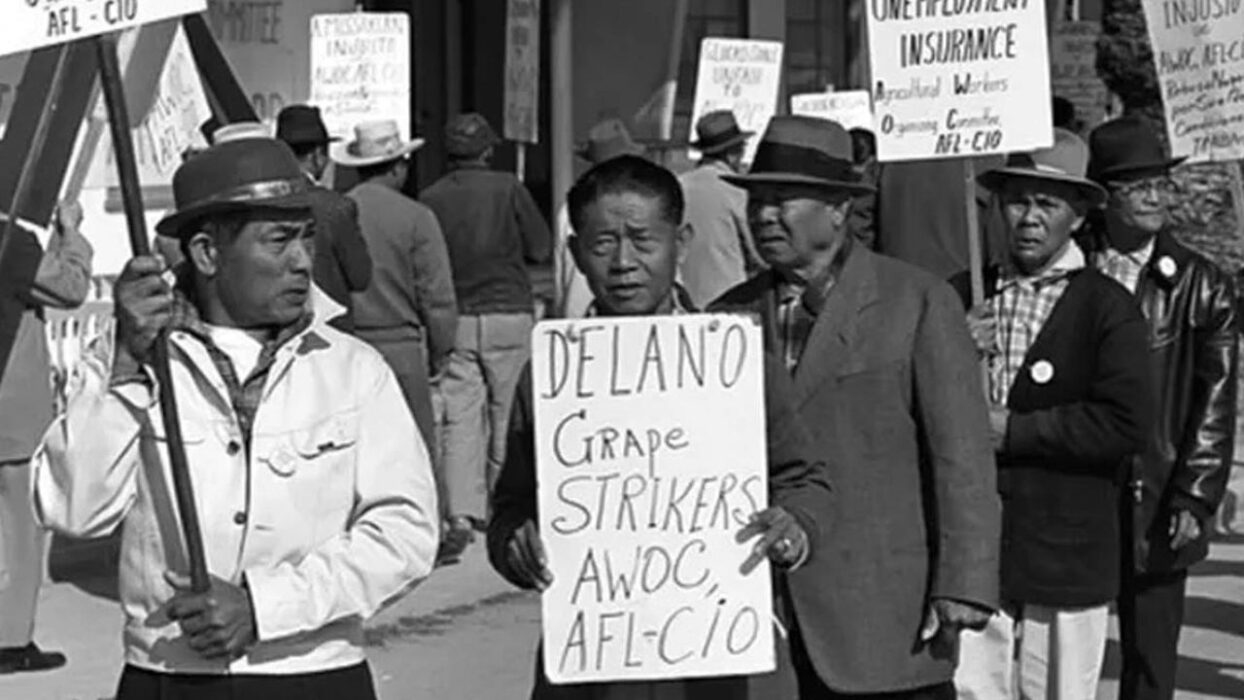
In March, at the meeting where Los Angeles supervisors moved to rename César Chávez Day Farmworkers Day, Johnny Itliong stood up to speak about his father. He told the room that Chávez had tried to “erase the history” of how the Delano grape strike began. “I’ve spent my whole life speaking up for my father and his generation of men and women who fed America,” the 60-year-old said, according to the Associated Press. His father, Larry Itliong, was the Filipino organizer who on the night of September 7, 1965, gathered grape pickers inside a community hall in Delano, California. There he led them to vote for the strike that would later make Chávez a household name.
In Latino media, we have spent decades telling the story of Delano as our own, with Chávez and the extraordinary Dolores Huerta at its center. Maybe it’s time we give honor where honor is due.
Back in March, a multiyear investigation by The New York Times reported that Chávez had sexually abused young women and girls in the movement. Huerta, now 96, confirmed in a Medium post that she was among his survivors.
Several states, cities and counties have since renamed the March 31 holiday Farmworkers Day, the AP reported. And every one of us who printed Chávez’s face on a mural or a magazine cover has had to look again at what we chose to celebrate. In the same post, Huerta wrote that “the farmworker movement has always been bigger and far more important than any one individual.” And she’s right.
This October, during Filipino American History Month, that truth should reach the men who walked out of the vineyards first and, over four decades of strikes, built the alliance with our community that made Delano possible.
Filipino farmworkers had been striking for decades before Delano
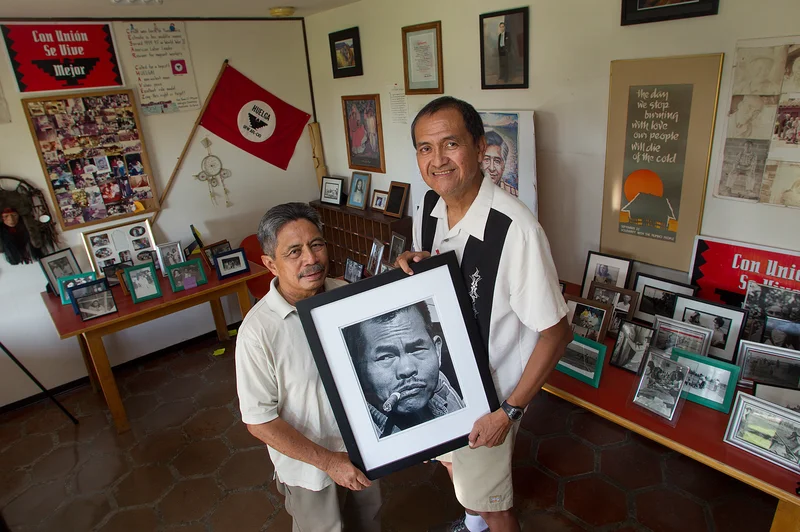
The men who struck in Delano belonged to a generation of Filipino Americans still called the manongs, from an Ilocano term of affection and respect that the National Parks Conservation Association (NPCA) says best translates as “older brother.”
Their journey began with imperialism.
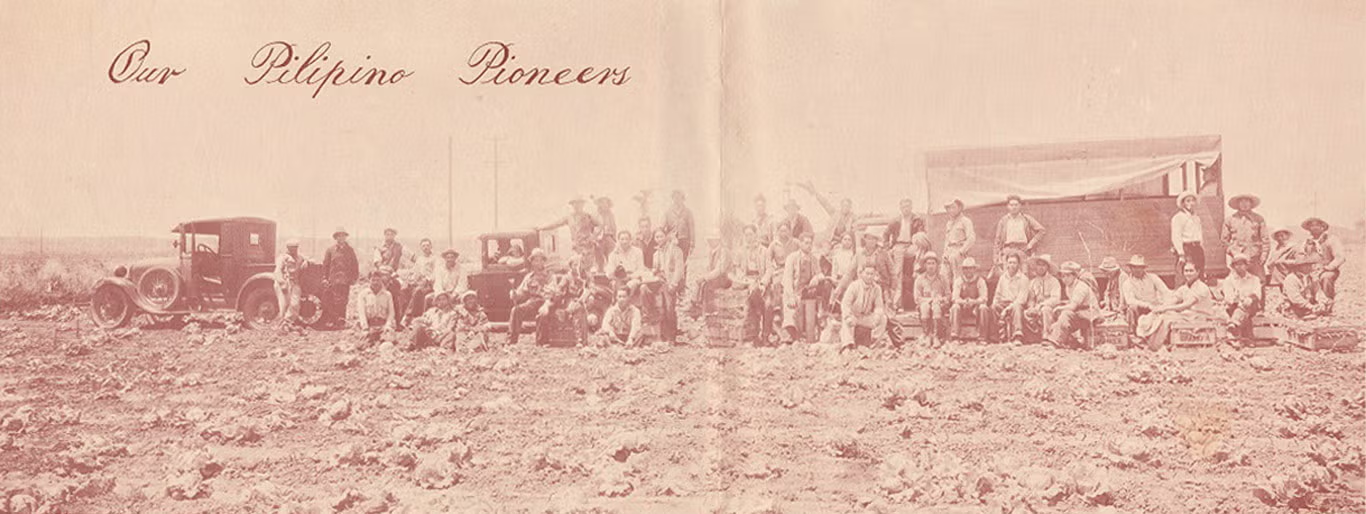
The Philippines became a U.S. territory after the Spanish-American War in 1898, making Filipinos non-citizen “U.S. nationals” who could enter the country without restriction. They filled the West Coast’s labor shortage after the 1924 Immigration Act barred other Asian immigrants. And more than 90% of those who came were male. Over 100,000 Filipino men arrived in the 1920s and 1930s alone, according to the NPCA.
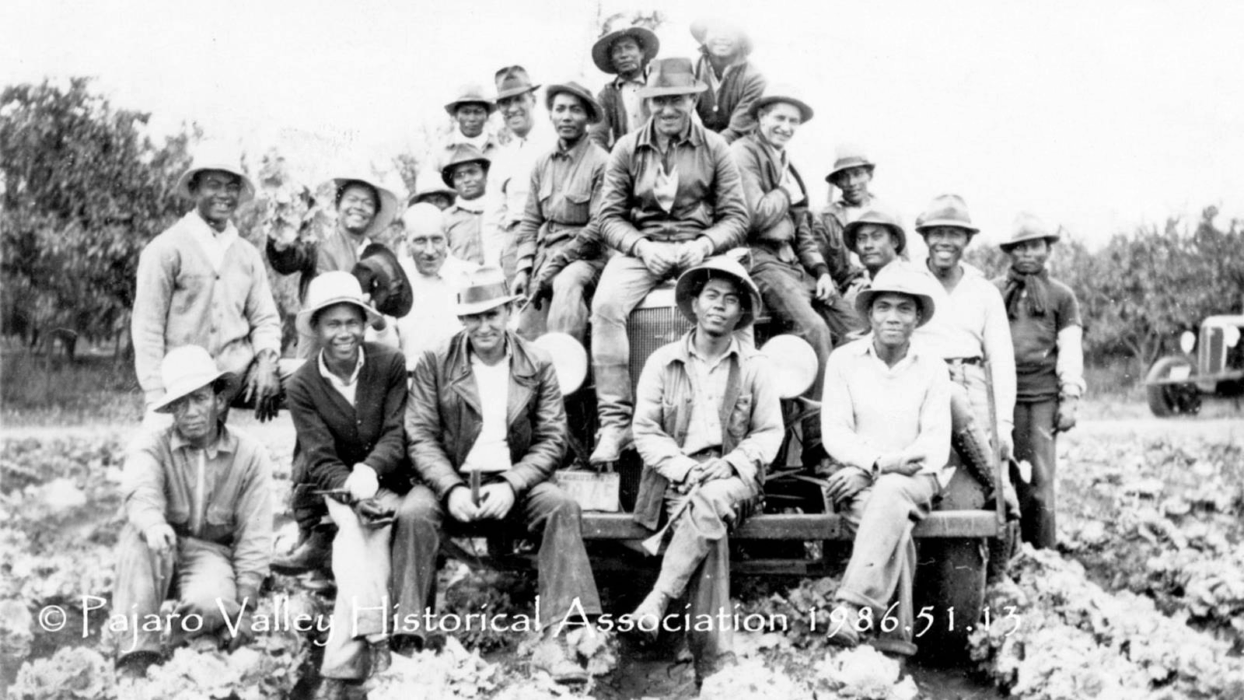
In the fields, they took the stooping, squatting work that many white laborers dismissed as “Filipino work” or “Mexican work.” They were often the lowest-paid group of all. Filipino men outnumbered Filipina women 14 to one, the NPCA notes, and laws barred them from marrying outside their race or owning land. When the Great Depression turned immigrants into scapegoats, a mob in Watsonville, California, dragged dozens of Filipino men from their homes in 1930 and beat them, and one was shot and killed. In total, at least two Filipinos were killed that year, Fermin Tobera and Aristo Lampky, during anti-Filipino riots that law enforcement supported.
Violence did not stop them from organizing. In Hawaii, Filipino sugar workers formed the Filipino Labor Union in 1919 under the organizer Pablo Manlapit. A year later, they joined Japanese workers in a six-month interethnic strike on Oahu, and the territorial government later deported Manlapit and other “labor agitators” to the mainland.
In California, the American Federation of Labor at first kept Filipinos and Mexicans out of its largely white unions. So the two groups struck together under the Cannery and Agricultural Workers Industrial Union, an affiliate of the Communist Party. About 140 interethnic strikes occurred across the state into the 1930s. Filipinos often initiated those alliances. By 1940, the Federated Agricultural Laborers Association, which grew out of Filipino labor groups and opened its ranks to Mexicans and others, counted more than 30,000 members, the largest interethnic union of its time. By the time Itliong reached out to Chávez in 1965, Filipino and Mexican farmworkers had been striking side by side for more than three decades.
Larry Itliong was already a veteran when he called César Chávez
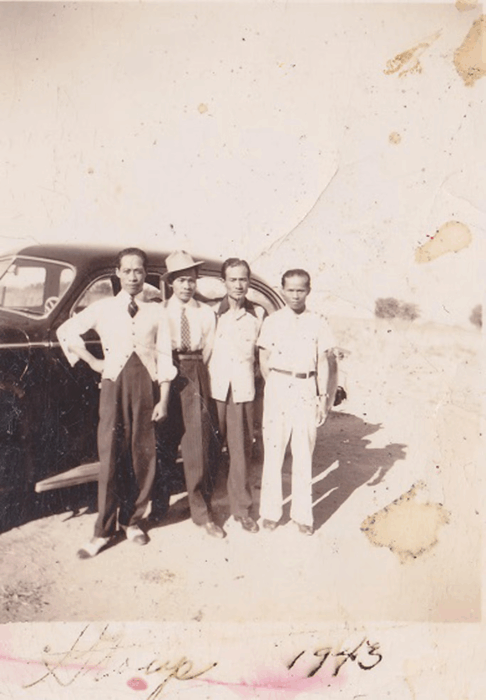
Modesto “Larry” Dulay Itliong was born on October 25, 1913, in the province of Pangasinan. According to the National Park Service, he left for the United States in 1929, at 15, with a sixth-grade education and the hope of continuing his studies. However, the Depression and pervasive racial violence against Filipinos ended that hope. Like many Filipinos of his generation, he “followed the seasons,” as the agency puts it. He worked one harvest after another along the West Coast, traveling as they did in crowded jalopies and on boxcars, and he spent summers in the salmon canneries of Alaska.
Shortly after he arrived, in 1930, he was among 1,500 farmworkers who walked out of the lettuce fields near Monroe, Washington, on strike. By 1933, he was organizing farmworkers in California’s Salinas Valley, and he also helped found the Alaska Cannery Workers Union. In 1948, he and Philip Vera Cruz joined the Stockton asparagus strike, which the Park Service describes as the first major U.S. agricultural strike after World War II. In 1959, Itliong was asked to organize for the Agricultural Workers Organizing Committee (AWOC), newly chartered by the AFL-CIO. The union was largely Filipino, the agency notes, but it included Mexican, Arab, Black and white workers. “They’re led by this really charismatic, veteran, seasoned, militant labor leader Larry Itliong,” Mabalon told NPR in 2015, describing the workers who would walk out in Delano.
The Delano grape strike began inside Filipino Hall
In May 1965, Filipino grape pickers in the Coachella Valley struck and won $1.40 an hour, the rate once paid under the expired bracero contracts, according to accounts of the strike. When the harvest moved north to Delano, growers offered $1.20, below the federal minimum wage, and the strikers demanded at least the minimum, the AP reported. On the night of September 7, the AWOC’s members gathered at the Filipino Community Hall and voted to strike.
“The next morning they went out to the vineyard, and then they left the crop on the ground, and then they walked out,” Mabalon told NPR. According to the Department of Labor, Itliong led more than 1,500 Filipino farmworkers against 10 vineyards. Today the hall is a community center, but to Roger Gadiano, a longtime Delano resident who leads tours of the strike’s landmarks, “this is a shrine. I guess it’s our Selma. This is it!” he told NPR.
Itliong built his plan around the way growers had broken strikes for generations. He knew that if the Filipinos did not reach Delano’s Mexican farmworkers, employers would use each group as strikebreakers against the other. The growers did exactly that and hired Mexican workers to cross the Filipino picket lines. “These business structures were very effective in pitting different ethnicities against each other to break strikes,” Dennis Arguelles, Southern California director for the NPCA, told the AP.
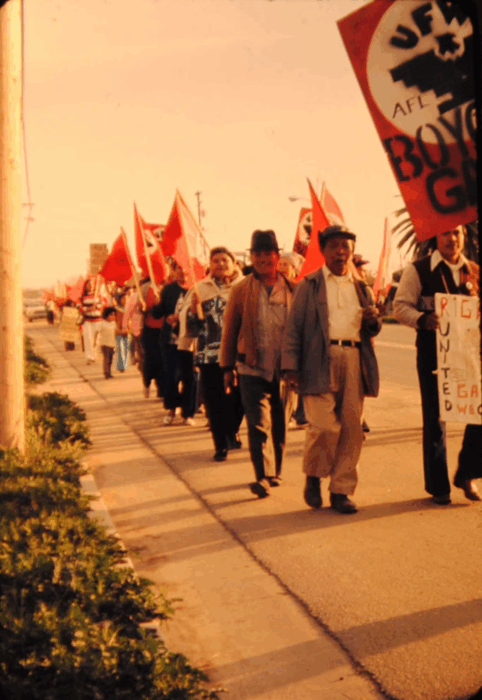
So Itliong went to Chávez and Huerta, whose National Farm Workers Association (NFWA) represented many of the town’s Mexican workers. Chávez hesitated, the National Park Service says, because he believed his members needed more time to organize, but those members wanted to stand with the Filipinos. On September 16, Mexican Independence Day, more than 1,200 people gathered at Our Lady of Guadalupe Church in Delano and voted overwhelmingly to join the strike, chanting “¡Huelga!” Some worried that night that the NFWA lacked the housing and meal support the Filipino strikers already had. The Filipinos ran their strike out of Filipino Hall, which NPR notes served as the movement’s hub in its first years.
Delano worked because Filipinos and Mexicans struck together
In August 1966, the two unions merged into the United Farm Workers Organizing Committee, with Chávez as director and Itliong as assistant director. Vera Cruz became vice president, a post the Park Service says he held for 12 years. Pete Velasco, Andy Imutan, Huerta and Gilbert Padilla all served in the leadership. “These two groups coming together to do this? That is the power in the Delano Grape Strike,” Mabalon told NPR.
That power needed five years of picket lines, marches, and an international boycott of table grapes to win. On July 29, 1970, grape growers signed union contracts that, according to the NPCA, improved the lives of more than 10,000 workers. Anhelica Perez’s Latina grandmother and other relatives took part in the strike and the boycott. NPR reported that Perez is outraged that the history isn’t better known, because those Filipinos’ actions improved her family’s lives. “I’m extremely proud that Cesar Chavez was the right face at the right time, but a lot of the dirty work was already done,” she said.
The manongs lost their place in the union they helped build
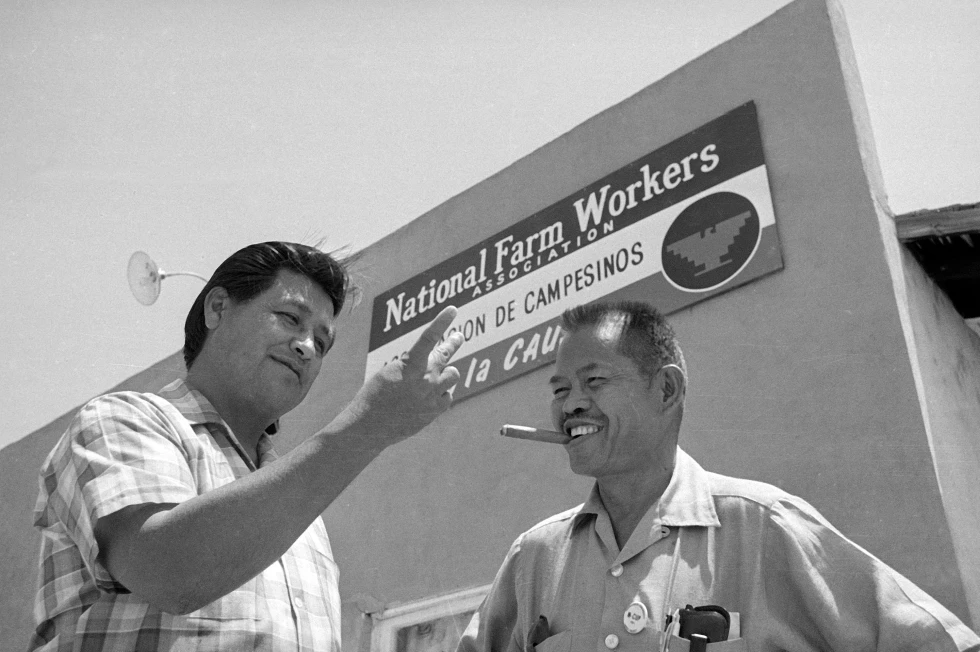
Once the unions merged, the curriculum says, Filipino members felt marginalized by the larger Mexican membership, and almost all the veteran Filipino organizers of the strike eventually left. The reasons were both practical and philosophical. According to accounts of the strike, the union’s new hiring halls favored settled workers and forced older Filipinos, who had spent their lives migrating with the harvest, to compete for jobs with younger workers. Meanwhile, the Park Service writes, Chávez saw the union as a social movement, while Itliong approached it as a traditional trade union. In 1971, Itliong resigned.
Vera Cruz stayed until 1977. That year, Chávez traveled to the Philippines as a guest of the dictator Ferdinand Marcos to receive an award. Vera Cruz had objected, citing the arrests of Philippine labor leaders and the ban on strikes under Marcos’s martial law, according to the Park Service, and he resigned, calling Chávez’s decision “the final blow.” The agency writes that the trip cost the union “the trust of many Filipino farmworkers.” Itliong died that same year in Delano, at 63. Three years earlier, the union finished Agbayani Village, a retirement home for aging Filipino farmworkers that Itliong helped establish, whose first residents were 57 men and one woman. Fred Abad, whom the NPCA describes as the last of the manongs, spent his final days there before he died in 1997.
Filipino farmworkers were written out of the story we tell
According to accounts of the film, the 2014 biopic Cesar Chavez gave Filipinos one speaking line and a few group shots. A year earlier, California lawmakers had passed AB 123 to place “a much greater emphasis” on Filipino American contributions to the farm labor movement, and they wrote into it that the story “has been greatly ignored by national and international media.” Melanie Retuda learned about the strike’s Filipino origins only as an adult in her late 20s. “I’d known of Cesar Chavez and Hispanics being involved,” she told NPR. “Being Filipino, it’s like, ‘Wow.’ Filipinos actually made an impact in the process. It makes me proud that they were involved.”
Honor where honor is due
Filipino groups canceled plans to march on César Chávez Day this year, the AP reported. Advocates want the holiday to center Filipino and Chicano farmworkers, particularly women, while acknowledging Chávez’s survivors, and at the Los Angeles meeting some proposed moving it to September 8, the day the Filipinos walked out. “There always seems to be a need to be like a main character,” Dillon Delvo, executive director of Little Manila Rising in Stockton, told the AP. “But the problem is that is not what a union is about.” For Arguelles, the upheaval opens a door that had stayed closed for decades. “Maybe this is our opportunity to tell a more accurate and comprehensive narrative of what took place,” he said.
What’s more, that narrative has to include the women. Vernadette Gonzalez, an ethnic studies professor at the University of California, Berkeley, told the AP that educators should honor the movement’s unsung heroes, among them the Latina members of the UFW who raised their families and prepared food for the meetings. “Nobody’s crediting them in the minutes of the meeting,” she said. “Who’s missing from the story? In the United Farmworkers movement, folks will say ‘It’s Larry Itliong and the Filipino farmworkers.’ But I would also say, ‘Where are the women?'” Huerta, who carried her secret for 60 years, is part of the answer.
California has marked October 25 as Larry Itliong Day since 2015, and in November 2024 the Department of Labor inducted Itliong, Vera Cruz and Velasco into its Hall of Honor. “In demanding fairness in the fields, they changed the course of history,” then-Acting Secretary of Labor Julie Su said at the ceremony. Latino media can do its part this October by putting their names beside Huerta’s, in our archives and on our murals, and by telling the strike in the order it happened: the Filipinos walked out first, and the Mexicans who joined them eight days later made it winnable.
Alex Edillor was 11 when his parents walked off the fields in Delano. Decades later, he told NPR that people today need to learn this history. “Not only is it a point of pride, it’s a point of fact,” he said. “Just understand that we stand on the shoulders of people who struggled before us.”