
Dopamine Sites Give You the High of Shopping Without Touching Your Wallet. But Do They Actually Work?
When VICE’s Luis Prada ordered ramen on a fake food-delivery site this month, he waited two minutes for a meal that did not exist. When the timer ran out, his “delivery driver” called, speaking in the generic text-to-speech voice you’ve probably heard a thousand times, to apologize for not being able to find his address. Then the driver apologized again, this time because the food he was “delivering” wasn’t real either, and hung up, Prada wrote.
Nobody got charged, and nobody got fed. And yet sites like this one, where you browse, add to cart, and check out without spending a cent or receiving a thing, have become wildly popular around the world, according to The New York Times.
Meet the dopamine sites.
So What Exactly Is a Dopamine Site?
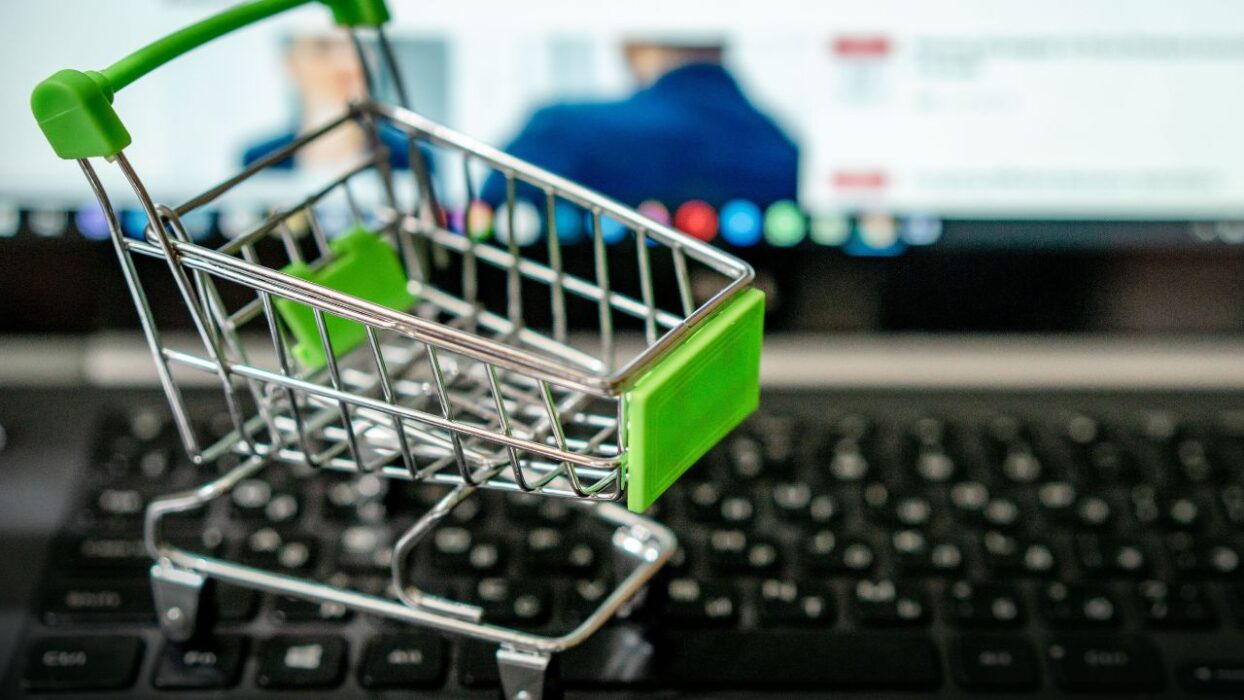
Named for the brain chemical associated with reward seeking, dopamine sites simulate indulgences like online shopping and ordering food, the Times reported. Users “browse, click, add to cart, checkout, and end with a zero balance,” as KTAL News in Shreveport, Louisiana, described it, getting “a hit of dopamine without the hit to their bank account.” Futurism called them “window-shopping reimagined for the age of doomscrolling.”
The Sydney Morning Herald’s Lauren Ironmonger spent an afternoon on a few of these sites, filling her basket with gold-foiled Nike Air Force 1s embossed with the Louis Vuitton logo, a Carhartt jacket, a Le Creuset Dutch oven and a Rolex she says was worth more than a year’s rent. At checkout, she typed in a fake name, a fake address, and a fake credit card number, was charged an 8% tax on money that didn’t exist, and received a tracking number for an order that would never ship.
And if you are strictly objective, this probably doesn’t make much sense. However, for one of those sites, Dopamine Shop, that’s precisely the idea. “Retail therapy without spending a cent,” its tagline reads.
How Dopamine Sites Went From a Joke in Seoul to a Global Trend
The trend began in South Korea this spring, according to the Times. In March, Seohyun Park, a 21-year-old mechanical engineering student in Seoul, built a fake food delivery site as what she called a “playful experiment,” after realizing she got less pleasure from eating the food she ordered than from reviewing menus and requesting a delivery. The site, whose name Park says best translates as Food Never Arrives, lets users place an order and then calculate how much money and how many calories they saved. “People began sharing it online and discussing whether it actually helped them resist ordering food,” Park wrote in an email to the Times, adding that the site gets around 10,000 visitors a month.
After Park’s site made headlines, others followed her lead. In India’s northwestern state of Rajasthan, two 26-year-old developers, Purvansh Parmar and Anshul Sharma, cited it as the inspiration for their own “dopamine kitchen,” which pairs fake deliveries with real recipes and has drawn more than 2.7 million views since launching in June, they told the Times. In the United States, a Microsoft developer built FakeHaul, a fake megastore modeled on Temu, as a personal project, and its footer explicitly labels it a parody, according to the Herald. Earth Day Canada launched Imaginair, a fake shop that highlights overconsumption and praises users for lowering their carbon footprint through pretend purchases, according to the Times and KTAL, while the developers of the Fake Eats app say they’re addressing emotional eating and the compulsion to order food when a craving hits, KTAL reported.
Why Pretending to Shop Actually Feels Good
Behavioral economists call it anticipatory utility, the good feeling generated by expecting something, which can equal or even exceed the pleasure of the thing itself, according to the Times. “The element of looking forward brings a lot of the pleasure, and we often crash after an event or feel let down,” Ravi Dhar, director of the Yale Center for Customer Insights, told the paper. Christopher Schmoutz, an assistant professor of pharmacology, toxicology and neuroscience at LSU Health Shreveport, told KTAL that it “struck me as funny that just the anticipation and picking out the items and adding them to the cart, those are all rewarding enough to keep people going back to these sites.”
“These sites take the enjoyable parts of shopping, browsing, choosing, and imagining, and remove the bill,” clinical psychologist Anastasia Hronis, author of “The Dopamine Brain,” told the Herald. “People have always window-shopped, so that isn’t new. But now the ritual has been turned into a digital experience, tapping into reward pathways in the brain that excite our desire for novelty and possibility.”
“I’ve been adding everything to online shopping carts and just … not purchasing,” one Redditor wrote in a thread about the trend. “It’s almost exactly the same feeling as retail therapy.” Another wrote that the fake food apps “show you how many calories you avoided gaining and cheer you on for not indulging,” calling it “the adult equivalent of being given a gold star and a pat on the back for self-restraint.”
Not Everyone’s Buying It, Though
“We’ve all lost our fucking minds,” one Reddit user wrote, while another suggested someone build a fake UPS tracking site where the package stays “out for delivery” forever, only for a third to reply, “It exists; it’s called FedEx Ground.”
The thrill of a simulation may fade when the mind trick becomes old, Lingguo Xu, a behavioral economist doing postdoctoral research on anticipatory utility at Canada’s University of Waterloo, told the Times. He also warned that simulating consumption “may lead to stronger cravings” and leave a person “bent on finalizing the eventual consumption to fix the anticipation machinery.” After her afternoon of fake shopping, Ironmonger wrote that she was “left wanting more” and that her “lust for stuff has become stronger.” Hronis called the experience “rarely nourishing” and compared the short-term thrill to blind boxes, gambling and porn. “The reality is that dopamine-driven behaviors often pull us away from the things in life that feel more deeply meaningful or satisfying,” she said. Some sites also borrow the hooks of other apps. Schmoutz pointed to prize wheels and random treasure chests, “mechanisms that keep you coming back, that keep you engaged with it,” he told KTAL.
Gary Mortimer, a professor of marketing and consumer behavior at the Queensland University of Technology, told the Herald that the sites could reinforce the very habits they claim to curb.
There is no research yet on the benefits of simulated shopping for curbing overconsumption, he said, while there is evidence that fake gambling sites can be a “gateway drug” to problematic gambling. Dopamine Shop even features a “buy it for real” button that redirects users to Amazon, though the links are often broken, the Herald found, and many of these sites carry disclaimers that user data may be collected and provided to analytics partners. Mortimer sees “a very savvy business model,” in which brands could learn which items, colors, sizes and price points people gravitate toward. “That’s great marketing data,” he said.
Consumer culture has absorbed its own satire before, as the Herald noted. More than a century ago, Elizabeth Magie created the Landlord’s Game to show the evils of capitalism, and it was later rebranded as Monopoly, an earnest rags-to-riches game and a staple of family arguments. Will Wright has said he created The Sims to satirize American consumer culture, and it became a staple of many millennial childhoods. Whether dopamine sites end up as a critique of the checkout button or its training ground is still an open question.
The Most Real Thing About Dopamine Sites Is the Community
Damta World, a dopamine site with nothing to do with shopping, was created last November by Seojin Ko, a 30-year-old developer in South Korea and a nonsmoker who had tagged along on occasional smoke breaks, according to the Times. (“Damta” is shorthand for “cigarette time” in Korean.) Users tap the screen to start a timed break, watch the ash fall to the sound of crackling tobacco and “whisper” messages that float briefly across the screen. About 150,000 people visit each month, Ko said. “Damta World has become a place where people can open up to random strangers about the difficulties they’re facing at work, at school, or just in everyday life,” she wrote to the Times, and some users now hang out in person.
Stanford addiction psychiatrist Anna Lembke, author of “Dopamine Nation,” told the Times that “dopamine sites are essentially equivalent to digital near beer,” but she also called them a “creative” response from young people unhappy with parts of their digital lives. In her field’s terms, the sites work as a “self-binding mechanism,” a way to limit habitual behavior, and they may also raise self-awareness and ease loneliness by providing community.
An internet designed to make us buy has trained us so well that pretending to buy now feels like a treat, and the healthiest part of the whole phenomenon happens offline. “Go out and do something with a friend,” Schmoutz told KTAL. “Maybe it’s kick a soccer ball around. […] go for a walk. Maybe it’s just having a laugh and a beer. Whatever it is, try to connect with somebody else.”