
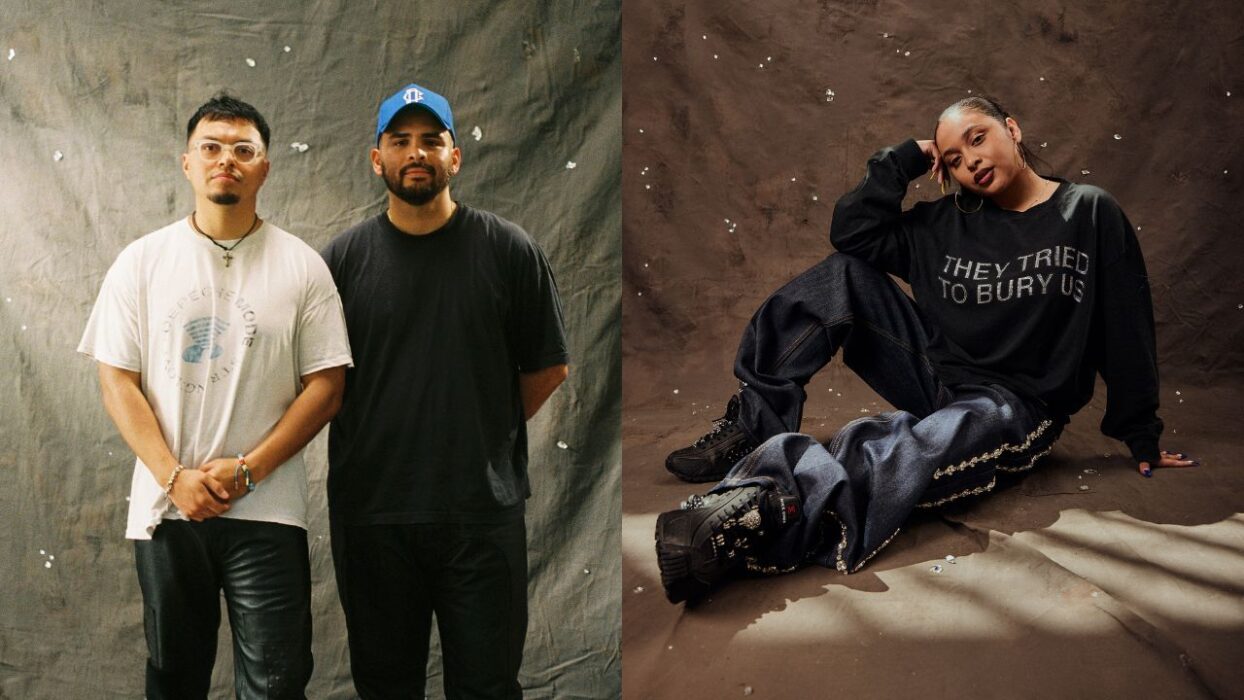
How DECIERTO Is Remaking Luxury Streetwear Through Immigrant Stories
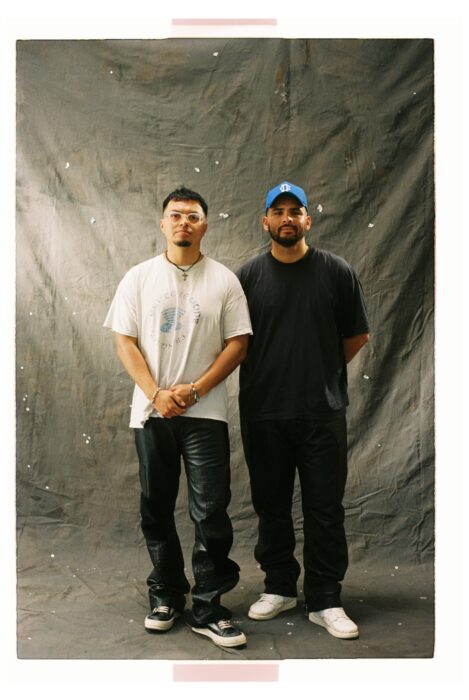
Ask Eric Cachua what luxury means, and he won’t mention Italian wool or custom embroidery, even though his brand, DECIERTO, could easily work with both. He’ll tell you about his parents, who had neither, but who had the ability to dream. “The only luxury that they had was that they were able to dream,” he says. “They didn’t have money or cars. They didn’t have the funds to buy nice clothes. The luxury they had was to dream.”
Now, in his mid-thirties, Cachua has the resources to chase those dreams his parents could only imagine. Five kids from a two-bedroom apartment, all of them college graduates, all of them carrying forward what their parents could only dream of. For Cachua, the logic is inescapable: his luxury is not a thing. It is their obligation to turn their dreams into reality. It is stitched into every piece DECIERTO makes.
The Desert and the Crossing
The brand name is a deliberate double entendre. Yes, “desierto” means desert. However, for Cachua’s parents, it meant the literal crossing—the physical terrain they had to traverse to reach the United States from Mexico. But it also meant something larger, something that happened every day after they arrived. “The figurative desert,” Cachua explains, “of all the issues and things that they had to go through in this country and throughout their storyline to be able to allow us to have this opportunity.”
He remembers his father repeating a phrase: “De cierto modo, we are going to make it happen.” There was no plan, no guarantee, nothing but the conviction that they would survive on will alone. They came with no money, no promise, no backing in the States. What they had was each other and the knowledge that their children would need better than what they left behind. When Cachua finally decided on a brand name in 2020, during the early days of the pandemic, the word came to him like something he’d always known.
His parents never spoke about it as a sacrifice. They spoke about it as survival, as forward motion. “For them, their biggest dream came true was being able to give us the opportunity to go to college and have a better life,” Cachua says. “Everything they did was not even for themselves. It was for future generations. That’s a story that was very drowned out, and it wasn’t very telling. And we wanted to tell that in a different space, in a very tasteful and artful way through our passion, which was clothing.”

How DECIERTO Is Refusing to Play Small
Cachua and his brother studied marketing and advertising, not fashion design. When they decided to start DECIERTO in 2020, they had to learn production from scratch—how to source fabric, pattern garments, navigate factories, and negotiate with manufacturers. But this learning curve became an advantage. They looked at brands like Fear of God and Amiri, luxury streetwear houses built by entrepreneurs rather than classically trained designers, and saw the blueprint: you could tell your story through craft without a degree to prove you knew the grammar of fashion.
However, what struck them most was the absence of representation.
“We never really saw a brand in the Mexican or Mexican American immigrant experience that was really telling the stories of our parents,” Cachua says. “We didn’t see any brands really telling that story or telling that vision. And we felt that, in a space where there’s been so much discussion and so many issues, this was a time to really put our passion into play and create those stories in a meaningful way.”
The commitment to quality then became non-negotiable. They wanted their pieces to sit next to these brands with decades of heritage and multi-million-dollar marketing budgets. “We’re not here wearing charro suits every day, or living in a super traditional Mexican household with all these relics and things like that,” he says. “But those are all part of our culture and our history. So we wanted to bring those elements in from a design perspective in a very respectful way, still being able to tell our story from a first-generation standpoint.”
In their first collection, Dead or Alive, they released a sweater that read “Us.” A play on Ralph Lauren’s iconic polo work, where the American designer had claimed America for his Americana aesthetic. DECIERTO was saying: “We belong here too. We belong in these spaces and these conversations.”
The Hands Behind the Work
Every DECIERTO piece is made in Los Angeles, in factories where most of the workers are immigrants themselves. Cachua spends time in these factories trying to understand and listen to the people whose hands are making his vision real. Speaking Spanish gave him an advantage most fashion brand owners don’t have. He could build bridges and ask about how the factory owners started, what brought them to Los Angeles, and what their dreams were.
“I go into the factories, and I talk to these people,” he explains. “I make sure to say, ‘You guys are not just creating the brand. You guys are the actual artisans and the skill sets behind these products and collections we’re making. It’s only possible because of you guys.’ We only come in with the designs and the vision. But for somebody to then take our ideas and create them into an actual product—that’s the most important step.”
Large luxury brands source their production through factories without acknowledging the workers behind the seams. These brands will tell you the story of the design, the heritage, and the founder’s vision. DECIERTO tells a different story, one where the workers are protagonists. “For us, it’s always been very important to carry that message and carry that respect of the immigrant story into something more real,” Cachua says.
When Artists Believed First
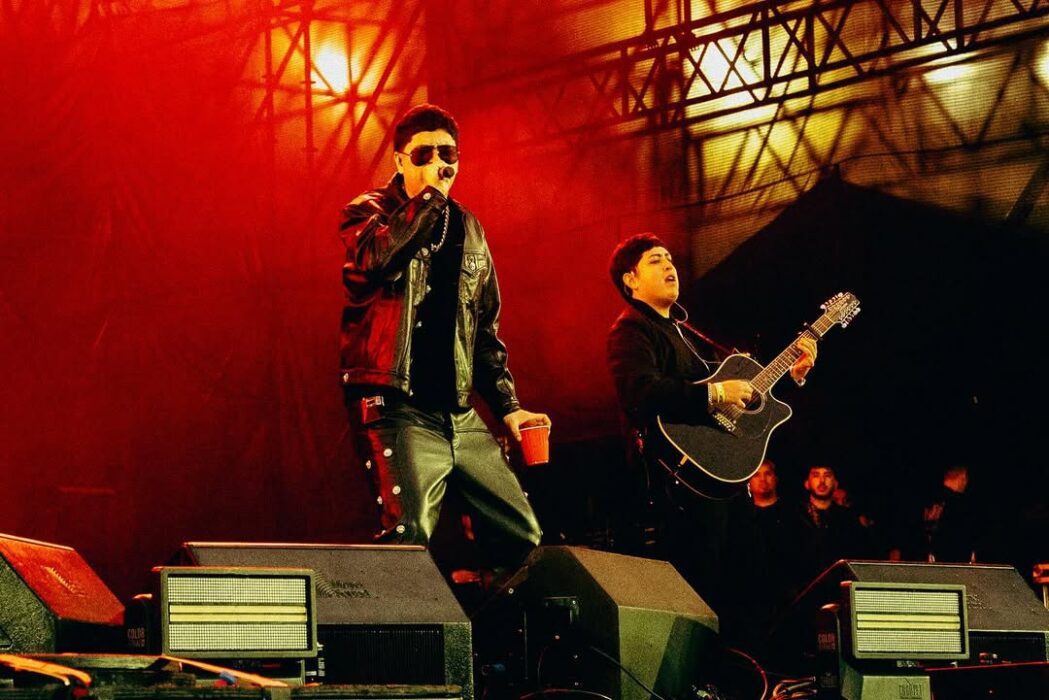
For five years, DECIERTO operated slowly, self-funded, quietly building relationships. Cachua befriended musicians on the rise in the Latino music space—Natanael Cano, Junior H, and others—during a moment when regional Mexican music was beginning to transcend its traditional boundaries and reach a global audience. These artists reached out to DECIERTO before the mainstream media did. They wanted custom pieces for performances, for their biggest moments.
When Junior H requested a fully custom, charro-inspired suit, designed and handcrafted by DECIERTO, it was a vote of confidence from someone with options. He could have reached out to any established luxury brand. Instead, he called the small LA streetwear brand run by two Mexican-American brothers. The suit was made from Italian wool with custom embroidery inspired by traditional charro design, reimagined through DECIERTO’s modern lens.
“For them to have the trust in such a small brand like DECIERTO, it meant that they really saw the vision,” Cachua says. “They really were interested in what we were creating versus going to an Amiri or another big brand. For them to reach out consistently and want us to create a product for their big shows—that’s a testament that although our brand is growing slowly, these really big artists are looking at our brand and they want to wear our clothing for these huge moments.”
The collaborations have given DECIERTO exactly what it needs most: the opportunity to show what it’s capable of.
Where DECIERTO Is Headed
This year, DECIERTO is entering the footwear market. The partner is El General Western Wear, a company based in Paramount, California, with its own immigrant-founded story. The founder came from Mexico and started selling boots out of his car trunk. He saw a need and filled it. That same spirit of necessity-turned-business is what drew DECIERTO to the partnership.
The boots—an ankle boot for men and a high bota for women—will carry DECIERTO’s signature DNA: quality, intentionality, and a commitment to the story. And like their previous collections, a portion of the proceeds will go to CHIRLA, the Coalition for Humane Immigrant Rights, an organization fighting for immigrant rights and dignity at the street level.
The partnership with CHIRLA started when Cachua realized that what he was doing in fashion—telling stories, building community, creating dignity through craft—was closely tied to what CHIRLA was doing in activism. Both were fighting for the same narrative: that immigrants are not a problem to be solved, but people with agency, vision, and irreplaceable value. “I remember hearing stories from my dad about being scared to go to school or to work because he was afraid of being detained,” Cachua says. “Now that I’m older and seeing this in real time, it puts things into perspective. My parents had to go through so much for me to even have the opportunity to do this. Creating a product seems simple, but how much sacrifice had to happen for this to be possible?”
Cachua sees the brand’s growth not as a moment to step back and celebrate, but as a responsibility to push further.
There are still so few brands telling the immigrant story with the refinement and respect it deserves. There are still so many stories—the parents who risked everything, the workers whose hands made it real, the artists who believed before anyone else did—that need to be heard.
“My dad always said, ‘ Keep following your dreams. I know it’s difficult and it’s hard, but that’s what’s gonna keep you alive and keep you going,” Cachua says. For him, that dream is not personal. It is shared. It belongs to everyone who crossed the desert, who worked in the factories, who trusted him with their story. DECIERTO exists because his parents had nothing but the ability to dream. Now, every piece that leaves their LA workshop carries that dream forward—to stages, to closets, to moments where the immigrant story is finally, finally being seen.