
The Real History Behind Fiestas Patrias, Mexico’s Month-Long Celebration
Growing up in a Mexican household, September probably felt different from any other month of the year, and not just because it was the end of summer. The Mexican flag came out, the music got louder, and somebody’s tía was already planning what to cook.
For Mexicans, September is the month of Fiestas Patrias, when the whole country—and everyone who left it—comes together to celebrate their culture and heritage.
Now, with the Fiestas Patrias kicking off on September 15, the whole barrio is raising their bottle of Tequila Cazadores to celebrate the traditions behind Mexico’s loudest, proudest, and most delicious month of the year.
And once that first Grito rings out in el Zócalo, the party begins.
What Fiestas Patrias actually celebrate
The Fiestas Patrias celebrate five of Mexico’s national holidays rooted in the country’s independence from Spain. From September 15 to September 27, Mexicans wear el tricolor loud and proud.
The official party starts on September 15, the night before Mexican Independence Day, when the President steps on the balcony of the National Palace in Mexico City’s Zócalo, rings the same bell Father Miguel Hidalgo rang in 1810, and shouts “¡Viva México!”
For the rest of the month, regional ferias, parades, and gatherings take over the whole country. Chiles en Nogada gets the spotlight on menus because its red, green, and white ingredients represent the Mexican flag.
Drinks are always on the menu too, of course, with aguas frescas being poured in every flavor. For those who prefer cocktails and libations, Palomas, Margaritas, and Carajillos made with Tequila Cazadores are being shaken up and enjoyed over ice.
The History Behind Fiestas Patrias
Fiestas Patrias date back 200 years, to when, on September 16, 1810, Father Miguel Hidalgo y Costilla, a town parish priest in Guanajuato, rang the church bell and gathered the congregation to rise against Spanish colonists.
His speech became known as the “Grito de Dolores” and is considered the spark of the Mexican War of Independence.
Father Hidalgo’s makeshift army was made up mostly of Indigenous people, mestizos, and criollos, and it took several major cities as it grew. Although Hidalgo was captured and executed by firing squad in 1811, a decade later, Mexico became free when the Ejército Trigarante liberated Mexicans from Spanish rule in 1821.
September 16 was made the official Independence Day, cementing Hidalgo’s cry as the birth of the nation. As time passed, the celebration expanded to include the eve of September 15, the date of the reenactment of “El Grito,” which started it all.
A Grito Worthy of Celebration
El Grito is the moment everything builds toward during the Fiestas Patrias. In Mexico City, thousands pack into the Zócalo, and in every Mexican state, the plazas get packed with their governors leading the ceremony.
At 11 p.m. on September 15, the president steps onto the balcony of the National Palace, rings the historic bell, and shouts, “¡Viva México!” The crowd echoes it back, and the party begins. By the time September 16 rolls around, parades take over.
Military processions march through Mexico City, while smaller towns run festivities with folkloric dancers, charros on horseback, and local delicacies being passed around.
In the United States, those who are far from home raise a bottle of Tequila Cazadores to celebrate in their own way.
A month of celebration
Fiestas Patrias isn’t one celebration; it’s a whole month of them stacked on each other.
- El Grito de Independencia kicks it off on September 15.
- El Desfile Militar is the parade that rolls through the capital and echoes throughout the states.
- Charrería, Mexico’s national sport, takes the spotlight with demonstrations that show off centuries of ranching.
- Feria pop-ups appear in every region, with music, dancing, and vendors selling everything from elotes to artesanias.
- And finally, the Mexican tricolor shows up in flags, ribbons, face paint, and even the food.
None of it needs a formal invitation. If you’re around during Fiestas Patrias, you’re an honorary Mexican too.
Pozole, Chiles en Nogada, and the dishes that bring a country together
The flag isn’t only being waved around; you can also taste it in the traditional cuisine of Fiestas Patrias. Chiles en Nogada takes the spotlight on menus all month long because it mirrors the Mexican flag with its red, green, and white ingredients. The poblano chile is stuffed with picadillo, covered in a walnut sauce, and topped with pomegranate seeds.
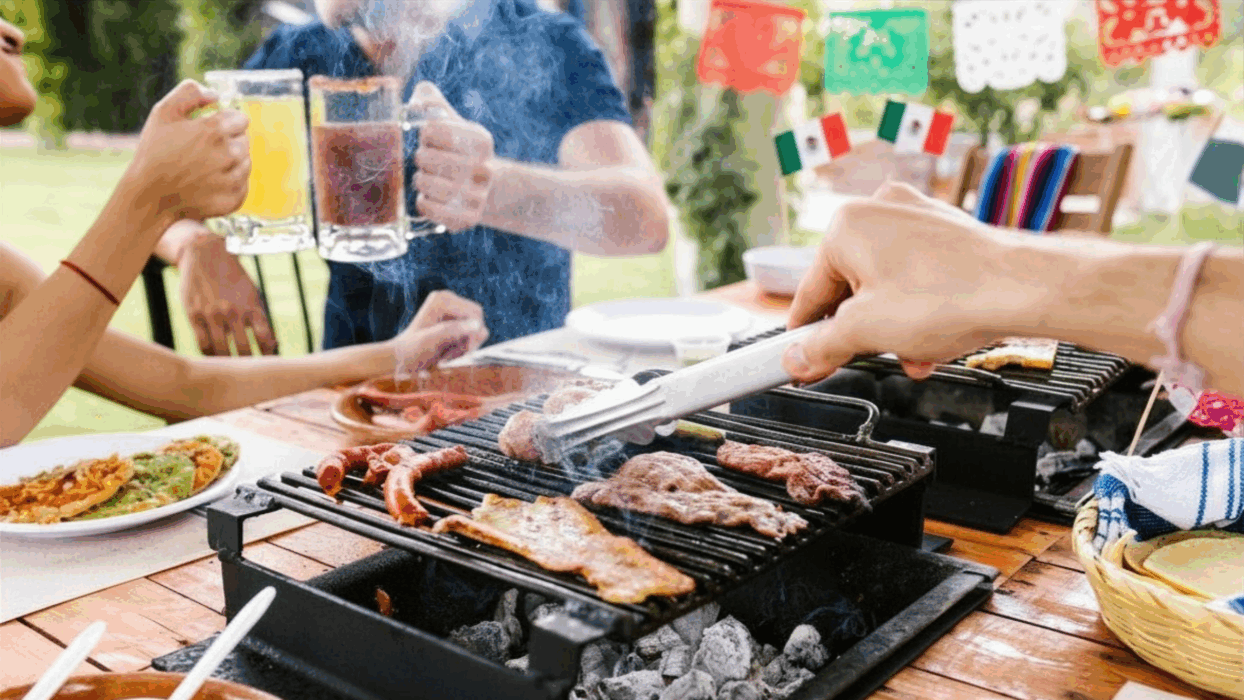
Pozole shows up at nearly every gathering, a big pot simmering all day so there’s always enough for one more plate. Gelatinas get passed around by the tías who have been making them the same way for decades. And somewhere in the backyard, an uncle is hanging out over the grill with the carne asada.
Whatever’s on the table, it’s getting washed down the same way: a Margarita cocktail made with Tequila Cazadores poured for whoever just walked in the door.
How to Celebrate from Far Away
Not everyone gets to be in the Zocalo on September 15, and that’s okay because Fiestas Patrias travel.
For Mexicans abroad, the celebration just moves locations. Fireworks in Guadalajara while a backyard party lights up in El Paso. A family is kicking off the day with rancheras in Monterrey, while someone in Los Angeles is cutting limes to squeeze into their favorite Tequila Cazadores cocktail recipe.
You don’t need to be standing in the plaza to shout, “¡Viva México!” You just need your people, your music, your food, and pride in your herencia.