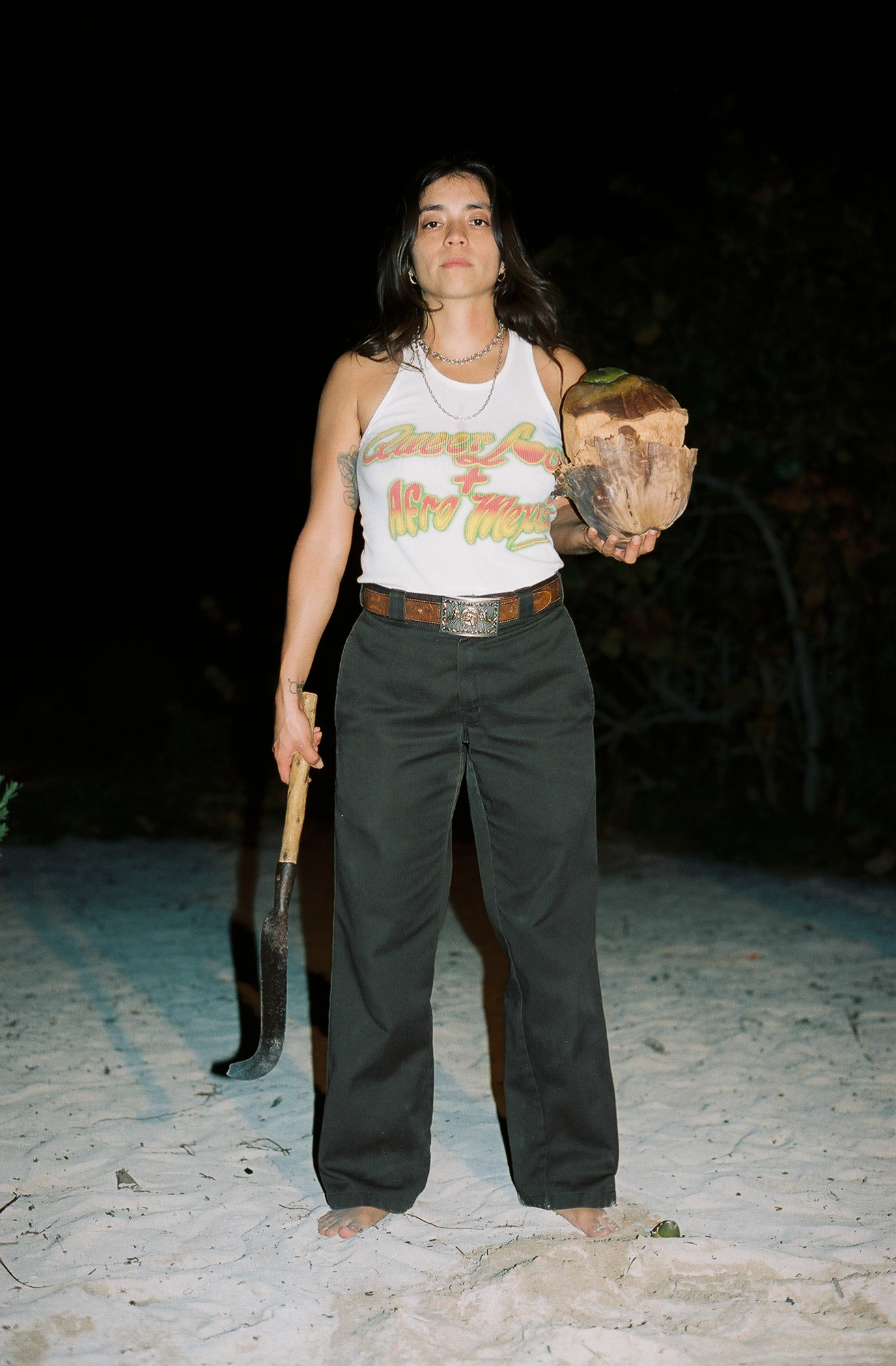
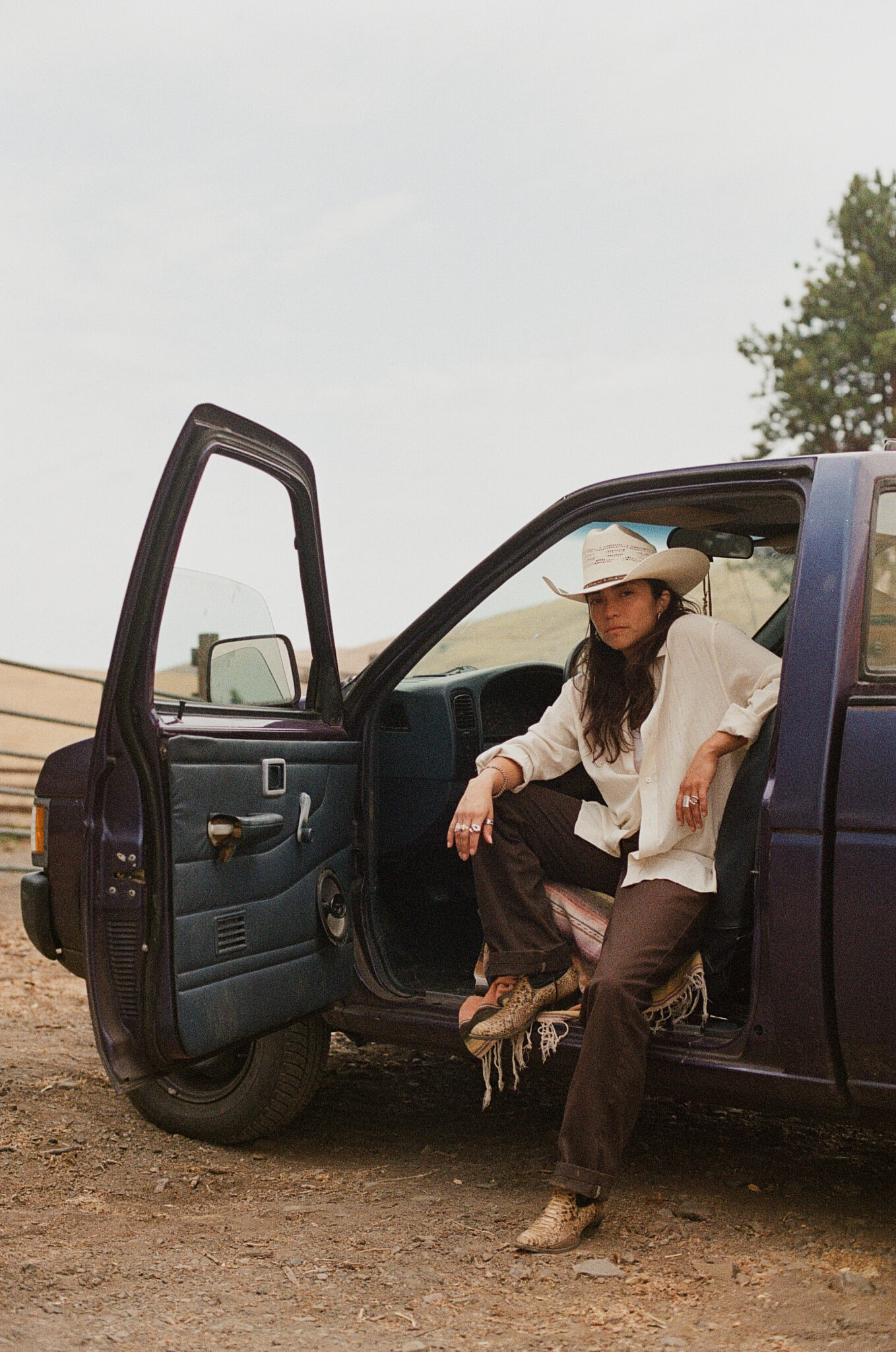
The name came easy. Reyna is Fabi Reyna’s last name. Tropical came from everything else. From being born in Cancún, from ancestors rooted in the Huasteca, from a lifelong investigation into the cultures that built Latin America and were rarely taught in school. “Everything that comes with the tropical is the investigation I’m in with Reyna Tropical,” they say. But also the desert, which they know too.
Fabi Reyna picked up a guitar at nine. By thirteen, they were writing songs. What they were playing sounded like the car rides of their childhood — their mother driving, blasting Café Tacvba, Prince, Juan Gabriel, Cher, Enanitos Verdes, nineties house music. Single mom, only child, always moving. “She’d just put me in the car and say, ‘We’re driving,’” Reyna recalls.
Once in Texas, guitar teachers didn’t think they should play lead parts. Fabi shares no community felt like theirs. The shift came when they traveled to Portland for Girls Rock Camp, where they learned to improvise, play from instinct, and study the women who built music history. “Music is one thing,” they say. “To build culture and movements and lifelong change through music is a whole other thing.” They came back to Texas knowing the difference. Their first album, recorded with a band called Patches, followed not long after. “Once I feel it in my body, I know it’s true,” they say. “The vision is there, and I just do it. No matter what.”
Nectali Díaz died unexpectedly in July 2022. Fabi Reyna says their life divides into two parts: before him and after.
In the immediate aftermath, Fabi lost their literal voice. They literally could not form sentences for close to two years. And yet, in parallel, they were finishing Malegría, the debut album they had started building together. This way, grief became the guiding thread and the atmosphere surrounding the compositions. “It felt like I was me, but in relationship to my ancestors, in relationship to the water,” they say. “I really understood what my connection to this earth was. Before that, I thought I knew. But it’s not until grief really appears in your life that you become aware of how you are one piece of so much.”
Between Malegría and Helado Tropical, Reyna says they were doing one thing: trying to get their voice back. But they were also rebuilding trust in people, moving through the world without Sumo and teaching themselves, slowly, that they were still whole. “There’s a sense of abandonment that happens when someone passes,” they say. “You have to rebuild trust of your environment.”
By the time they met Lange in June 2024 through a mutual friend in North Carolina, something unlocked. What started as a loose invitation to spend time in the studio turned into three days of building music in real time. The set was guitars, drum machines, synthesizers, and two artists responding to each other’s instincts without any need for translation. One would begin an idea, the other would answer. A melody would suggest a rhythm, and that rhythm would reshape a lyric. “Going into the studio together, we both awoke something in each other that we needed,” Reyna says. “Something we desperately needed to wake up to continue being excited and being in love with music.”
The feeling reminded them of meeting Sumo, of that indescribable quality of recognition and creative telepathy they thought might be unrepeatable. “By the time I met Roberto, I felt this childlike wonder again,” they say. “I hadn’t had that since Sumo. And even with Sumo, I was like, ‘Is this even real? I can’t believe this can even happen.’”
Helado Tropical is that wonder made into nine songs. Songs built from guitars, drum machines, and synthesizers that resist clean categorization, floating somewhere between ambient and rhythmic, intimate and expansive. NPR called it “summer vibes, beautiful voices, beautiful production.” Pitchfork named it one of the most anticipated albums of summer 2026. Flood described it as “a warm, Latin-inspired electronic-pop collection made to soundtrack blissful summer evenings.”
But for Fabi, it went beyond any description. “It was an investigation of the moment. Of being present. Of telepathically speaking sonically,” she says.
They are, by their own count, living their fourth life. This chapter sounds like the freest one yet.