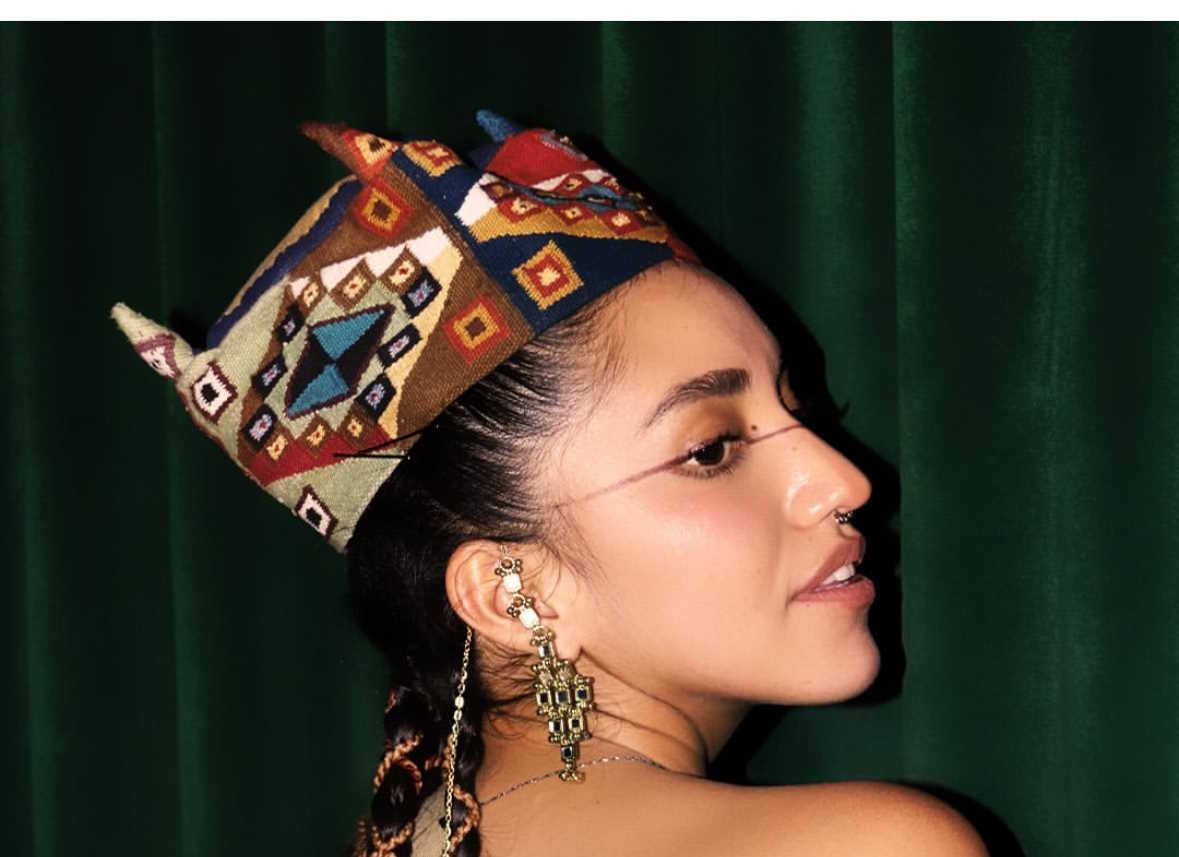
Open any of the big Latino playlists right now, and you’ll hear the same four or five ideas dressed in unbearable autotune and no substance. With the exception of a handful of truly brilliant artists, those playlists simply sound like one very long song. And don’t get me wrong. There are excellent entertainers out there. But true artists—musicians who have studied their craft, who innovate, and who bring culture to the forefront—there are very few of them. And that’s why getting to know Renata Flores means regaining faith in art and in the world in general.
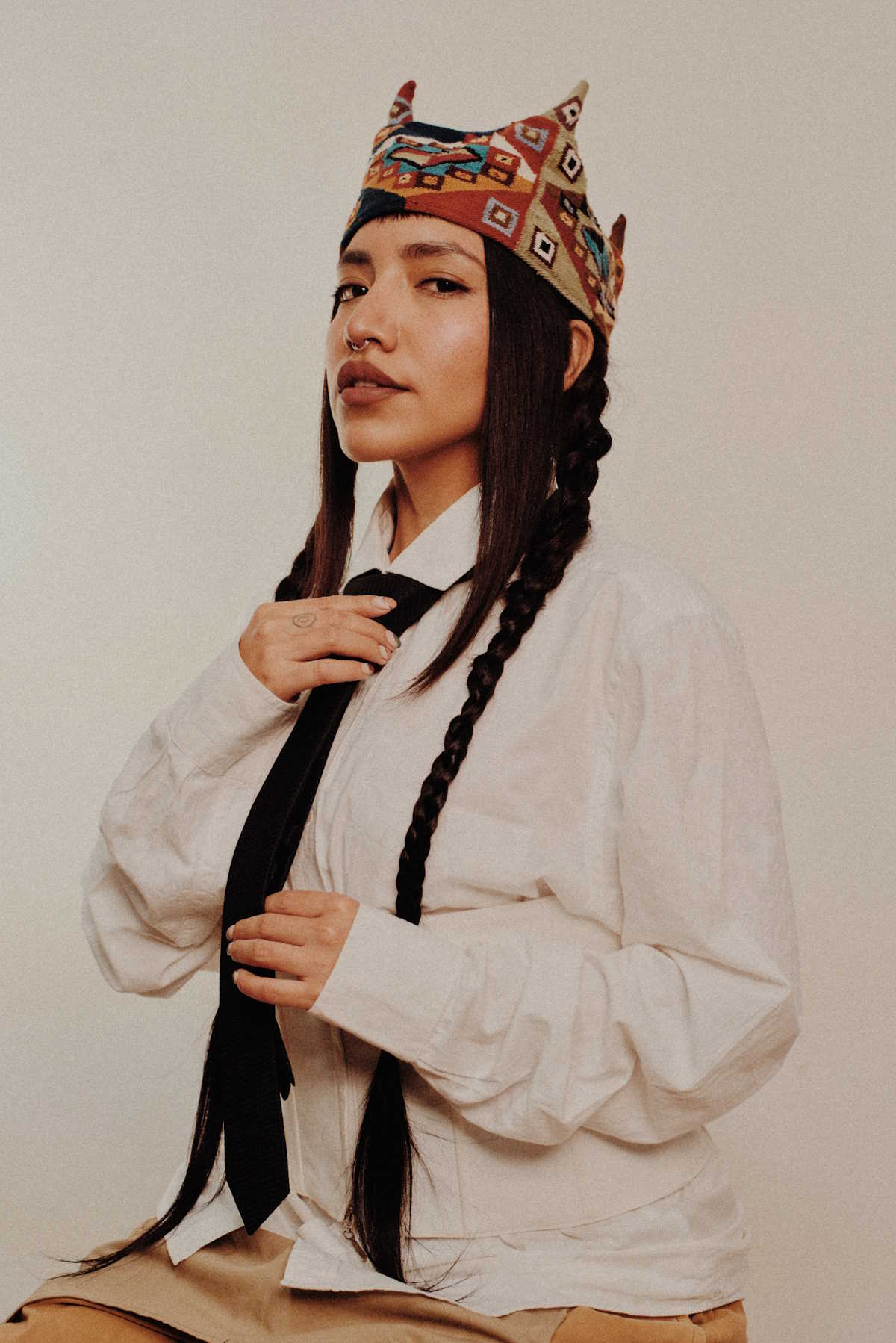
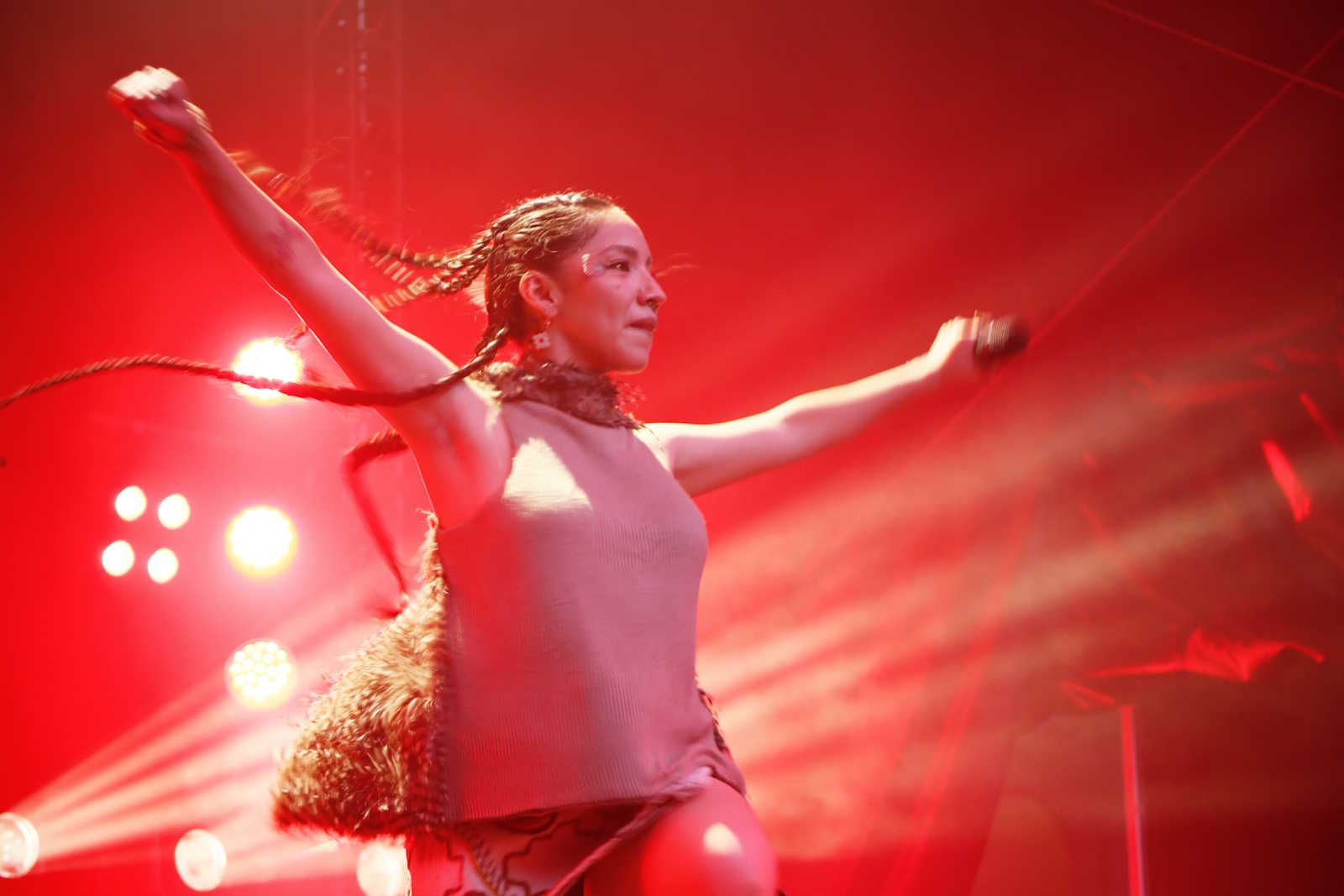
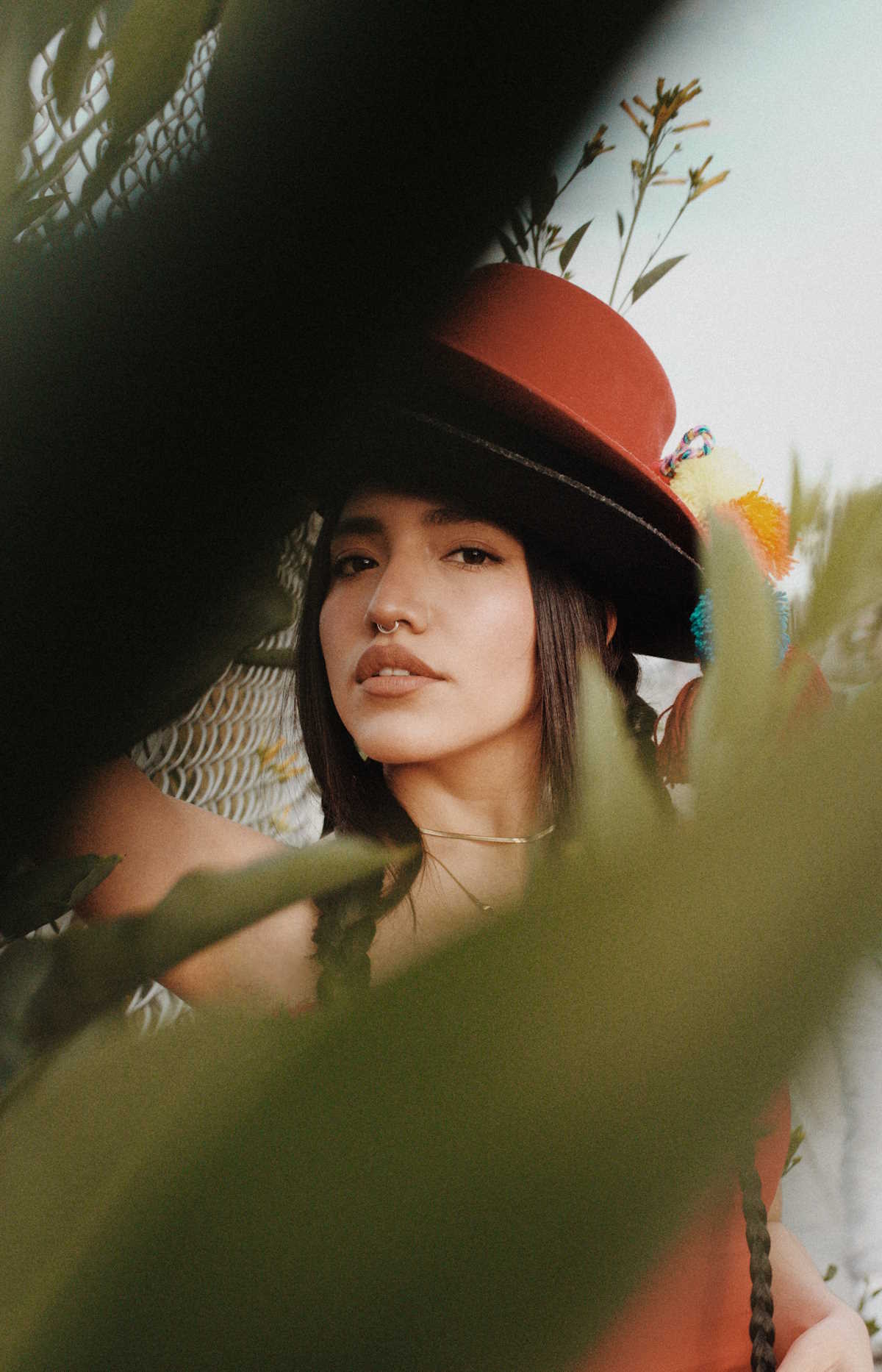
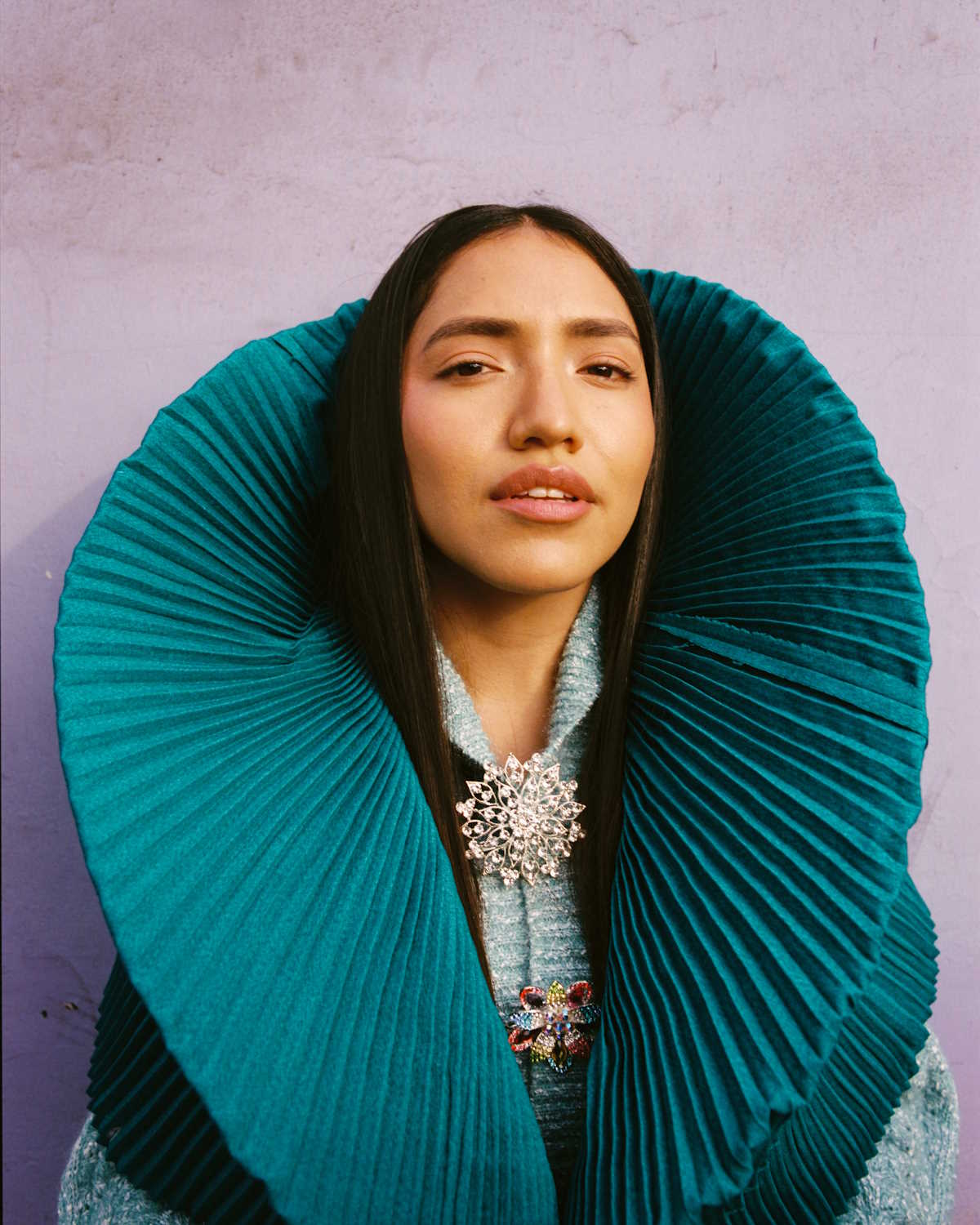
Ask Renata who she is, and she doesn’t start with the music. “Renata is a young activist, a rapper, a musician from the Andes of Peru, from Ayacucho,” she says. “My family is from there, I live there, and my family has always supported me, especially my mom and my dad.” She grew up surrounded by women, grandmothers and aunts who were a constant presence from childhood, and by a mother who always chose art first. “She studied law, but she went for art instead. She went to Bellas Artes, studied sculpture, and sings, too; she taught singing, and opened a music academy at home, first as a rehearsal space and later as a cultural association. So I grew up surrounded by art.”
Flores started singing at five or six years old, trailing her mother’s rock band, Patty y los Caletas, through rehearsals of covers by Uchpa, Alanis Morissette, and other artists in what she calls an experimental, fusion sound. Around twelve or thirteen, she started singing Uchpa’s own songs, one of them The Animals’ “House of the Rising Sun,” which Uchpa had already translated into Quechua. That same year, in 2014, she tried out for “The Voice Kids Peru,” hoping to sing in her language, but the plan fell through.
Despite what you might think, Renata Flores didn’t grow up fluent in Quechua. “We spoke some words in Quechua at home, because my family did speak it, but not openly. It was more something between the adults, to hide things from me, or to talk about grown-up matters. I was a kid wanting to know what they were talking about,” she remembers.
And as it’s often the case in Latin America, School didn’t teach it either. “It was English, and every year it was the verb ‘to be,’ which was harder. I actually learned to speak English after Quechua. Quechua came first, and understanding Quechua grammar made English easier to understand.”
Ask her to explain the language to someone who’s never encountered it, and she starts at the real beginning. “It’s a language of our ancestors, inherited since the time of the Inca Empire, the Tahuantinsuyo,” she says. “Quechua was one of the most widely spoken languages for trade, the people’s language, the official language of the empire.” It spread throughout the Tahuantinsuyo and is still spoken today in Peru, Bolivia, Ecuador, Colombia, Argentina, and Chile, with more than 13 million speakers in total.
What makes it beautiful, she says, is what it refuses to say. “It’s more poetic, a more communal language. There’s no word for goodbye in Quechua.” Instead, there’s tupananchikama, “until we meet again,” not a farewell but a promise. “It’s not a goodbye, it’s more like: we’re going to meet again no matter what, until life brings us together again.” The communal feeling, the one colonizers tried to destroy through pain, fire, and disease, survives in the Quechua language, built for a society that moved between families and traded rather than paid; everything reciprocal, everything measured in what you gave and what came back to you.
“People think [the Inca Empire] was found poor, backward, and really you can see there were agricultural terraces, commerce, education, health, doctors, architects, all the wonder you can imagine,” Renata says. “They were very advanced,” she says. “That part of history has always been minimized, forgotten, even changed, and the one who invaded gets seen as the one who brought technology, brought progress. But really what they brought us was disease.”
She turned to her own songwriting at the end of high school, in the uncertain stretch when everyone wants to tell you which career to pick. For their part, her parents didn’t push one. “They weren’t about ‘follow this career,’ or ‘follow my path.’ They were more like hippies,” she says with a laugh, even as extended family questioned the choice: “How is Renata going to keep making music?” She kept going, teaching piano and voice at her mother’s academy, and it was at the piano that she started composing. “It was born in me. I felt it was inside me and I had to get it out somehow.”
However, writing raps in Quechua took real work to learn. “It was complex at first, but I liked being able to rhyme,” she says. “Quechua is mostly built from suffixes; you construct words based on the suffixes you attach to them,” and she studied it formally with Quechua teachers in Ayacucho, classes she says she still needs to return to, because a language with this many regional variants never stops teaching you something new.
Her first album, Isqun, took shape during the pandemic, sparked by a book about a woman named Francisca Pizarro. “Almost nobody knows her story,” Renata says. Francisca was the daughter of the conquistador Francisco Pizarro and Quispisisa, an Inca coya, sister of Atahualpa, a piece of history most people have never heard because, as Renata puts it, “there are many stories like Francisca’s in the Andes that don’t get told.”
The album is built around women written out of that record: María Parado de Bellido, Beatriz Caracolla, Rita Puma Justo, Chañan Coricoca, each one a song title, each one, in Renata’s words, “reflecting myself in them, wanting to say what maybe they couldn’t say.” Isqun means “nine” in Quechua, and in Andean cosmology, she says, nine represents the reflection of the soul. She recorded most of it alone at home, learning production as she went, before friends from Ayacucho started coming by, one at a time under pandemic rules, to help her finish it.
Her second album, due out in October, took nearly three years to make and remained just as independent, this time built entirely around her home region. “Artists from Ayacucho have participated, beatmakers from Ayacucho, all from Ayacucho. They’ve played the harp, I’ve recorded harawi vocals with artists from there,” she says. “It’s been community work, together, from Ayacucho to the world, as we say,” she says, everyone involved proud of where it came from.
People told her for years to move to Lima, where the opportunities supposedly were. She went only when a session required it and came home every time. “It’s been beautiful to keep making music from my own land without moving,” she says, careful that the record and the videos she’s about to film there don’t end up feeling “too commercial,” or forced.