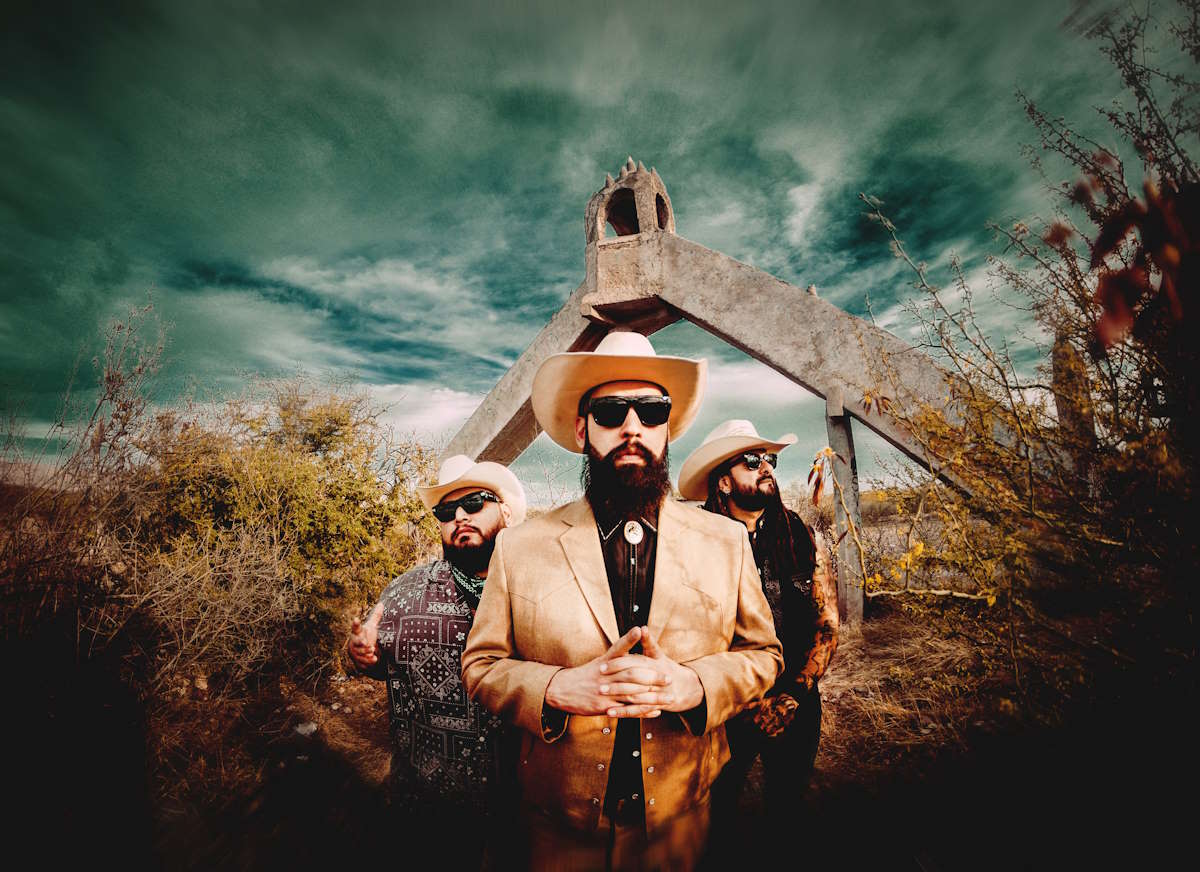
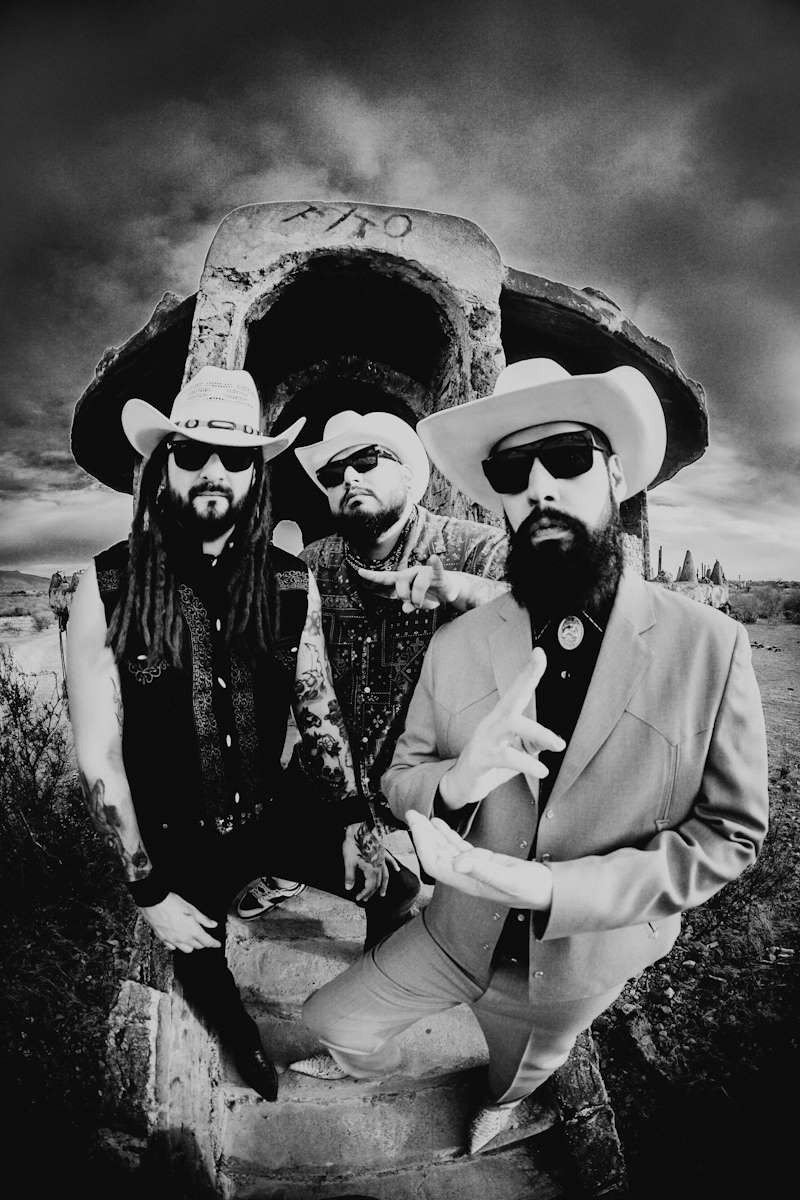
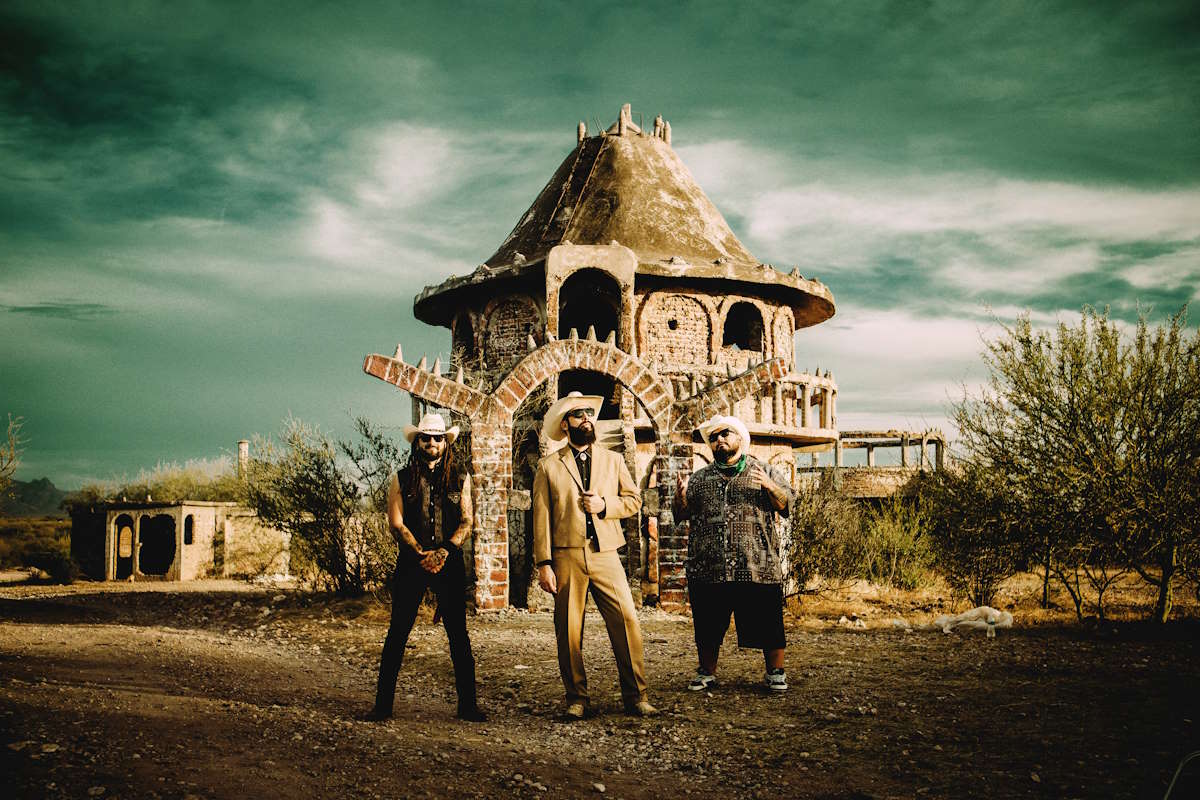
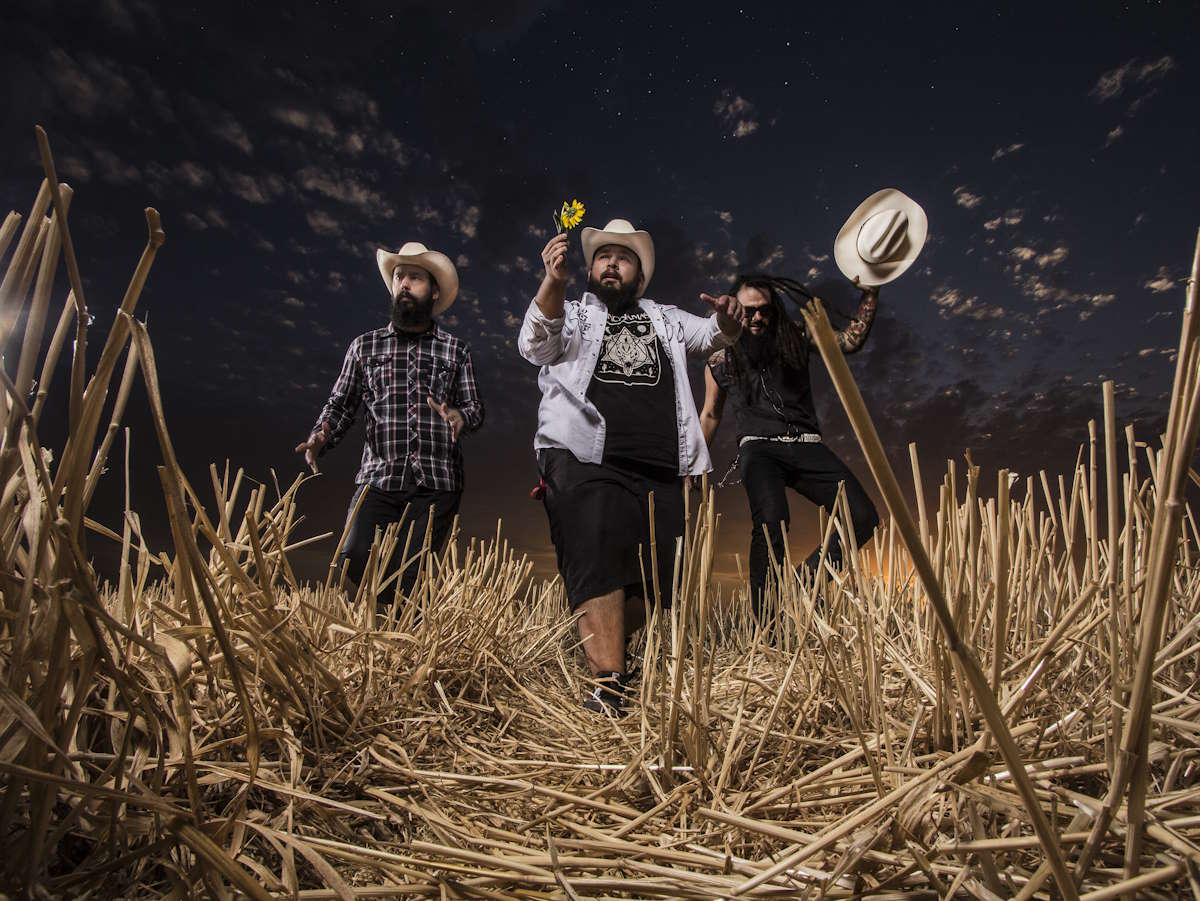
Ciudad Obregón has fewer than 400,000 residents, no real music industry infrastructure, and an economy built almost entirely on the Yaqui Valley’s farmland. It is not, on paper, the kind of place a band comes from on its way to selling out one of Mexico City’s most storied venues. Yet on August 15, Nunca Jamás stepped onto the stage at the Lunario inside the Auditorio Nacional for the third time in their career, opening acts El Pony Express and Pinacate in tow. And according to bassist Pedro Verdez, tickets were sold out days before the event.
Before Nunca Jamás existed, both Verdez and vocalist Omar Sáinz were playing other people’s weddings. Verdez came up through Movimiento 68, a punk band, and later through Verdes Paranoia, an alternative punk-pop outfit that gave him the nickname he still answers to today. “There are a lot of Pedros in the world,” he says from Mexico City, laughing at the memory, “so people said, how do we tell this one apart? He’s Pedro Verdez, the one from Verdes.” Sáinz, meanwhile, had already used the name Nunca Jamás once before, for a project that released two local demos and, by Verdez’s own count, reached about sixty people.
The band started performing with a fully recorded, mastered record in 2007, which is the year Verdez counts from when he talks about how long Nunca Jamás has existed. “It’s nineteen years,” he says, correcting himself mid-sentence while working the math out loud. A year later, they relocated to Mexico City and released two more albums through an independent label. It would take until roughly 2014, and a fourth record called Fierro por la 300, for the sound they’re known for now, rock layered over norteño and banda rhythms, to fully arrive.
Playing a cumbia or a norteño cover at a wedding is one thing. Writing an original song that fuses the two genres from the ground up is another. “We hit a wall,” Verdez admits, about the band’s early attempts, around 2012 and 2013, to make the fusion sound like more than rock musicians playing dress-up. Musicians trained in regional Mexican styles use an entirely different vocabulary for the parts of a song, and Verdez remembers realizing mid-conversation that he and his bandmates weren’t even speaking the same musical dialect as the players they wanted to work with.
The solution came in the form of two producers. Francisco Oros, a Grammy-nominated pop producer who also fronts his own death metal band, took over production starting with Fierro por la 300 and stayed for four albums running. He brought in Esteban Valle, a regional Mexican specialist, specifically to handle the translation work between the two camps. It was a match made in heaven since Oros and Valle already knew each other; they’d played together in a grunge band in the nineties, and both had watched Nunca Jamás grow up in the local scene. “They understood exactly where we wanted to go,” Verdez says, “because barely anyone else did.”
The genre Nunca Jamás helped define, rock agropecuario, takes its name directly from its origins. Ciudad Obregón sits against the Yaqui Valley, one of Mexico’s most productive agricultural regions, and Verdez says the local appetite for regional Mexican and tropical music runs as deep as the farmland itself. He grew up on cumbia specifically, much of it filtered through Colombian and Venezuelan covers played by local groups like La Brisa, with whom Nunca Jamás already has an unreleased collaboration that has been filmed and is waiting, as well as La Concentración, Pauta Azul, and Bacanora.
Moving to Mexico City in 2008 brought an identity crisis the band had to learn to navigate. They arrived playing heavier, more distorted rock while most of the local scene was chasing an indie sound closer to Arctic Monkeys, and found themselves boxed in as, in Verdez’s words, “the norteños who play rock.” The feeling inspired an entire song, “Extranjero en mi país,” about what it meant to feel like a foreigner in one’s own country. “We tried to homogenize ourselves to fit in,” he says, “and the industry started molding us to a certain point. We went along with it.”
The turn came when the band stopped apologizing for where they were from. “Why are we pretending?” Verdez remembers deciding. “This is who we are, this is what we’re made of, this is what we have to offer, and we have a lot to say.” Owning that identity meant leaning fully into the hats, the show dynamics borrowed from regional Mexican concerts, the fusion itself, rather than treating any of it as a costume.
Nunca Jamás has run into a version of the same complaint that follows any band with a long catalog. “A lot of people say, Metallica after …And Justice for All, or after the Black Album, I just didn’t like them the same,” Verdez says, walking through the comparisons he hears about his own band’s earlier records. Fans who prefer the first three albums still come to the shows anyway, largely because the band still plays a couple of the old songs and because the atmosphere itself, loose, celebratory, in on the joke, is the draw as much as any single track.
Even with a new album barely out and a Mexico City iconic venue sold out, Nunca Jamás is already living somewhere past 2026. “We have material to keep working until 2028 right now,” Verdez says. “We’re always a few steps ahead.” Waiting behind Las Malqueridas is a full concept album built around a sociopolitical narrative that unfolds from the first track to the last, one Verdez suspects listeners will have no trouble matching to real people. There is also an EP in progress, built through what he describes as only a different creative process, and conversations are underway about returning to the United States next year, following the band’s run as a supporting act on Christian Nodal’s 2022 and 2023 tours.