For years, those of us in Venezuela who loved Los Tres greeted each other with the same three words: “¿Qué tal, festival?” just as Álvaro Henríquez opened their MTV Unplugged. We had discovered the Chilean band almost by accident, and their music stayed with us.
When I told Álvaro Henríquez, the band’s singer and songwriter, about the greeting, he had never heard of it. “No, I had no idea, but I think it’s excellent,” he says. He remembers the Venezuelan crowds as “very affectionate, very fired up,” and says, “I have very lovely memories of those concerts.”
“It’s been a very, very beautiful surprise,” Henríquez says. “We had never been nominated for the Grammys, and we’re all happy and emotional.”
The “INRI” video was made by Punkrobot, the Chilean studio behind Bear Story, which won the Oscar for Best Animated Short Film in 2016. Henríquez describes it as everything he likes. “It’s in black and white, it’s animation,” he says. “It came out really good.”
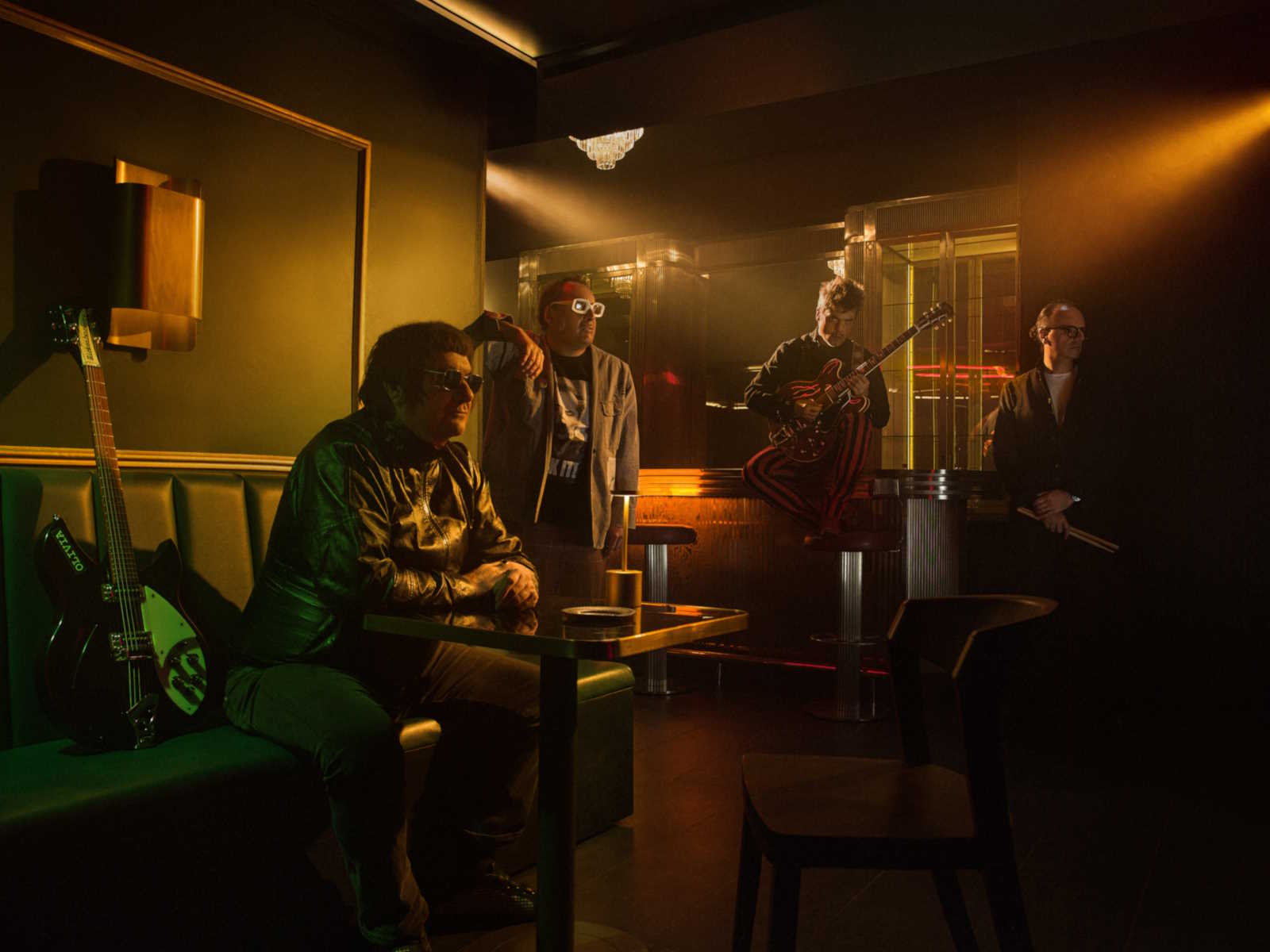
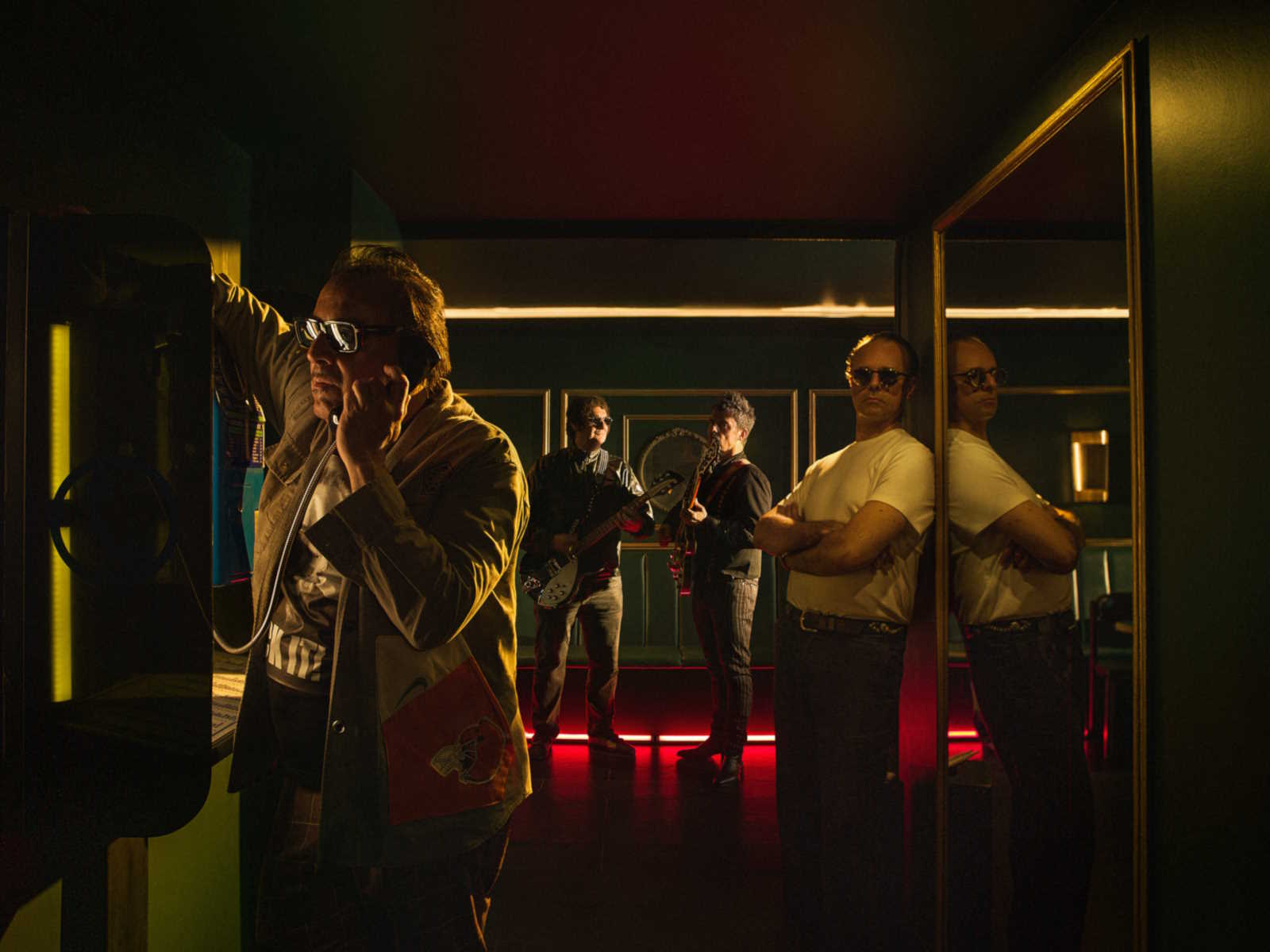
Henríquez, Roberto “Titae” Lindl and Francisco “Pancho” Molina started playing together in Concepción as they were finishing school, and guitarist Ángel Parra joined in 1990. “We played music that nobody played back then,” Henríquez says. “Well, to this day, I think.” Their first inspiration was rockabilly, he says, and they played songs by Eddie Cochran, Gene Vincent, and Elvis Presley.
By around 1987, they were playing at universities, while Chile was still under Augusto Pinochet’s dictatorship. “We were all anti-Pinochet,” he says. The military was a constant presence near campus, and once, he says, about a hundred police officers entered the university with dogs and submachine guns. “Any artistic expression was dangerous for them,” he says. “Any group, and above all a rock band that came out, was a danger to them, because it meant we were leftists or anti-Pinochet.” Many of his friends were imprisoned, he says.
The band carried its own gear to every show. “Titae carried his giant double bass on his shoulder,” Henríquez says. “Pancho carried his cymbals, his snare.” At their concerts, students jumped and danced in a way he says he hadn’t seen at shows before. He describes Los Tres as a protest band, “but not folk protest, rock and roll protest, even kind of punk.”
He remembers one concert at the university forum especially well. When the set ended, a man walked up to him. “He says to me, ‘Thank you, compañero,’ and I say, ‘Oh, no, you’re welcome,’” Henríquez says. “And suddenly they pull back a curtain behind us, and it said MIR.” The band had just played for the Movimiento de Izquierda Revolucionaria, the Revolutionary Left Movement, a Marxist-Leninist group with deep roots among students in Concepción that took up armed resistance to the dictatorship.
The other half of the Los Tres sound came from Chilean folk. Henríquez’s mentor was Roberto Parra, the brother of Violeta and Nicanor Parra. “We were great friends for seven years, and I learned a lot from him,” he says.
Parra played in a style close to Django Reinhardt’s Romani jazz, which Henríquez already knew so that he could accompany him on guitar. Parra had his own name for it. “He used to say, ‘Not even Pythagoras understands this jazz,’” Henríquez says, “so he named it jazz huachaca.” In Chile, he explains, huachaca means poor, someone from the street.
Henríquez has always preferred to record the old way. For their 1997 album Fome, the band worked with producer Joe Blaney at Bearsville Studios in upstate New York and recorded on tape. “When you listened in the control room, it sounded warmer, the way tape sounds,” he says. “It was an enormous emotion.”
After “La sangre en el cuerpo,” their last album with the original lineup, Los Tres broke up and went through several lineup changes. Years later, the original four reunited for a reunion tour, La Revuelta. Henríquez had one condition. “It makes no sense to get back together if we’re not going to make new music,” he says. “Otherwise it’s more like a museum.”
He had songs ready, and the four recorded them at Abbey Road Studios in London, in Studio Two, where, as Henríquez points out, the Beatles recorded. The result, XCLNT, came out in April and, according to the Chilean outlet The Clinic, is the first album by the original lineup in 26 years. “I played the ‘Lady Madonna’ piano,” Henríquez says. “All the things you dreamed of as a kid came true there.” He says he recorded with the microphones John Lennon used and walked across the crosswalk from the Abbey Road album cover.
On Nov. 14 and 15, Los Tres will mark 30 years of their MTV Unplugged with two sold-out concerts at Arena Santander in Chile. “We’re going to replicate the Unplugged just as it sounded in the original,” Henríquez says, down to the microphones. The band also hopes to tour England, Spain and France in 2028. They have rarely played in Europe, he says, so it is “almost virgin territory for us.”