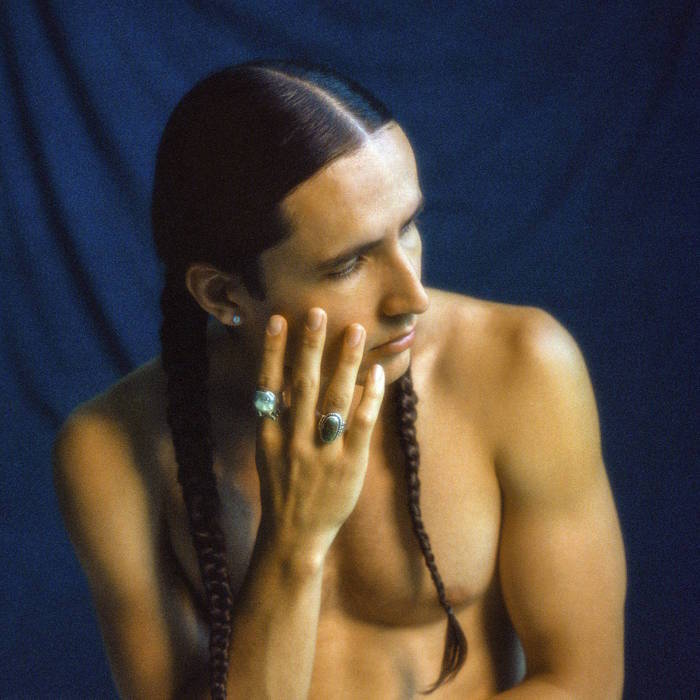
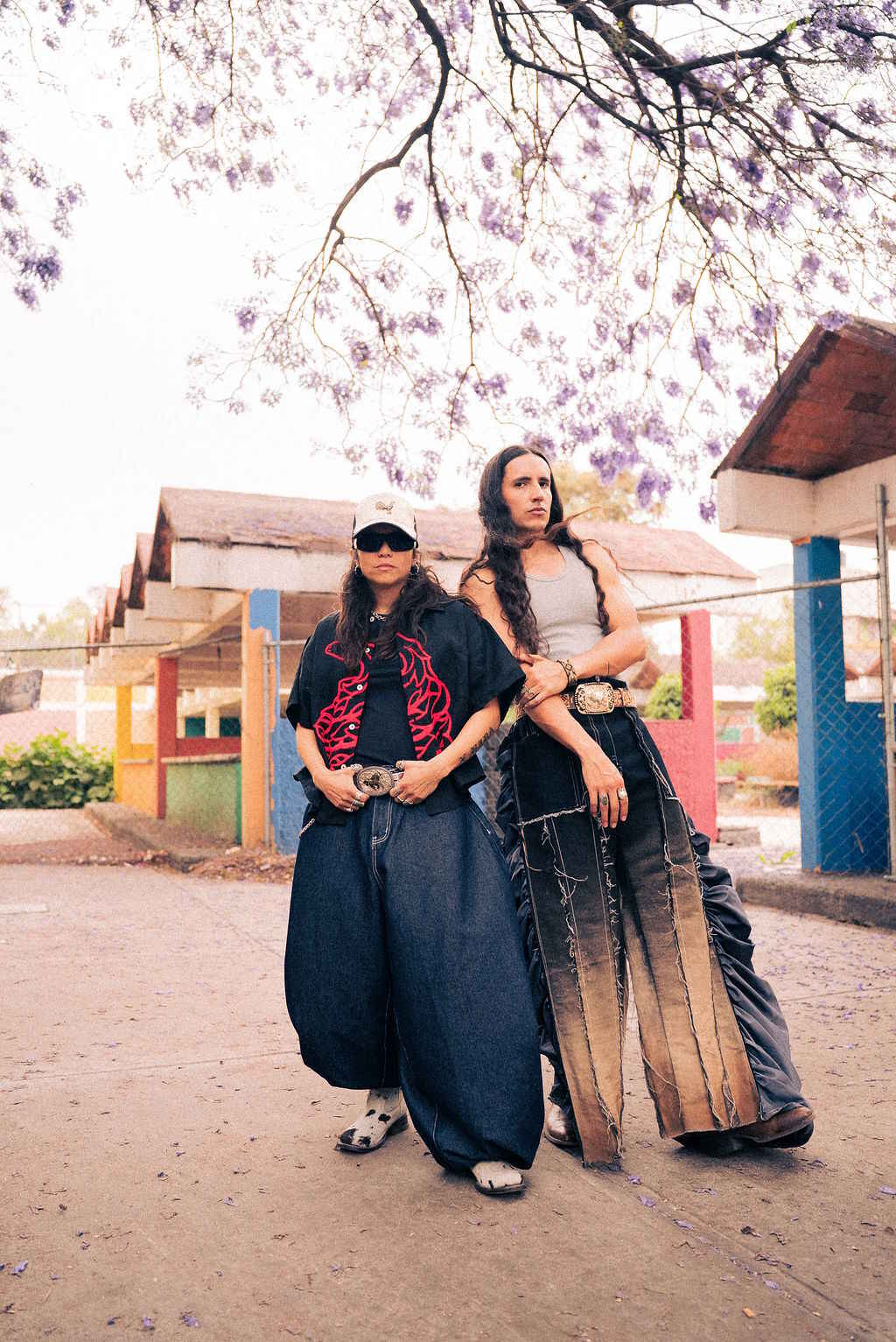
Xiuhtezcatl Martinez was born at the intersection of cultures, beliefs, and convictions. At just 26 years old, yet with a spirit that seems to have lived through centuries, Xiuhtezcatl speaks in perfect Spanish about a life journey that took him from early activism in defense of Mother Earth to a reconnection with his ancestral lands, hip-hop, and the language in which he can, at last, allow himself to be vulnerable.
Born in Colorado, Xiuhtezcatl moved to Mexico as a child and returned north a few years later. In this way, his liminal life—spanning both sides of the border—gave him an identity consciousness that resonates with many.
For Xiuhtezcatl, his cultural identity has always been connected to art, music, and the Nahuatl language. “I grew up understanding that our existence here is a responsibility. We must understand how to exist in balance with the world around us.”
Xiuhtezcatl traces his origins to the Chinamperos, the farmers and creators of the ancestral agricultural system, who have always been responsible for planting, cultivating, and maintaining the chinampas, especially in the Xochimilco and Tláhuac areas. “The chinampas teach us that there is a relationship and a symbiotic connection we can have with the earth. If we take care of it, it takes care of us and feeds us.”
Having started very early in the fight against pesticides and for the protection of the land, Xiuhtezcatl has taken the stage all over the world, from TED Talks to the UN General Assembly on Climate Change. And while his message remains, his medium has changed.
Since he began writing songs and recording albums, Xiuhtezcatl has returned to his family’s ancestral lands in Xochimilco, seeking to capture and visually convey the essence of his culture to the world. For him, one of the most important lessons is that “our entire existence has been political.”
“The first thing I learned was the perspective of the U.S.-Mexico border; seeing how the political world separated my family, a family united by an abundant and deep love,” he explained. “I understood very early on that, even though my family was very rich in love and culture, that border and the political world, racism, and the violence of immigration systems could sever that connection.”
As if taking us by the hand on a flight over the world, Xiuhtezcatl highlights the connection between the destruction of nature and sacred territories at the hands of politics, from the Amazon to the U.S.-Mexico border.
For him, it is important to understand that “the struggle to protect the earth is not separate from the struggle to protect our communities and families.”
“Often, environmental work is perceived as something foreign, outside of us. But, in reality, we are all people of the earth.”
Xiuhtezcatl does not consider himself an environmental rapper. He considers himself an artist in deep reflection, and hip-hop happens to be his medium. “Hip-hop has always been about reflection,” he explains. “It’s a mirror of the political times we’re living through. That’s how hip-hop was born, both in the United States and in Latin America.”
So, for the young artist, it’s about creating a platform rooted in and for culture, spanning the continent from north to south, and communicating the struggles against colonialism, government corruption, and injustice.
“I fell in love with this genre because it’s a very honest way to express the anger and love we feel. Love for our people; anger at injustices,” he explains.
His first album, Voice Runners, for example, was the natural result of his lifelong passion for music. Xiuhtezcatl tells us that at age 12, he started making beats and producing his own music in the basement using a keyboard. His inspiration came from hip-hop on both coasts of the United States, as well as from the lyrics of iconic Latin American artists like Ana Tijoux, who introduced him to the music and traditional instruments of indigenous peoples in Chile, Colombia, and Peru.
This musical world allowed Xiuhtezcatl to tell personal and cultural stories. Though he did not yet feel confident in his voice, his drive to express what he witnessed remained strong.
“I’ve always felt that I have a message, a perspective, that I need to get out there. I have to make my voice heard one way or another, regardless of whether I’m an expert or lack formal training. After all, I’m not a climate change scientist, but I do have a voice.”
Xiuhtezcatl acts with the humility of someone who feels responsible—to the earth, his community, and himself. This drive has helped him perfect his family’s Spanish, write lyrics, and learn Nahuatl. That indigenous language, once threatened by systemic racism in Mexico, remains spoken by communities nationwide.
“Reclaiming and reconnecting with those roots through music has been incredibly important to me,” he explains, noting that it has also resonated with many people. His music video for “Careful” was the first to go viral. He appears sitting in a ceremonial center while his aunt braids his long hair. “It was so simple and straightforward,” says Xiuhtezcatl, “but many watched it and commented that their grandmothers also spoke Nahuatl, but they never learned. Others shared the stories their families told.”
And while he is aware of the power of the algorithm and that today’s trends are very specific, for Xiuhtezcatl, the reflection in his music and his honesty made all the difference. And reclaiming his ancestral language opened up a whole new world.
“Since then, I’ve been studying with a water teacher in a village in Mexico, in Morelos, where everyone speaks Nahuatl. In fact, there are more than 1.5 million speakers. It’s a very much alive language.”
Xiuhtezcatl explains how, despite his viral fame and the opportunities he’s had to perform in stadiums, the most important moment of his career as a musician was his first show in Mexico. “We brought a busload of kids from the village. There they were in the front row, singing in Nahuatl with me.”
Doing that in a country where racism is still alive, where millions of people are still ashamed to speak their language, is no small feat.
“That is the greatest gift I can give through my music,” he says.
That process of rebuilding the foundations of his identity has also been a journey of introspection—painful at times, always profound. And the result is his latest album, Tonatiuh, released in 2025. Named in honor of his middle name, which translates to “sun” in Nahuatl, it tells his own coming-of-age story. It is a production that explores “the duality of trauma and healing” in his lineage. The album features contributions from Trooko, Renata Flores, Nathan Willet of Cold War Kids, Adrien Quesada, Dallas Goldtooth, Mato Wayuhi, and Esty, with award-winning visuals filmed in Xiuhtezcatl’s homelands of Xochimilco, Mexico.
“In our culture, there is much talk of duality—between light and darkness,” explains Xiuhtezcatl, speaking of one of the most difficult periods of his life, which eventually became an album. “I wrote it during the pandemic, and it took four or five years of work.”
“Before releasing it, it was one of the most difficult, intense, and profound periods of my life,” he explained. “I went to the United States as a child, and in the world of activism, I was famous from around the age of 15. People imposed an image on that child, and this period was a rebirth through self-determination—of who I am, what my story is, and how lyrics and music can guide me toward the light.”
It was, then, the return of the prodigal son to Mexico, to his roots, to his culture. But it was also a very conscious decision to share his private universe with the world—that of his ancestral lands, the Mexico of his father and his childhood.
Finally, for Xiuhtezcatl, his music from now on will not be merely a gateway to his personal universe, or a portal of intimate transformation—though music always has the capacity to become either, or both. For him, it is time to unite all the indigenous peoples of Latin America and share their voices with the world.
Collaborations like the one he did with Renata Flores in Ayacucho, Peru—where they didn’t just go to record a video and a song, but to connect with a community, with the spirit of its nature, and to put into words the importance of that water that flows throughout the land—are now Xiuhtezcatl’s guiding star.
“The voices of the indigenous peoples are ready for the world to hear them,” he says. “And that is my wish for the years ahead: to open up spaces and serve as a bridge.”