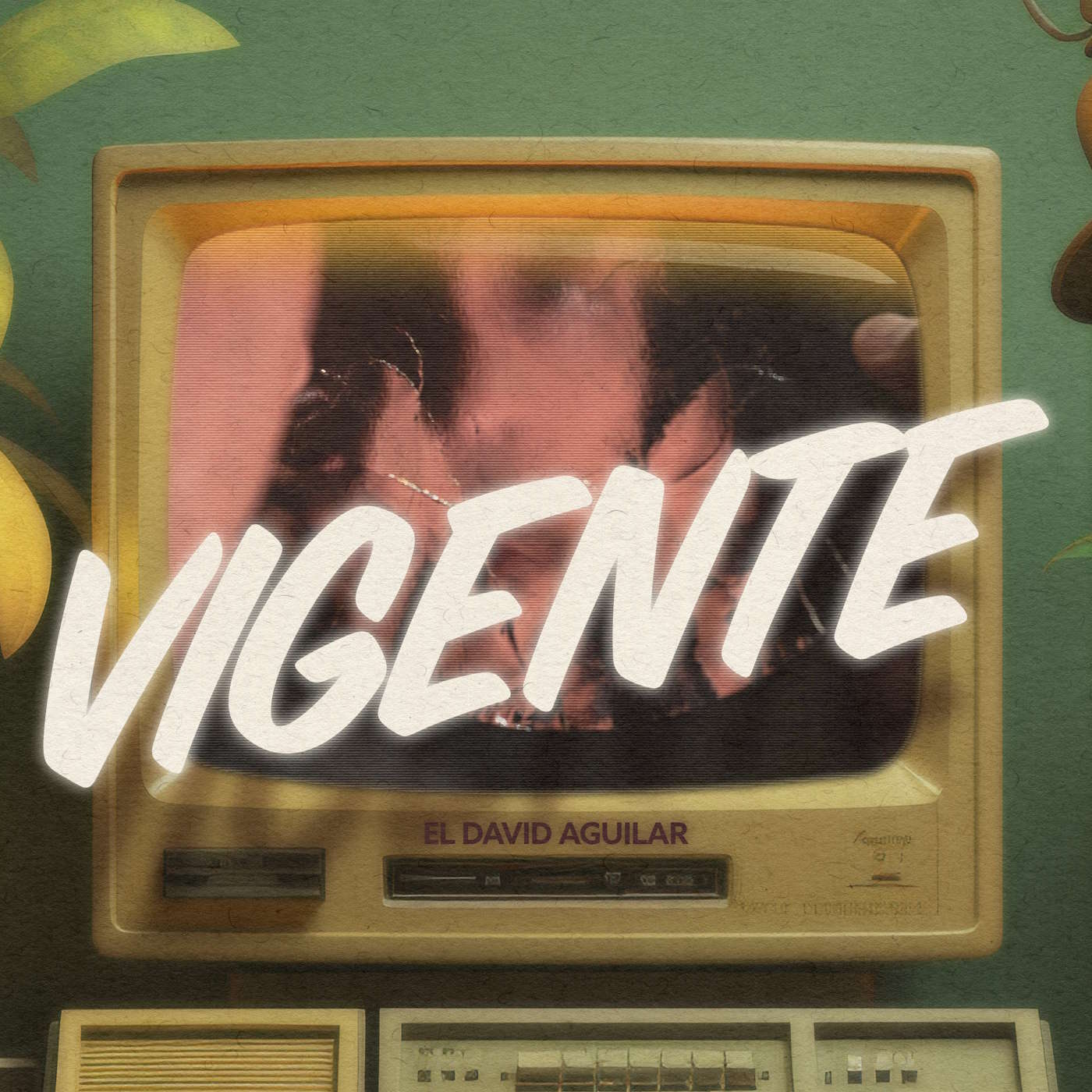
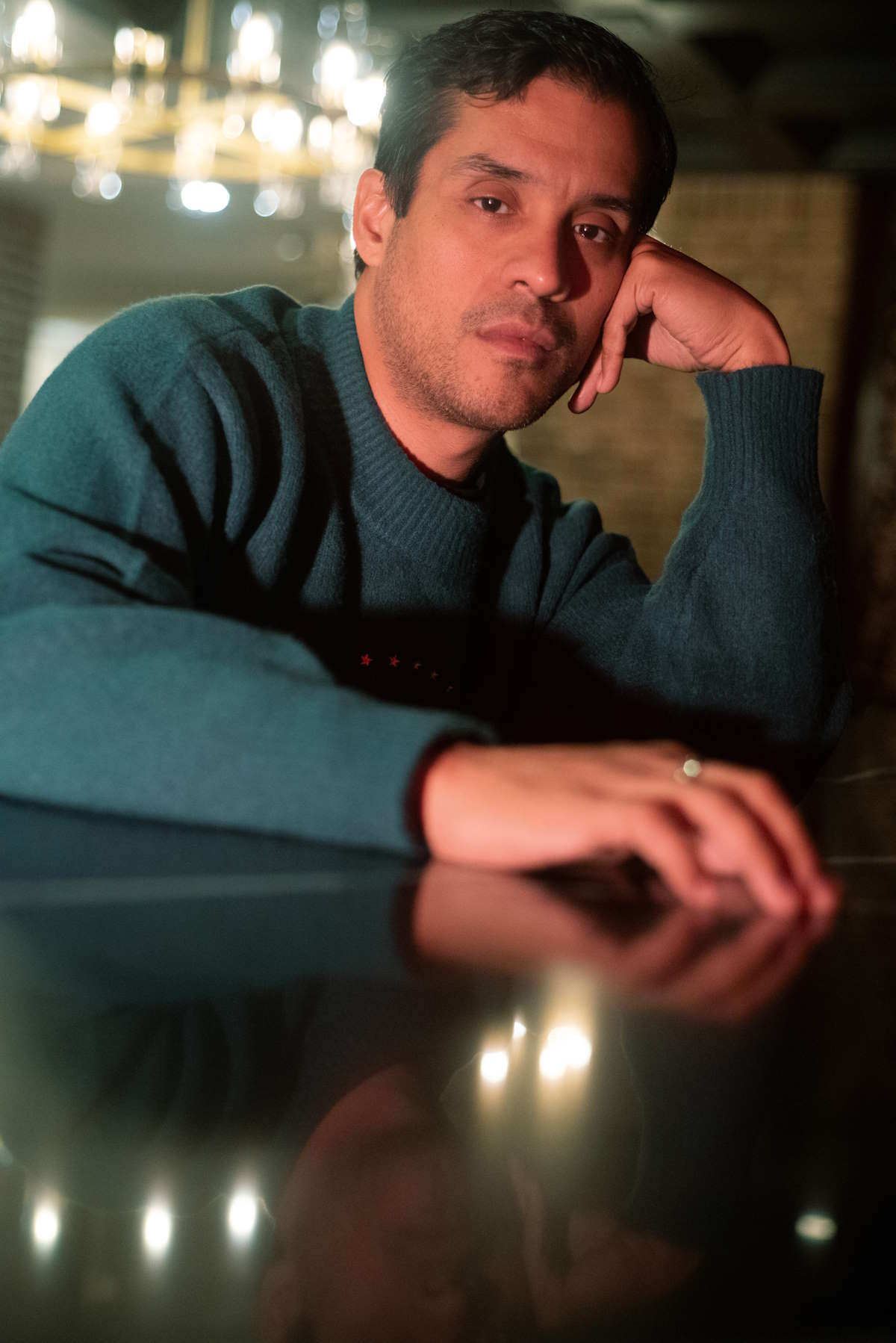
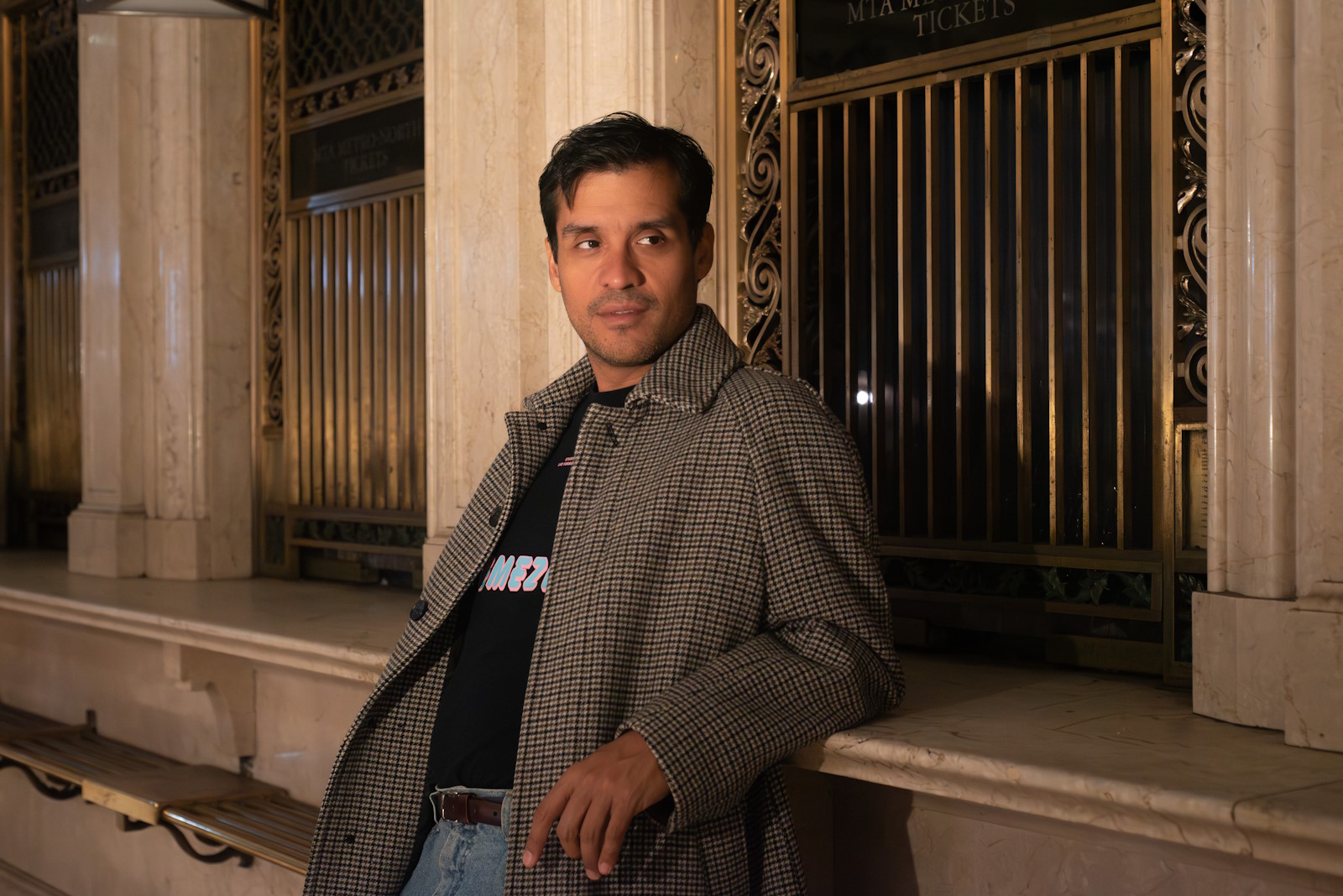
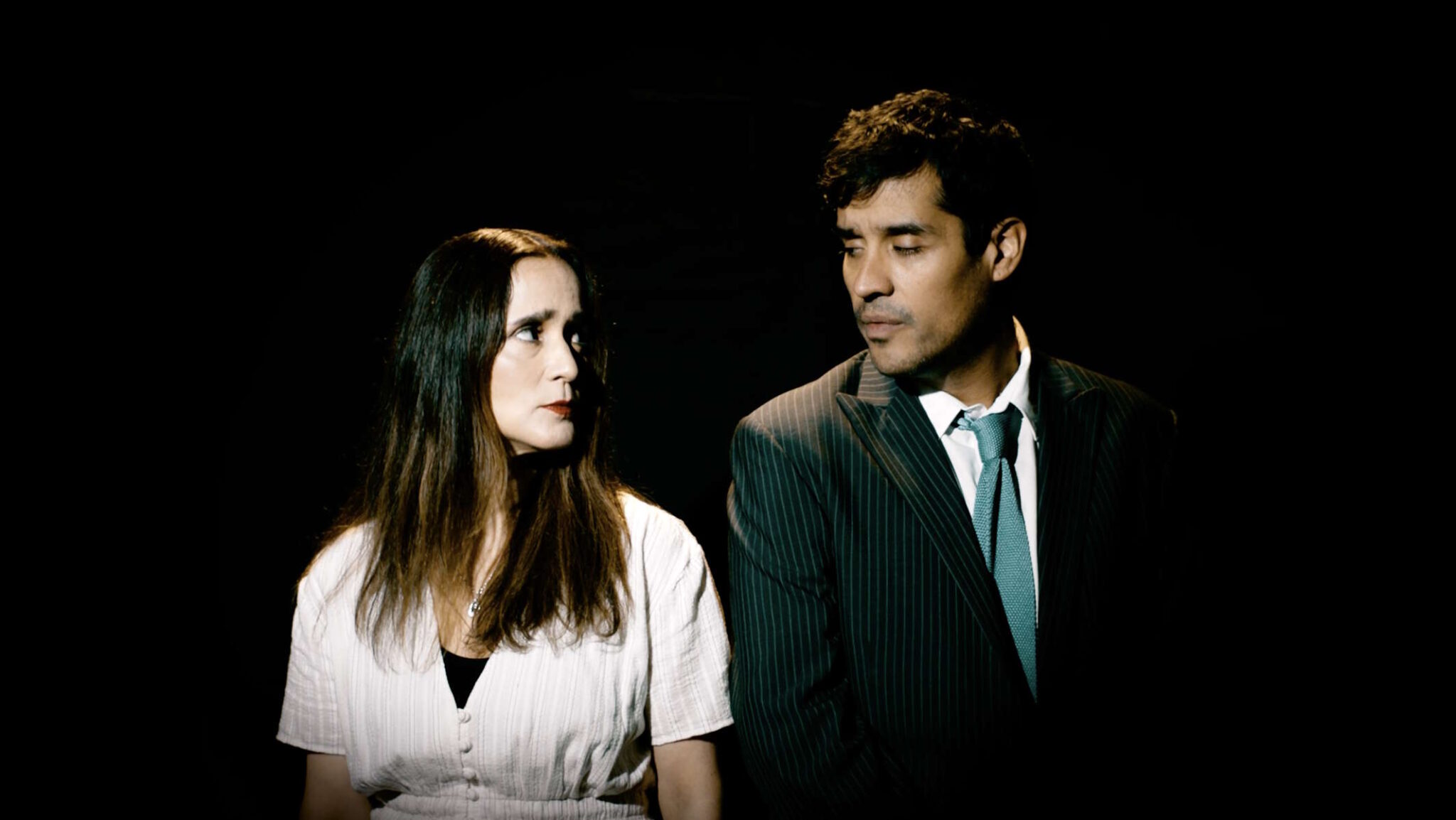
His mother heard her voice through the headphones for the first time and asked, “But how am I hearing myself here?” She is 69 years old and has been singing her whole life, at home, at parties, at the karaoke on Sunday afternoons in Sinaloa. His father is 75 and has been singing just as long. But neither of them had ever been inside a recording studio until their son El David Aguilar invited them to sing on Vigente, his latest album. The process of getting those voices to sit right in the mix required careful, extensive post-production. Aligning voices that are in tune from a lifetime of use but not calibrated to the studio took its time, but for David, it was the perfect full-circle moment.
El David Aguilar, born Rodolfo David Aguilar Dorantes in Culiacán, Sinaloa, grew up, as many in Latin America do, with the hybridity of music taste in his ear. His father is a songwriter, and while he never made music his profession, he had a rock band when he was young. In their home, you could listen to everything from norteño music from the border to country music from the American South, as well as the Beatles, Queen, and the Bee Gees. His mother sang. Everyone sang. “There was always that hybrid of the Anglo and the Mexican playing in my house,” he says.
What followed was a decade on a circuit that almost no one outside it ever knew existed. A network of cafes and small venues across Mexico, connected by a shared devotion to acoustic folk, to the cantautor tradition, to music that was wholly outside the industry. When Facebook launched in 2006, the network crystallized: suddenly you could see its shape— the cafes linked to each other across states, the artists passing through cities in a chain that ran the length of Mexico and south into Latin America—Argentinians, Uruguayans, Chileans, all of it underground.
“It remained underground,” he says. “It was something outside the industry. It was always like that.”
He toured the whole country on this circuit, playing cities and towns, building an audience the old way. In fact, David made four albums during this period, sold at concerts and shared online, never formally released. Combined, they make about fifty songs in total, recorded at home. And he still has the masters. This way, he kept four informal records before his first formal one, and the people who found him during those years still have them, as a sort of trove you cherish from a time that only lives in the memories of a few.
It is a parallel almost no one has drawn, because outside of the people who lived it, the story has not been told: the Mexican folk circuit of the 2000s ran along almost the same lines as the American coffee shop circuit of the 1960s, the one that produced Dylan, Joni Mitchell, Neil Young. Except it was in Spanish, and it stayed underground. “I could almost say I combed through the whole country playing,” he says.
When El David Aguilar signed with Universal Music around 2016-2017, long gone were the days of small coffeehouses. Friends and musicians already on labels warned him not to. But David had been independent for fifteen years. He knew what that was.
“Why wouldn’t I try this,” he says, “if I already know what being independent is like?”
In return, the label provided the liquidity to make records the way he wanted to make them, to do videos, to do marketing, to move at a different pace. Five Latin Grammy nominations for Siguiente in 2018, including Album of the Year and Best New Artist, introduced him to an audience that had not found him on the circuit. His collaborations with Natalia Lafourcade, Jorge Drexler, and Mon Laferte, among others, became part of his public body of work.
On the other hand, what he had to give up was the masters. “When time passes,” he says, “and you understand that you can’t rely on your music for your income, that’s heavy to see.” He says it without bitterness, as a fact of the industry that has always been thus.
About two or three years ago, El David Aguilar had what he calls a revelación. He stopped measuring his career against the careers he admired. He started looking at what made his career specifically, inescapably his own. “We want to be like those we admire and for our careers to resemble the careers of people we admire,” he says. “But I thought: I have to accept the things that make me unique, the things that can allow me to be different.”
El David Aguilar’s latest album, Vigente, which means “current” or “in force,” is the third in a series whose names represent a word game. The first was Siguiente (Next), which can never truly be a first; the second was Reciente (Recent), which ages the moment it is released; the fourth, still to come, will be Pendiente (Pending). “I’m kind of laughing at the concept of the album,” he says, meaning, at the idea that any record can hold still long enough to be what its title claims.
El David Aguilar is about to take Vigente on his first U.S. tour, with nine concerts in October in Chicago, Los Angeles, New York, and Miami. He does not know yet what the Latino audience in the United States will make of him, but he is definitely curious. However, in his forties, he wants stability. He wants what he calls an anchor, a base camp. “I love walking here, going to cafes, reading, watching films,” he says of Mexico City. “I have a life that is a little quiet, a little silent.”