
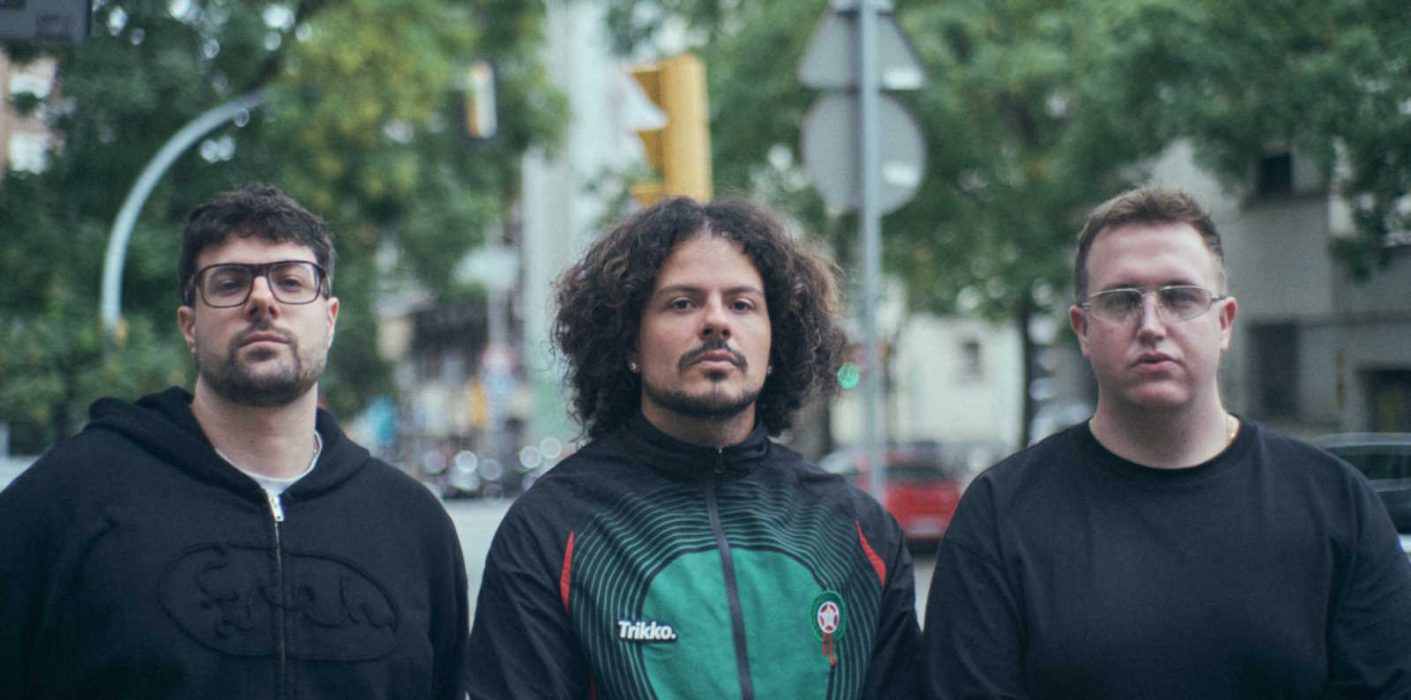
Çantamarta Turns Cultural Crossroads Into a Musical Language
The trio Çantamarta is in Barcelona to perform at one of the city’s well-known venues. On stage, the three artists showcase their musical range and emotionally complex lyrics, stirring the audience to reflect and dance with the same intensity. The next day, I sit down with them for an interview on a rainy morning, as we all reach for our first sweaters and shield ourselves from the shift into the autumn chill.
We sit in an unpretentious café in a working-class neighborhood on the outskirts of Barcelona, far from the tourist-packed streets. Over coffee meant to shake off the Sunday sleepiness after a concert, we begin a conversation punctuated by the hiss of milk-steaming machines, murmurs, laughter, and the clink of glasses at other tables.
Amid the small noises, the cold, and the drowsiness, the trio tells me their story began with a chance encounter on the streets of Granada in the summer of 2017. Luis, better known as Luislo, had recently migrated from Venezuela and was playing guitar and singing near the city’s cathedral when Omar and Benito, friends studying sound engineering in Málaga, stopped to listen. “We were spellbound,” they recall.
Luis had arrived in Spain two years before. After working off the books in bars and shops, he soon began playing on the street. Omar and Benito had technical training and a curiosity about exploring new sounds. After that afternoon, they exchanged what they were working on through SoundCloud. They began experimenting with Luis’ compositions, which he hadn’t known how to develop beyond guitar and voice until then.
“It turned into a musical laboratory,” Benito says. For two years, they tested ideas without fully realizing they were forming a band and, above all, a friendship. “We were getting to know each other,” Benito says. It might sound like a bromance, but the bond took shape during the pandemic, when lockdown allowed them to work consistently and develop what Luis calls the “imaginary project.” Until then, it had progressed only through meetings and trips between Granada and Málaga.
When Andalusia Meets the Caribbean
The band’s name refers to Santa Marta, the Colombian city where Luis’ mother is from. Omar suggested adding a C with a cedilla (Ç), bringing in an Andalusian and Mediterranean reference. The result puzzled listeners of their early songs. At first, the band posted animated videos that did not show their faces, so some people thought they were Brazilian. As Luis puts it, no one could understand him: “They didn’t know whether I was speaking Spanish, Portuguese or making up a language.”
The three musicians’ influences explain much of that blend. Salsa, flamenco, pop and electronic music played in their families’ homes. Music was part of family gatherings, dancing and, above all, oral tradition. Omar, for example, had a close relative from Colombia’s Valle del Cauca region. “He wasn’t that into salsa. He loved Michael Jackson and Technotronic, but obviously salsa was there, too,” he says. Experiences like these eventually came together in the band’s songs.
“What’s beautiful about the project is the way each of our ways of thinking come together, and how we’re influenced by what we heard at home,” Benito says. One connection between the Caribbean and the Mediterranean lies in rhythm. The bass and the tumbao, the sound Benito loves, reveal affinities between salsa and flamenco. Despite their differences, the two traditions share patterns of accompaniment and musical dialogue. Hip-hop brings improvisation and puts words at the center.
Çantamarta’s sound follows no fixed formula. One song may lean toward rap, another may revive the bolero, and another may explore electronic sounds. That freedom, however, also creates challenges in an industry that needs to label music to distribute and promote it.
“Being a hybrid project is both an advantage and a disadvantage. It’s easy to find yourself in a space where nothing is entirely one thing, and it’s easy to get lost there,” Luis acknowledges. Over time, Çantamarta has learned to use labels as an entry point for audiences without letting them become creative limits. Still, Luis says, “If we don’t package that hybridity in a way people can digest, we feel we’re failing, because we want to reach new spaces.” Omar adds that “our message has also evolved as the project has grown. Its needs have changed, and we’re finding our niche.” Luis continues: “There’s no Latin Grammy category for ‘Best Hybrid Project of the Year,’ so if you want to be nominated, you have to find the right way to package it. Some projects may be more electronic or more folkloric, but you have to know which side carries more weight. We saw it yesterday in Barcelona: We already have an audience that knows it can enjoy an authentic product without being led into a single genre.”
Making Music Counting Every Penny
The band’s evolution has also been shaped by its financial circumstances. None of the members comes from a family that could finance a music career. They paid for their first experiments with money earned from their jobs. “We didn’t have anyone paying for our records apart from ourselves,” Omar says.
Their relationship with Rimas Entertainment gave them access to a professional infrastructure and expanded their production possibilities. “We have to be grateful they noticed us,” Luis says. Even so, they have wanted to retain some control over their songs and artistic development.
The support has also helped drive a visual and sonic evolution. Early work such as Pasarela reflected exploration, while more recent releases, including the EP No me olvides and the album La esquina + violenta, feature more defined production and greater cohesion between sound and image.
Producing music for other artists contributed to that shift. After working on someone else’s project, the members felt the need to ask themselves what they wanted to do with their own music. That question led to La esquina + violenta.
The album took about three months to make, compared with the nearly three years it took to produce Pasarela. “It was an album made out of necessity. We needed to spit it out right then,” Omar says.
The speed didn’t stop them from refining the arrangements. The band stripped things back and worked toward a more concise sound. Luis’ voice, for example, was given a grainier, more distorted treatment to reinforce the lyrics’ character.
“Melancolía” and Notes of Sorrow
One of the central tracks on La esquina + violenta is “Melancolía,” a song that addresses suicide through Luis’ personal experience. Its origins are contradictory: it emerged during an improvisation session over cheerful chords, even though the story that took shape was painful.
Luis recalls looking through his contacts in September 2025 and finding the numbers of two friends who had died by suicide. Their names were still on his phone, but they could no longer answer. “Digitally, you’re there, you still exist, but if I send a message or call, you won’t answer,” he says.
The image stayed with him until a question emerged during a writing session, one that echoes in the song: “Where’s my pana who doesn’t answer my calls?” As the composition developed, Luis realized he was writing about his friends’ deaths.
The song also challenges the idea that suffering is always visible. Luis says one of those friends did not fit the usual image of emotional fragility. His tough exterior didn’t reveal what he was going through.
What stands out about the track is that the music keeps its upbeat rhythm, a choice the band connects to traditions such as salsa and merengue, which can address tragic experiences through danceable structures. In “Melancolía,” that contradiction offers a way to approach loss without reducing it to a single emotion.
Refusing to Look Away
Migration, rejection, and social contradictions also run through Çantamarta’s lyrics. For the band, writing about these experiences means avoiding a postcard version of diversity that strips away its complexity.
“As long as we’re not mainstream, we’ll have more room to go deeper and break through the surface,” Luis says. Growth can expand an audience, but it can also pressure artists to soften lyrics or fit commercial formulas. Çantamarta has been encouraged to make more pop music and tone down certain messages. Its response is clear: “If it’s going to be political, then let it be political, and do it properly.”
Luis describes experiences close to home, including friends being detained by U.S. Immigration and Customs Enforcement (ICE) and the deportation of people he believes should not have been expelled. Those experiences shape his view of the world and find their way into Çantamarta’s songs.
Music can turn an experience that is difficult to explain into something others can understand from a different perspective. For Çantamarta, that ability is reason enough to address subjects that do not always find a place in public conversation.
Literary references also inform the band’s perspective. Luis names Gabriel García Márquez and Venezuelan poet Andrés Eloy Blanco among his influences. The songs also echo Spanish poet Federico García Lorca and the flamenco tradition. In “Tanguillos,” from Pasarela, for example, the band engages with flamenco singer José Mercé and a vision of Andalusia shaped by memory and forgetting.
Flamenco also brings a particular relationship with authorship. Many of its coplas come from oral tradition and change as they pass from one voice to another. This circulation of texts, along with tributes to other artists’ work, shapes the repertoire the band draws on.
A Community Around the Songs
At Çantamarta concerts, people of Latin American and Spanish backgrounds mingle with hip-hop fans and listeners who come from other genres. That diversity reflects the mix of references that defines the band. As the members put it, “Çantamarta was formed through an encounter, and that encounter is there in our music.”
Some fans know the lyrics in detail, spot references and analyze double meanings, such as the one at the end of “Mar Caribe,” which includes a small nod to another Venezuelan music group that has gained significant visibility over the past year. “It’s not a beef,” they clarify. This loyal audience has helped establish the project, even if its consumption habits don’t always match those of audiences who buy tickets or merchandise from more commercially successful nostalgia-associated artists. Çantamarta remains focused on its own path. “We have an idea that may not always be commercial, but it’s ours, and that’s our flag,” Luis says.
The band wants to grow without losing that connection. It knows that reaching a wider audience means finding new ways to present its music, but also that it cannot please everyone. Nor does it believe audiences should be limited to people who only listen to easy-to-digest music. The challenge is to preserve the songs’ complexity while reaching new listeners.
The response has extended beyond concerts. The members say they have received messages from students interested in researching their lyrics and the literary and social references they contain. Their songs have reached universities and other educational settings, prompting conversations that go beyond listening.
The ending of La esquina + violenta points toward hope. “Mi prima fue mamá otra vez” serves as a statement of continuity on an album marked by loss and violence. “Whatever happens, new life has always come, and we have to make sure that life can develop in this world in the best possible way,” they say.
Çantamarta began when two Spanish students stopped to listen to a Colombian-Venezuelan musician on a street in Granada. Years later, that encounter still offers a key to understanding their music: a dialogue between traditions, experimentation, and a desire to tell stories that are often left out of dominant narratives. On La esquina + violenta, that search shares space with a question that runs through their songs: How do you move forward without looking away from what is happening around you?
Çantamarta leaves us wanting more, with a desire to connect with others and understand their complexity.