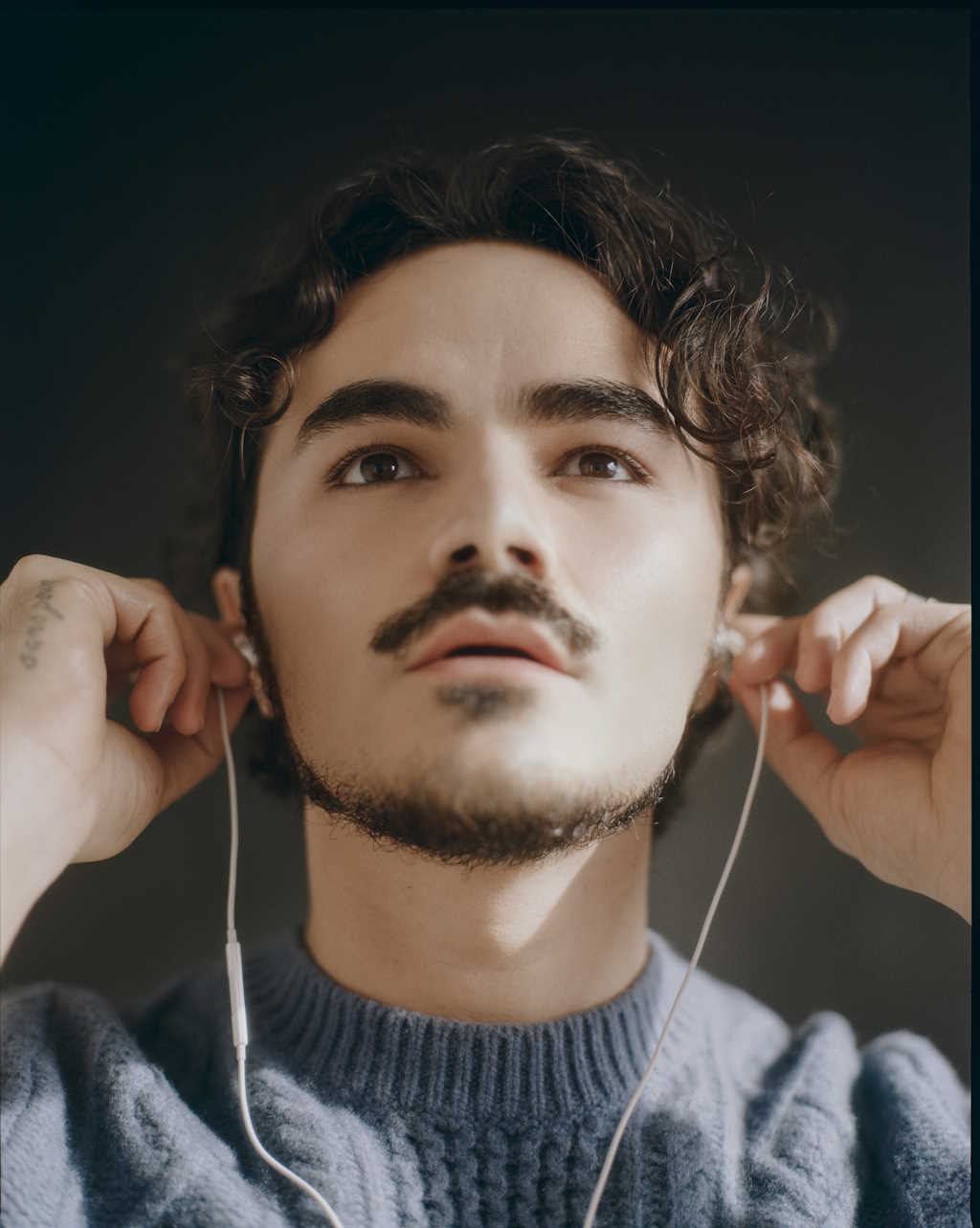
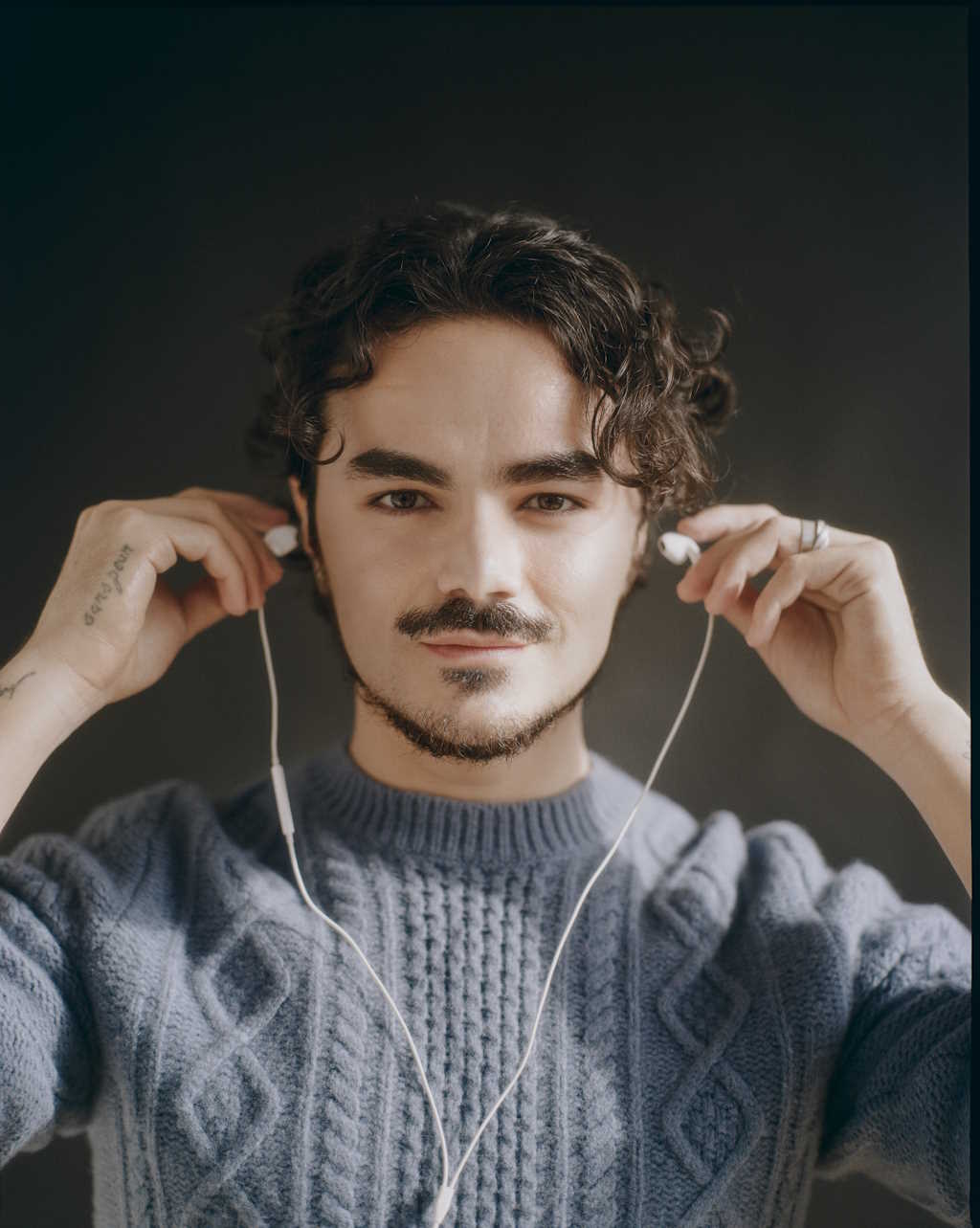
Much of what we forget about Latin American music is that it has a common thread. Nothing comes about by magic. All the genres, stories, and emotions share a nearly volcanic undercurrent. I recalled this reality during my interview with Baby Yors, born Marco. Early in our conversation, we realized that our hometowns—his, Jujuy, in Argentina, and mine, Mérida in Venezuela—are directly connected by the Andes. That realization brought a smile to our faces, but it also reminded us that, when it comes to Latin American culture, we are all part of the same tapestry.
The cities that made us, both of them mid-sized, both of them ringed by mountains, both of them inexpensive enough that a kid could take piano lessons and dance classes and choir rehearsal all in the same week, produced a particular kind of artist, one who cannot do just one thing and has never understood why anyone would want to.
Marco Palou has six simultaneous projects underway: he is releasing an album called SCREAM on June 26, while preparing to film his first feature in New York in October. He has a short film narrated by Rose McGowan, making its way through festivals and launching a nonprofit called Art Anyway Foundation. He is publishing a nonfiction book called Homo Artis in September. At the same time, he hosts a podcast called Don’t Freak Out, paints, edits his own footage, designs his own graphics, and somewhere in the background, three novels he has been writing for fifteen years are waiting for two quiet weeks.
None of this, he insists, is scattered. “It’s all water from the same river,” he says.
He left Jujuy at seventeen, almost eighteen, on a classical dance scholarship. The path from a city in the Andes to New York on a full scholarship sounds like the beginning of a narrowly defined journey. For Marco, the initial plan lasted about a weekend.
“I started classical dance at fifteen, and by seventeen I already had a scholarship,” he says. “It happened very fast.” In his first conversations after arriving, a mentor laid out what the life of a classical ballet dancer actually looks like: short, specific, physically brutal, and with an endpoint that arrived whether you were ready or not. The mentor himself had suffered an injury from walking down the street. He had to stop dancing and start teaching. “He told me what that life looks like,” Marco says. “And combined with other things, I said: I don’t think this is for me.”
He enrolled in a musical theater school instead, mostly to keep his visa. He was learning to live in a place where he knew nobody, in a language that did not yet cooperate with him.
Marco moved to Harlem, then Washington Heights. He started hosting gatherings in his apartment: beers, burritos, musicians. Someone would play, he would sing, and one night it all clicked. “It was the first time I started singing without thinking,” he says. “Without thinking about technique. And something started to mutate.”
There is a chapter in Marco’s life that belongs in one of his scripts. He went to Argentina for what was supposed to be a minor nasal procedure. The surgical team left a piece of gauze inside his nose. He returned to New York, and nothing felt right. Five months later, emergency surgery.
During the recovery, he could not perform or act. He stopped everything that required him to show his face and pivoted to writing. “I wrote and wrote and wrote,” he says. “Music, stories, scripts, everything.” He has, he realizes now, an archive of things that have never been released, novels and pieces accumulating quietly for years.
SCREAM, Baby Yors’s upcoming album, is almost entirely his own. He produced most of it himself and co-produced with Mati Mora, a Los Angeles producer who handled the mixing. He wrote every word and describes the choice to work that small as beginning out of necessity and becoming something else entirely. “At a certain point, I realized that this gives me the possibility of making something that is coming one hundred percent from inside me,” he says. “Maybe it resonates with people, maybe it doesn’t. There’s not much of a filter. There’s no committee giving notes.”
And then comes the problem.
Marco describes reading a Billboard report about companies that operate fleets of thousands of accounts to manufacture virality on TikTok: feeding songs into the algorithm at scale until the numbers move. Without that kind of machinery behind a release, a track has almost no chance of being seen in a landscape where more than 100,000 songs are uploaded to Spotify every single day, according to Luminate’s 2025 Year-End Music Report. “I feel like there’s so much saturation,” he says. “And in some way, I am also tired of putting things out and not having them be seen. There is no feedback.”
Like a prophet of sorts, Marco has been carrying the concept of Homo Artis for years. While nonfiction—it is, after all, his methodology for making things—it is also an essay about his philosophy of creativity, the argument for why doing six things at once is not counterproductive but coherent.
The title traces an evolution. From Homo sapiens, the species that thinks, to Homo artis, the species that creates. He believes the next meaningful step in human development is not cognitive but artistic. Marco argues that what machines cannot replicate is not intelligence. It is the human-to-human transmission that happens in the experience of real art.
“Machines outthink us,” he writes in the framing of the book. “Spirit remains.”
The name Marco performs under says almost everything you need to know about his creative philosophy. Baby, because that is how fragile art is when it is born. Yors (yours), because once an artist releases something into the world, it no longer belongs to them. It belongs to whoever receives it.
And that’s true to the core. Everything Marco Palou makes, he makes with the intention that it will travel from him to you. In an industry that has built elaborate machinery to determine what you should see, and when, and for how long, he is still making the thing first and trusting that the right person will find it.
That is either naive or it is the only defensible position left.