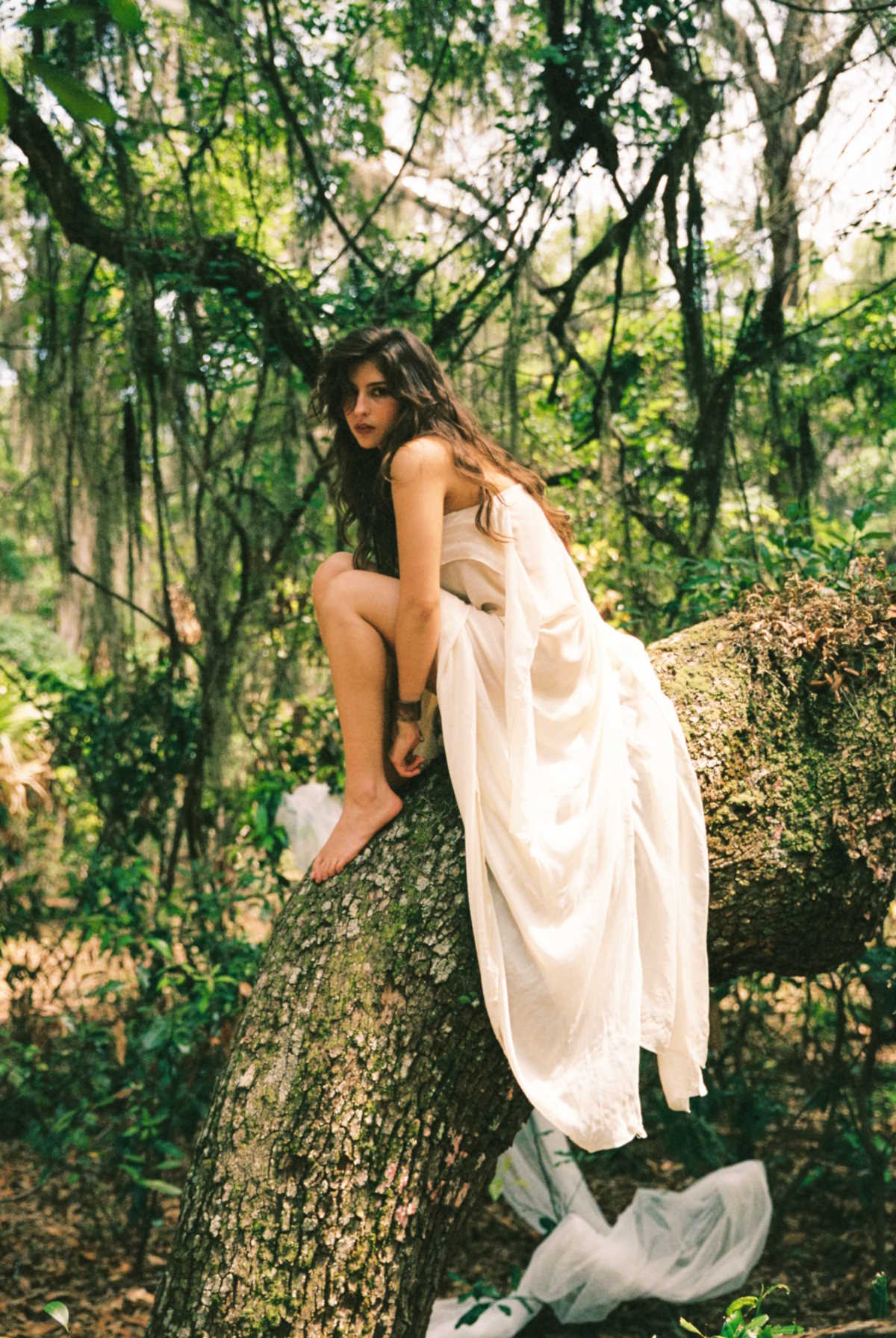
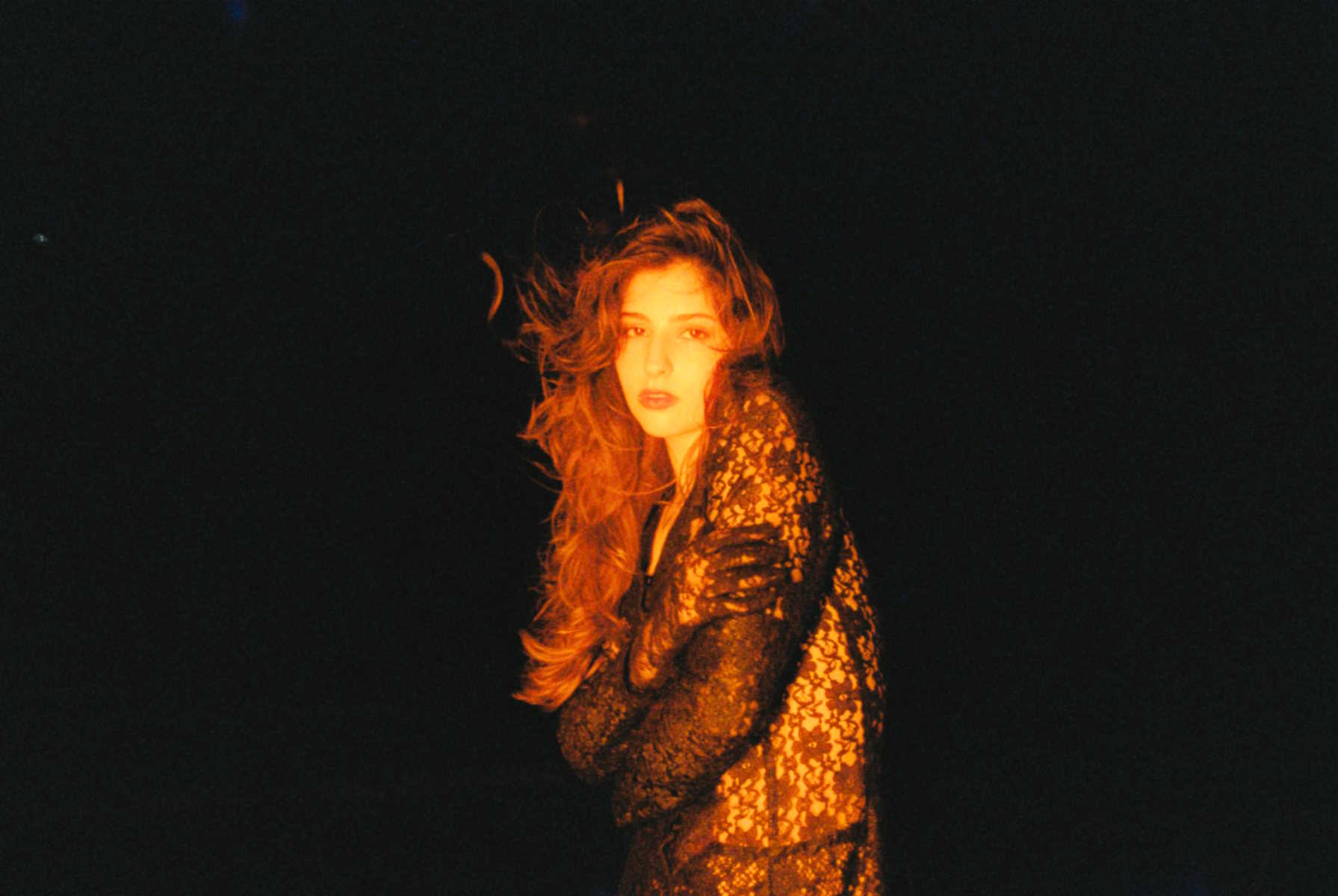
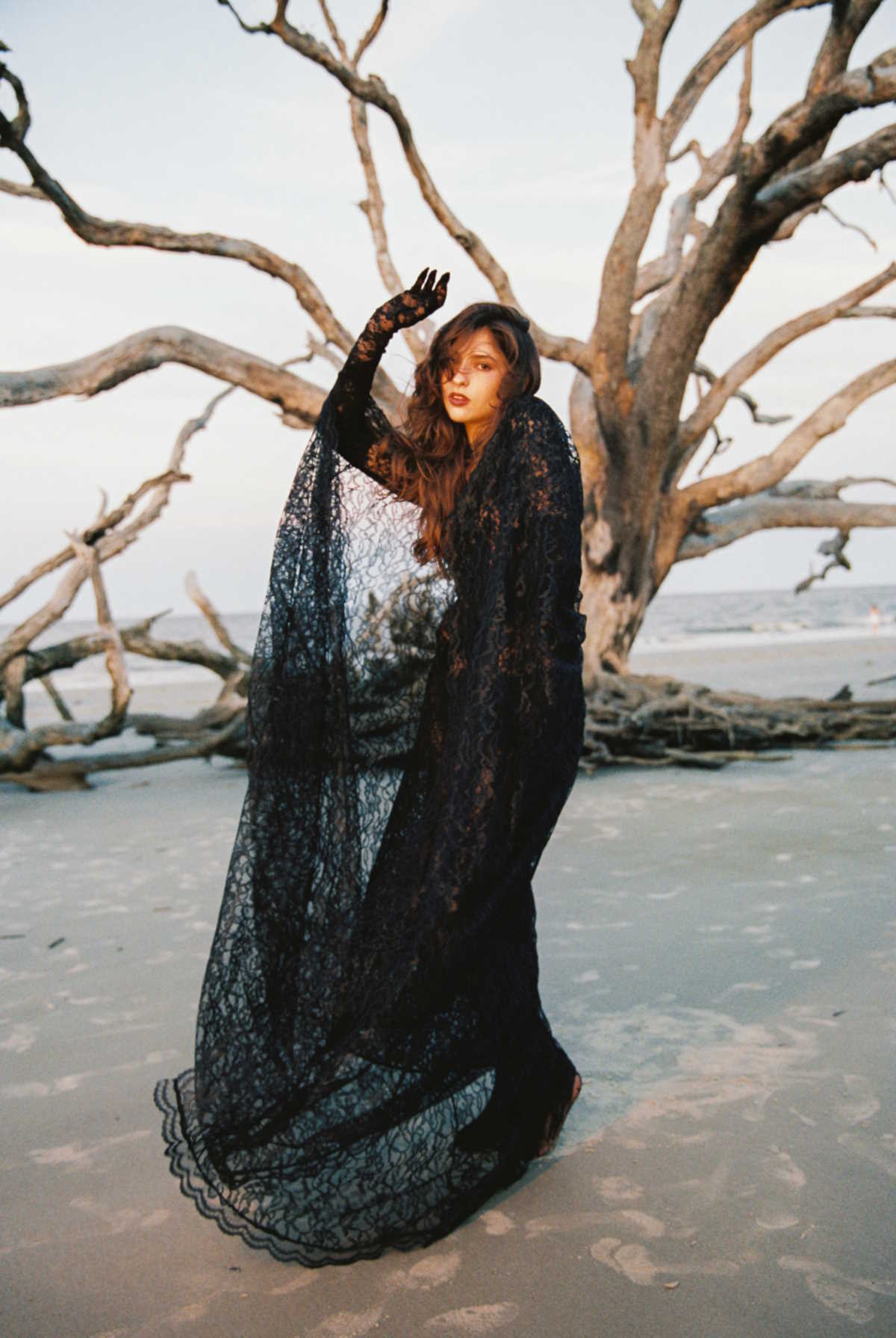
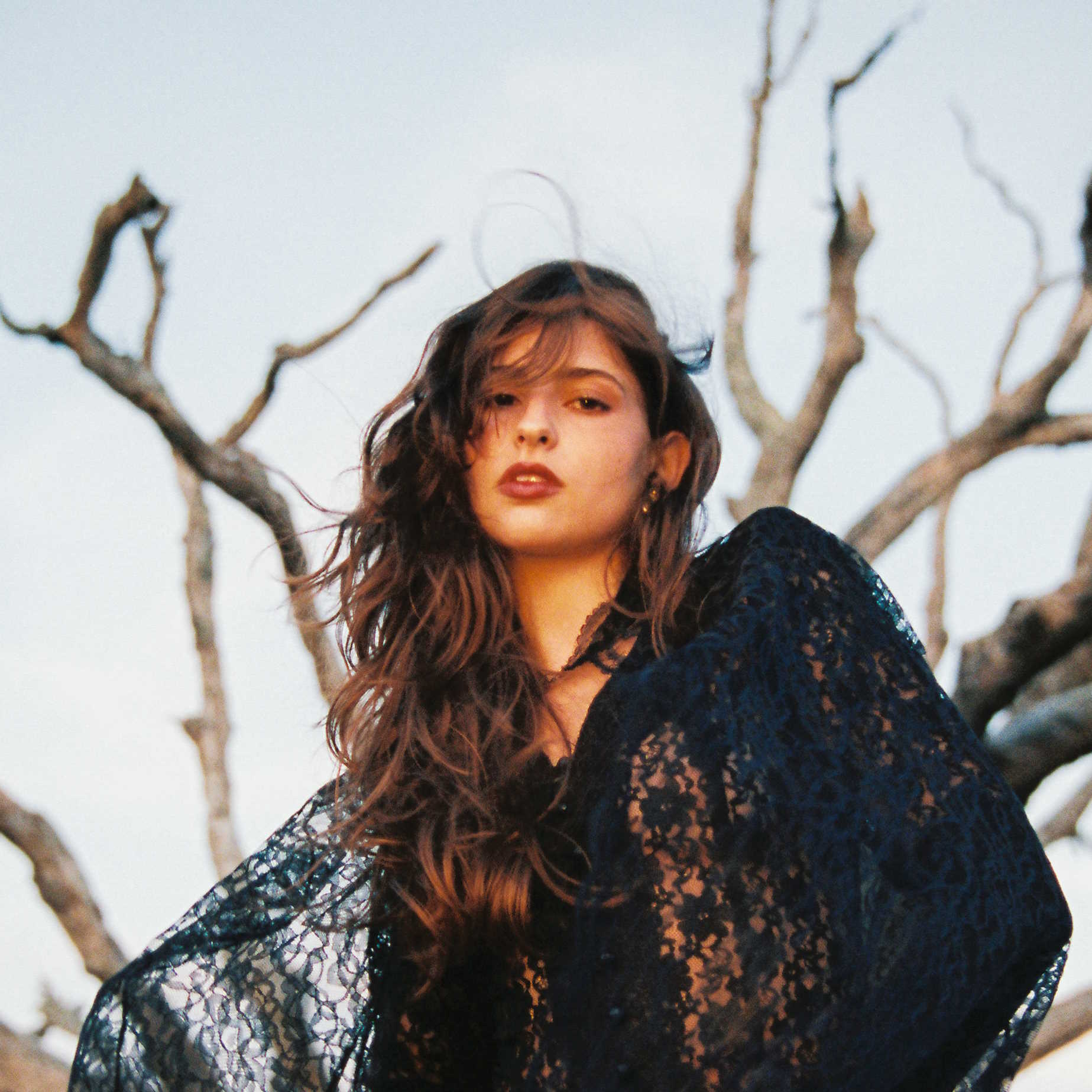
When Andrea Bejar was four or five years old, she always slept next to her grandmother, and one night she told her, “Abi, when you die, I’m going to grab onto your leg and go up with you.” “Girl, how are you five and thinking about… you’re about to go to bed, and you’re saying that if your grandma dies, you’re gonna hold onto her and go up with her?” she says now. “What are you thinking about, queen?”
That anecdote brings together many facets of Andrea’s identity and personal exploration, both as a musician and as a person. Her debut album, “In Bloom,” out October 2, opens with a lullaby written for her grandmother, and it centers on womanhood, anticipatory grief, and the fear of growing old, themes she chose over the romantic relationships she believes so many artists keep writing about.
Andrea was born in Mexico City, spent her earliest years in Cuernavaca, moved to Guadalajara for her father’s work, and arrived in Miami at three. While she went to school in English her whole life, we can comfortably switch between both languages. “Honestly, it’s thanks to my parents that, by some miracle, I can also speak Spanish, because I went to school in English my whole life, so I only spoke Spanish at home,” she says.
At home, Luis Miguel, Agustín Lara, and Chavela Vargas shaped her upbringing with her grandmother. For his part, her father loved Queen, Journey, and the pop-rock bands that made it to Mexico. She also listened to a lot of Juanes, whose songs, she says, are “ingrained in the walls of my childhood home.”
“I had severe ADD growing up,” Andrea says, and her mother enrolled her first in piano lessons, which she describes as “my nightmare.” Voice lessons followed, and eventually her teacher, whom she calls her “therapist and mentor,” began teaching her privately at his house. Meanwhile, she steered away from reading and writing. “I would have to read the same page 15 times, and it was, like, a nightmare. I genuinely just felt dumb,” she says. “And then whenever I had to write, I’d feel dumb again ’cause I was just like, ‘This sounds bad.'” She tried writing her first song at 17 and hated it “because I was so bad at it.”
image credit: Summer Schantz
Andrea’s journey toward songwritting also surprised her with serendipitous pivots. A friend was playing random chords on a classical guitar when Andrea recorded them on a voice memo and forgot about them. Months later, cleaning out her voice memos on a plane, she found the recording. “I was like, ‘This is really pretty,'” she says. She wrote a verse and a chorus to what became “Despierto,” the first song she wrote in Spanish and, in her words, “the first song that I felt like I could say something in.”
“I wasn’t judging myself much because I was writing in Spanish, and Spanish lends itself to being more romantic than English,” she says. “I think you can get away with more in Spanish without sounding cringey.” Because she had no expectations of how she would write in Spanish, she says, “it let me let go of anything that I was holding onto that made me think that I was a bad writer.” She began writing in both languages, and in 2024 she wrote “Marigolds,” released the following year and perhaps the first song in English she truly loved. The reading came back too. “Once I started caring more about what I was writing, it felt very natural to start reading more,” she says.
“I wrote a lot of songs about being a woman, which I am so proud of,” Andrea says. “Wild Woman,” the latest single, is about divine femininity, and it is followed on the album by “Tell Me I’m Beautiful,” a song about growing older as a woman, something she calls terrifying. “I feel like the younger you are, the more desirable people make you,” she says. “And I feel like the older you get, the more invisible you become to society.”
She doesn’t agree with any of it, she adds, but she has seen it in the stories her mother and grandmother have told her. Her mother still criticizes her own reflection in the mirror, and when Andrea FaceTimed her grandmother the morning of our interview, her grandmother complained that she looked horrible. “I was just like, ‘You’re, like, the most gorgeous human person I’ve ever seen in my life,'” Andrea says. The song’s first verse goes, “Finding bags around my eyes. Another morning where the mirror steals my appetite,” and later: “A woman getting old, well, that’s a crime.”
“I’ve always been scared of the people around me, like anything happening to them,” she says, and her grandmother has always been at the center of that fear. Whenever they said goodbye, whether Andrea was leaving Mexico or her grandmother was leaving Miami, “it was so hard for me,” she says, “because I was like, ‘Anything can happen to her. I’m not there to take care of her.'” Her grandmother, she says, has always been “such an independent woman.” “She’s about to turn 85, and she lives in the mountains, and she has her garden. She goes down to the market every day; she still drives,” Andrea says. “She’s literally superhuman.”
“Get To You” came from a poem about the sun and the moon, which never meet. “I didn’t write it about, like, a partner. I didn’t write about my boyfriend,” she says. “If I am writing a song about love … I need it to be grounded in something deeper,” so that whoever is listening can think, “Oh, this song can be about my parent,” or their grandparents, their friends, or their animals.
The Juanes dates began on September 18 at Newark’s Prudential Center and run through October 22 at Petco Park in San Diego. Last year, she opened for Ivan Cornejo and Kevin Kaarl on their full tours, and for Conan Gray in three cities in Mexico, and what she loved most came after the shows. “I loved going to the merch table and saying hi to people, whoever wanted to say hello, and I would just give them a hug and have a moment with them,” she says. “I think very few artists can make you feel connected to them. Natalia being one of them.”
Before the release, Andrea told her therapist she was scared nobody would hear the album. When her therapist asked whether she was afraid people wouldn’t like it, she answered, “No, I don’t care if people don’t like it because I like it, and I think that it’s great, and I’m so proud of what I did.” Her therapist stopped her. “She was like, ‘Hold on. You’ve never said that before,'” Andrea says, and asked her to explore what she felt. “It was so hard for me to describe, to, like, sit with the happiness of, like, I made something that I really love, that I think is really good.”
At a recent Sofar Sounds show in New York, a young woman told her that she had lost her mother and connected deeply with “Marigolds.” “I just, like, started crying,” Andrea says. “It’s so crazy how music can do that.” For someone who once felt “dumb” every time she had to write, the hardest subjects have become the songs she values most. “I’m also really proud of myself for talking about the things that I feel uncomfortable talking about,” she says, “because those are the best songs.”
This interview was conducted in English and Spanish. Spanish-language quotes have been translated.